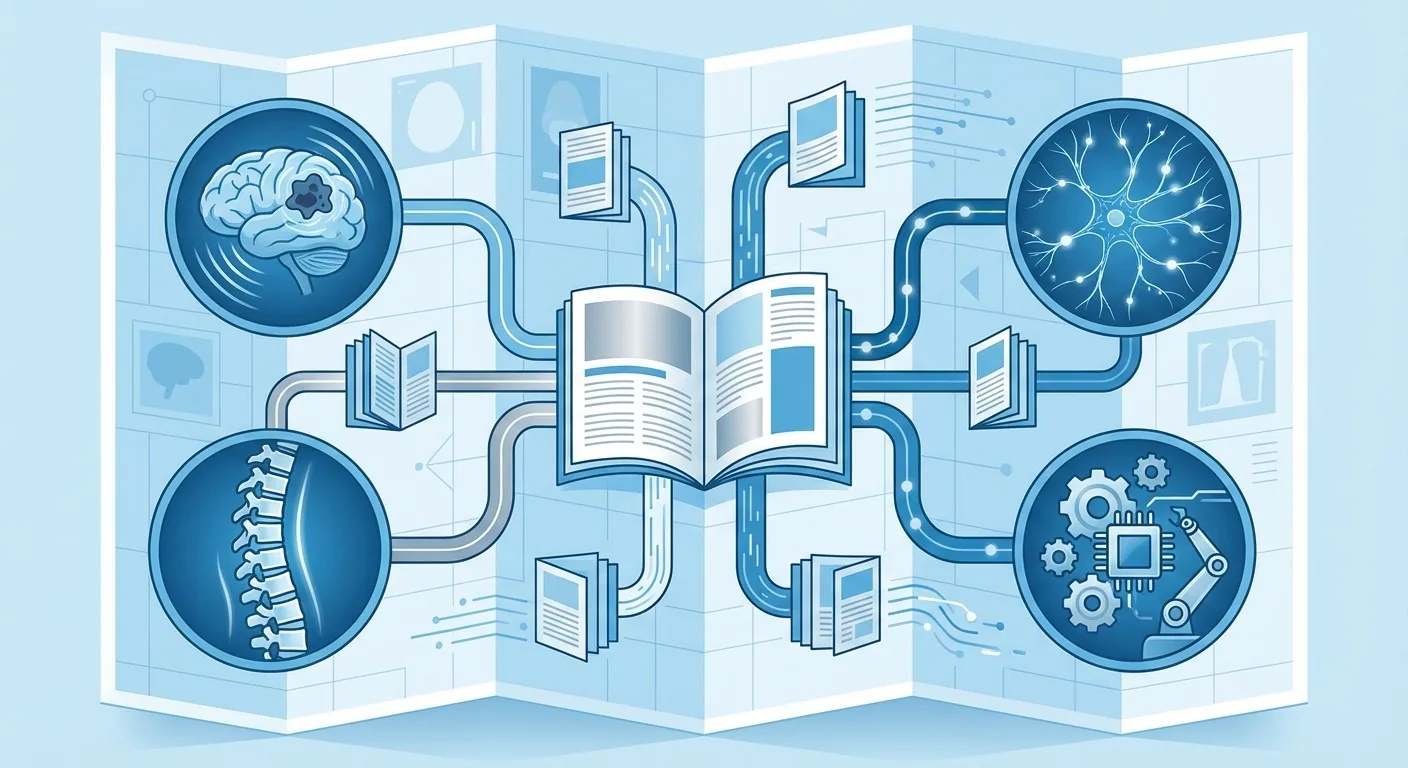
In this first issue, we have gathered all the main topics of neurosurgery under one roof. Below you can find a brief introduction to each section and our reading recommendations.
BRAIN TUMOURS (S05–S18)
Brain tumours are one of the most critical and frequently encountered areas of neurosurgery. In this section, we discussed tumour types, their symptoms, diagnostic methods, and current treatment approaches.
Glioblastoma (GBM): The most common malignant brain tumour in adults.1,2 We evaluated current approaches in the triangle of microsurgical techniques, chemotherapy, and immunotherapy.
Meningioma: A group of tumours originating from the meninges, generally benign but capable of causing serious symptoms depending on their location. Detailed information on Grade classification and surgical decision-making.
Brain Metastasis: The spread of cancers from other organs to the brain. Gamma Knife radiosurgery and decision algorithms.
Pituitary and Acoustic Neuroma: Endoscopic transsphenoidal surgery and hearing-preserving approaches.
SPINE SURGERY (S19–S38)
We comprehensively covered all dimensions of spine surgery, from lumbar herniated discs to cervical herniated discs, and from spinal stenosis to scoliosis.
Lumbar Herniated Disc: Microdiscectomy, endoscopic surgery, and conservative treatment options. Which method for which patient?
Cervical Herniated Disc: Plate-screw stabilisation, artificial disc technology, and motion-preserving approaches.
Minimally Invasive Surgery: Percutaneous screw systems, endoscopic techniques, and comparison with open surgery.3,4
Artificial intelligence, neuronavigation, robotic surgery, 3D printing, telemedicine, intraoperative monitoring, stem cells, and augmented reality — the future of neurosurgery is on these pages.
PERIPHERAL NERVE (S39–S46)
All faces of peripheral nerve surgery, from hand numbness to facial pain, and from elbow compression to nerve injuries.
HYDROCEPHALUS, CHIARI AND EMERGENCY NEUROSURGERY (S47–S52)
Normal pressure hydrocephalus, Chiari malformation, and emergency intervention approaches in brain haemorrhage.
COMMON MISCONCEPTIONS AND FAQs (S53–S60)
We brought together the most frequently asked questions by patients and the most common myths with scientific facts. 20 myths, 20 facts.
TECHNOLOGY AND INNOVATION (S61–S70)
Artificial intelligence, neuronavigation, robotic surgery, 3D printing, telemedicine, intraoperative monitoring, stem cells, and augmented reality — the future of neurosurgery is on these pages.
HEALTHY LIVING (S71–S76)
Nutrition, exercise, ergonomics, and cognitive gymnastics recommendations to protect brain and spine health.
NEUROSCIENCE FROM AROUND THE WORLD (S77–S80)
Current neuroscience news, congresses, and research developments from the world and Turkey.
CLINICAL GUIDE (S81–S84)
When to see a doctor? Paediatric neurosurgery guide, emergencies, and medical terms dictionary.
INTERVIEW AND CONTACT (S85–S88)
New horizons in neuroscience, anaesthesia in the elderly patient, masthead, and a look at the next issue.
Kaynaklar
- Yang F et al. Neurol India. 2024. PMID 39216020
- Ostrom QT et al. Neuro Oncol. 2022. PMID 36196752
- Gadjradj PS et al. Spine (Phila Pa 1976). 2021. PMID 33290374
- Gadjradj PS et al. BMJ. 2022. PMID 35190388
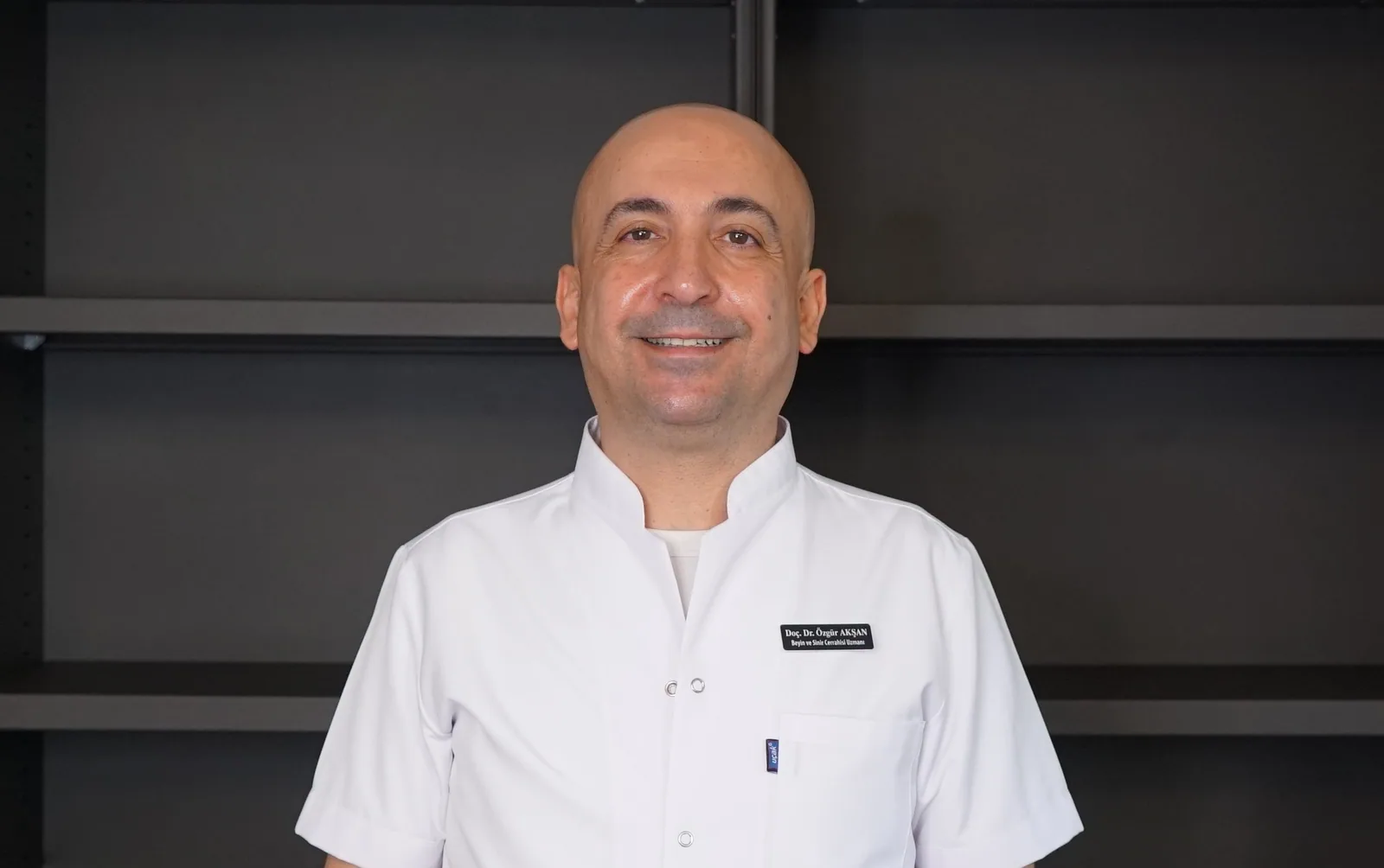
Doç. Dr. Özgür Akşan
Beyin ve Sinir Cerrahisi Uzmanı
Beyin ve Sinir · Sorumlu Yazı İşleri Müdürü ve Editör · Künye