
Dr. Feryal Akşan — Anaesthesiology and Reanimation Specialist
Anaesthesia Challenges in the Elderly Patient
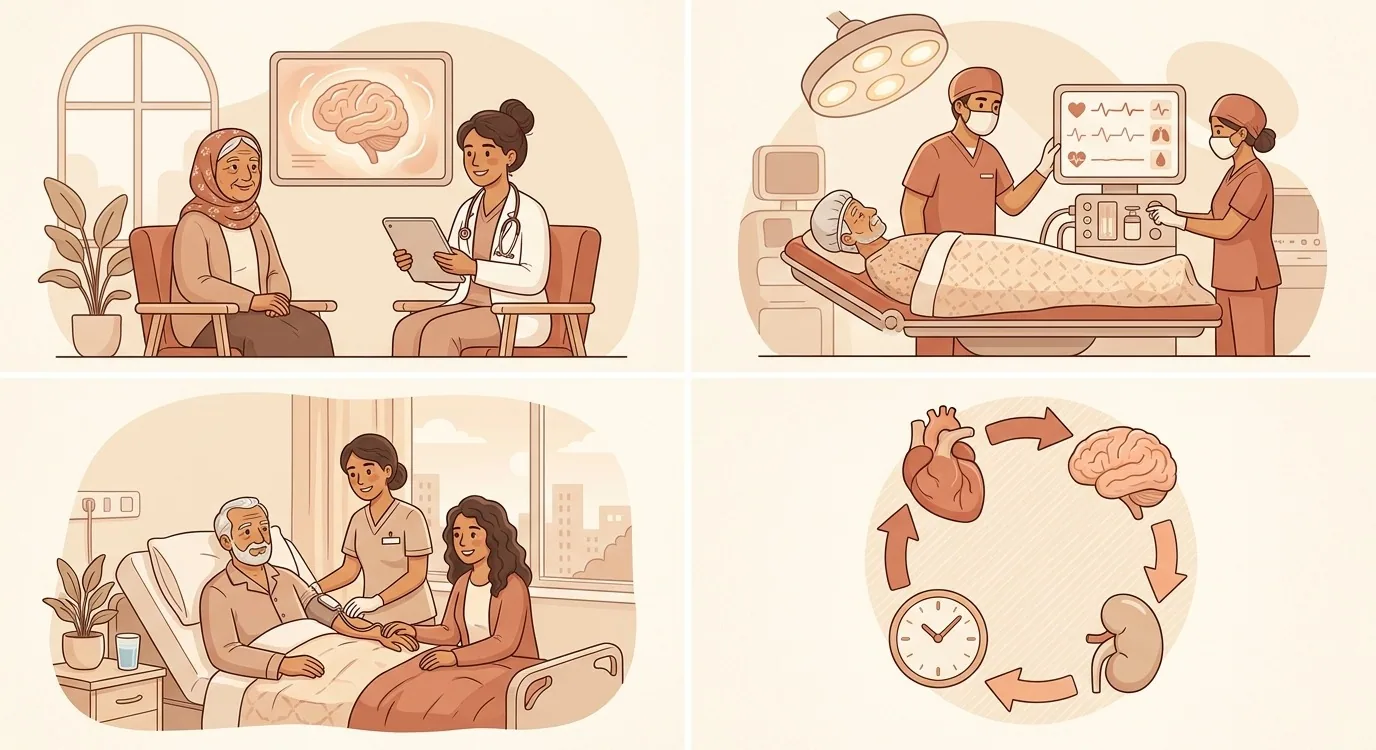
Neurosurgical anaesthesia in patients over 65 years of age requires special attention. Cardiovascular diseases, decreased respiratory function, decline in kidney and liver capacity, drug interactions, and reduced physiological reserve complicate anaesthesia management.
Preoperative Evaluation
Comprehensive cardiac evaluation (ECHO, stress test if necessary), respiratory function tests, kidney function panel, nutritional status assessment (albumin, prealbumin), cognitive evaluation (delirium risk score), polypharmacy management (multiple drug use analysis). Frailty scoring is increasingly being used to determine surgical risk.1,2
Neurosurgical anaesthesia in patients over 65 years of age requires special attention.
Intraoperative Management
Haemodynamic Stability: Avoiding blood pressure fluctuations — impaired cerebral autoregulation in elderly patients can increase the risk of cerebral malperfusion.3 Target: keeping within 20% of preoperative values.4
Brain Protection: Avoiding hypothermia, normocapnia, optimal oxygenation.
Fluid Management: Avoiding fluid overload. Goal-directed fluid therapy (GDFT) may reduce postoperative complications in some types of surgery, but its superiority over standard treatment has not been definitively proven in every patient group.5,6
Postoperative Delirium
Prevention: pain management, early mobilisation, maintaining the sleep-wake cycle, presence of familiar people, sensory support (glasses, hearing aids). Early diagnosis and intervention are of critical importance.
Kaynaklar
- Panayi AC et al. Int J Surg. 2024. PMID 39166975
- Amrock LG et al. J Am Coll Surg. 2014. PMID 25154667
- Fu H et al. Curr Opin Anaesthesiol. 2018. PMID 29120931
- Pang Z et al. Int J Surg. 2025. PMID 39878550
- Castro GIP et al. Braz J Anesthesiol. 2024. PMID 38554793
- Aaen AA et al. Br J Anaesth. 2021. PMID 34389168