The brain is the most complex organ in the body — containing approximately 86 billion neurons and trillions of synaptic connections. With ageing, some changes naturally occur, but healthy lifestyle habits can slow down this process and preserve cognitive functions.

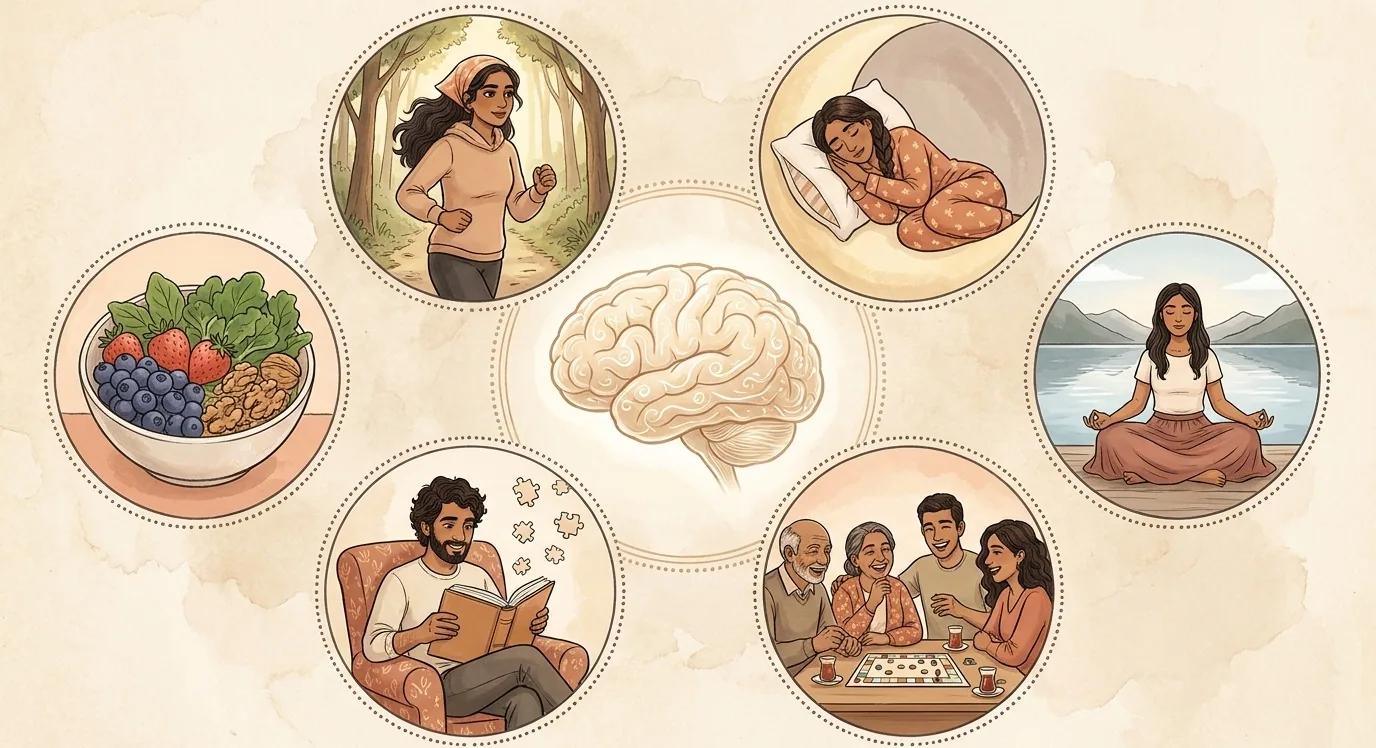
7 Golden Rules for Brain Health
1. Regular Exercise
At least 150 minutes of moderate-intensity aerobic exercise per week is recommended for adults;1 in studies showing cognitive benefits, sessions generally lasted 45-60 minutes.2,3 Exercise increases hippocampal volume, elevates BDNF (brain-derived neurotrophic factor) secretion, and supports neurogenesis.4,5
The brain is the most complex organ in the body — containing approximately 86 billion neurons and trillions of synaptic connections.
2. Quality Sleep
7-9 hours of sleep for adults. During sleep, the brain clears toxins (including beta-amyloid) through the glymphatic system.6,7 Chronic sleep disturbance increases the risk of Alzheimer's.8,9
3. Mediterranean Diet
A diet rich in vegetables, fruits, legumes, whole grains, fish, and olive oil. The MIND diet (Mediterranean + DASH) can reduce the risk of Alzheimer's disease by 35-53%.10 Omega-3 fatty acids (fish, walnuts) reduce neuroinflammation.
4. Social Connections
Social isolation increases the risk of dementia by 50%.11 Regular social activities and relationships with family and friends strengthen cognitive reserve.
5. Mental Activity
Learning new things (a language, a musical instrument, a hobby) increases neuroplasticity. Reading, solving puzzles, and playing strategy games preserve cognitive functions.
6. Stress Management
Chronic stress damages the hippocampus by elevating cortisol levels.12,13 Meditation, yoga, breathing exercises, and spending time in nature reduce stress.
7. Chronic Disease Control
Hypertension, diabetes, high cholesterol, and obesity increase the risk of vascular dementia and Alzheimer's.14,15 Regular check-ups and treatment compliance are of critical importance.
→ Next page: S72 — Spine Health
Kaynaklar
- Bull FC et al. Br J Sports Med. 2020. PMID 33239350
- Northey JM et al. Br J Sports Med. 2018. PMID 28438770
- Zhang S et al. Int J Environ Res Public Health. 2022. PMID 36497772
- Szuhany KL et al. J Psychiatr Res. 2015. PMID 25455510
- Erickson KI et al. Proc Natl Acad Sci U S A. 2011. PMID 21282661
- Sangalli L et al. Sleep Med. 2023. PMID 36481512
- Jessen NA et al. Neurochem Res. 2015. PMID 25947369
- Ungvari Z et al. Geroscience. 2025. PMID 40214959
- Wang S et al. J Neurol. 2024. PMID 38656621
- Morris MC et al. Alzheimers Dement. 2015. PMID 25681666
- Lazzari C et al. Int J Psychiatry Clin Pract. 2022. PMID 34369248
- Bertollo AG et al. Front Neurosci. 2025. PMID 39981404
- Memudu AE et al. Prog Brain Res. 2025. PMID 40222786
- Jones A et al. Dement Geriatr Cogn Disord. 2024. PMID 38346414
- Rundek T et al. Neurotherapeutics. 2022. PMID 34939171

Doç. Dr. Özgür Akşan
Beyin ve Sinir Cerrahisi Uzmanı
Beyin ve Sinir · Sorumlu Yazı İşleri Müdürü ve Editör · Künye