How Does It Work?
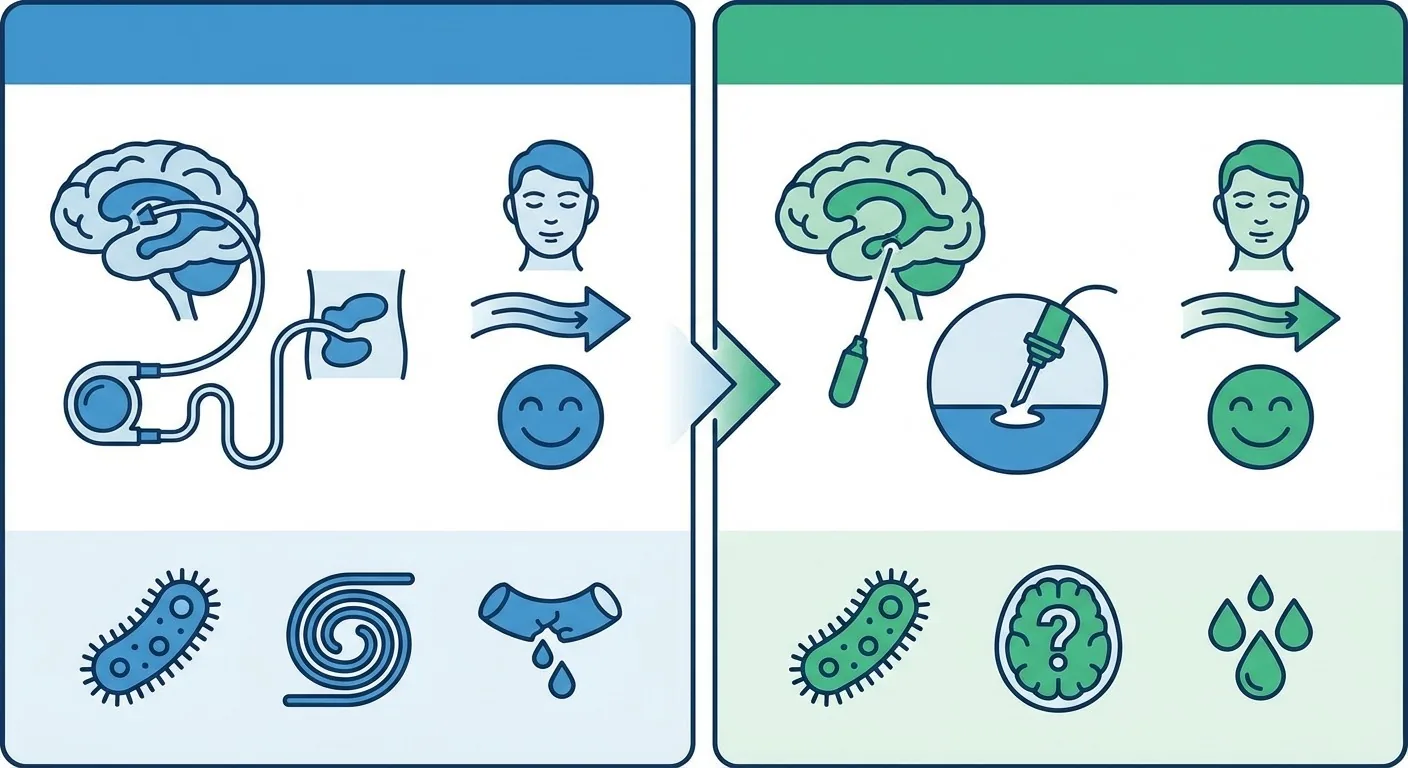
A catheter placed in the brain ventricle is connected to a tube extending under the skin to the abdominal cavity. A pressure-adjustable valve between them directs excess CSF to the abdominal cavity. The CSF is absorbed by the peritoneum.
Programmable Valves
In modern shunt systems, the valve pressure can be adjusted magnetically from the outside. This allows for pressure optimisation without the need for surgery. In NPH, a low-medium pressure setting is preferred.
Shunt Outcomes in NPH
With proper patient selection, the clinical improvement rate after a shunt is approximately 74%. This rate varies between 70-80% depending on the type of shunt used.1 Walking is the symptom that responds best. Although evidence regarding the relationship between symptom duration and the success of shunt surgery in NPH is inconsistent, some studies suggest that the success rate decreases as symptom duration prolongs.2,3
Complications
The most common problems are shunt blockage and infection; over-drainage and fluid accumulation under the brain membrane (subdural effusion) can also develop. In adults, dysfunction has been reported in approximately one-third of shunts during follow-ups exceeding two years; therefore, patients with shunts are followed up for life.4,5
Endoscopic Third Ventriculostomy (ETV)
How Is It Performed?
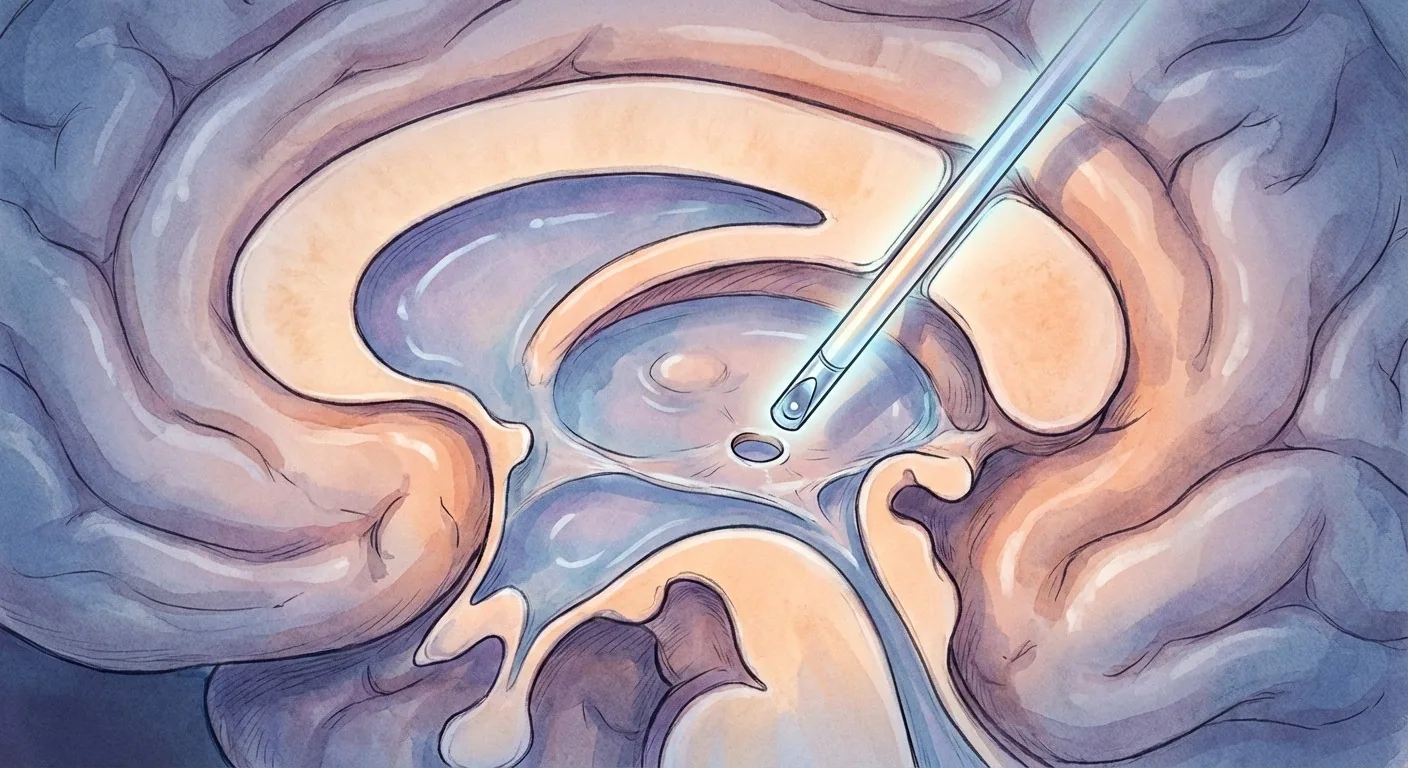
A hole is created at the floor of the third ventricle with an endoscope, allowing the CSF to reach its normal absorption surfaces. No foreign body (shunt) is implanted.
When Is It Preferred?
It is the first option in obstructive (blockage type) hydrocephalus.6,7 It is preferred in conditions such as aqueductal stenosis and posterior fossa tumours. Its role in NPH is controversial — although some centres report good results, a shunt is still the standard treatment.8,9
Advantages
No foreign body is implanted (very low risk of infection), natural CSF circulation is restored, and there is no risk of over-drainage.
Decision Algorithm
CSF drainage test positive → proceed to surgery. CSF drainage test negative → re-evaluation with long-term drainage.
→ Next page: S49 — Paediatric Hydrocephalus

Kaynaklar
- Salih A et al. EClinicalMedicine. 2024. PMID 39539993
- Rovčanin B et al. Diagnostics (Basel). 2025. PMID 40722526
- Kimura T et al. World Neurosurg. 2021. PMID 33895373
- Isaacs AM et al. Neurosurg Focus. 2023. PMID 37004137
- Kelbert J et al. World Neurosurg. 2025. PMID 39577651
- Bouramas D et al. Acta Neurochir Suppl. 2012. PMID 22116439
- Obaid S et al. J Neurol Surg A Cent Eur Neurosurg. 2015. PMID 25045859
- Greuter L et al. Br J Neurosurg. 2024. PMID 36537195
- Sohail A et al. Surg Neurol Int. 2024. PMID 38840608
Doç. Dr. Özgür Akşan
Beyin ve Sinir Cerrahisi Uzmanı
Beyin ve Sinir · Sorumlu Yazı İşleri Müdürü ve Editör · Künye