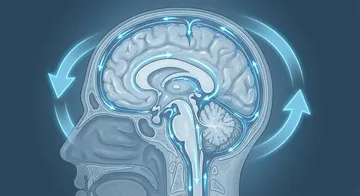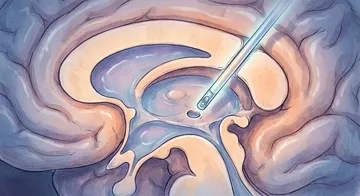
Chiari malformation is the descent of the lower part of the cerebellum (cerebellar tonsils) down through the foramen magnum (the large opening at the base of the skull) into the spinal canal. This descent obstructs CSF circulation and can compress the brainstem and spinal cord.
Types
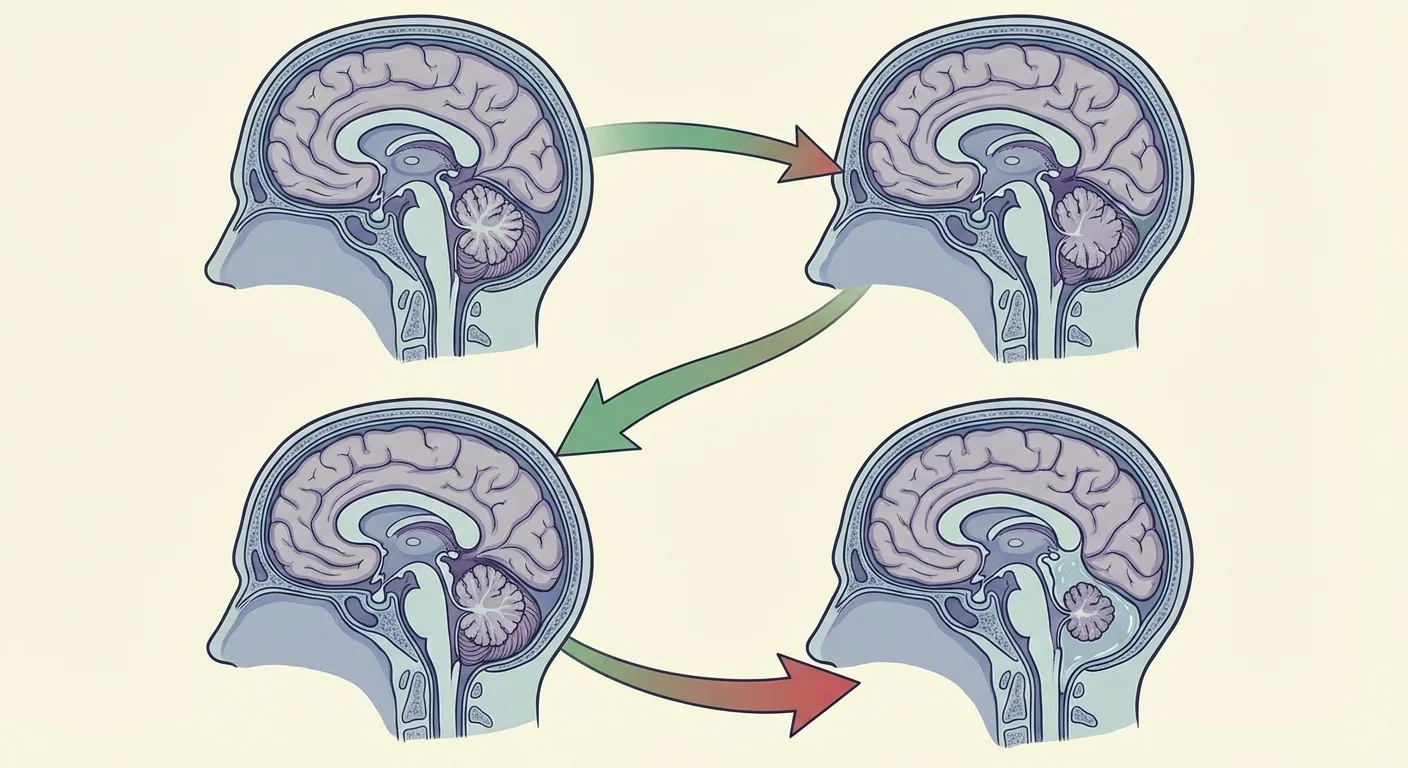
Chiari Type I: The most common form. The cerebellar tonsils are 5 mm or more below the foramen magnum.1 It is usually diagnosed in adults. It is not associated with spina bifida.
Chiari Type II (Arnold-Chiari): The cerebellar tonsils, vermis, 4th ventricle, and a part of the brainstem descend through the foramen magnum. It is almost always seen together with myelomeningocele (spina bifida). It is a childhood diagnosis.
Chiari Types III-IV: Very rare and severe forms. Associated with encephalocele.
Symptoms (Type I)
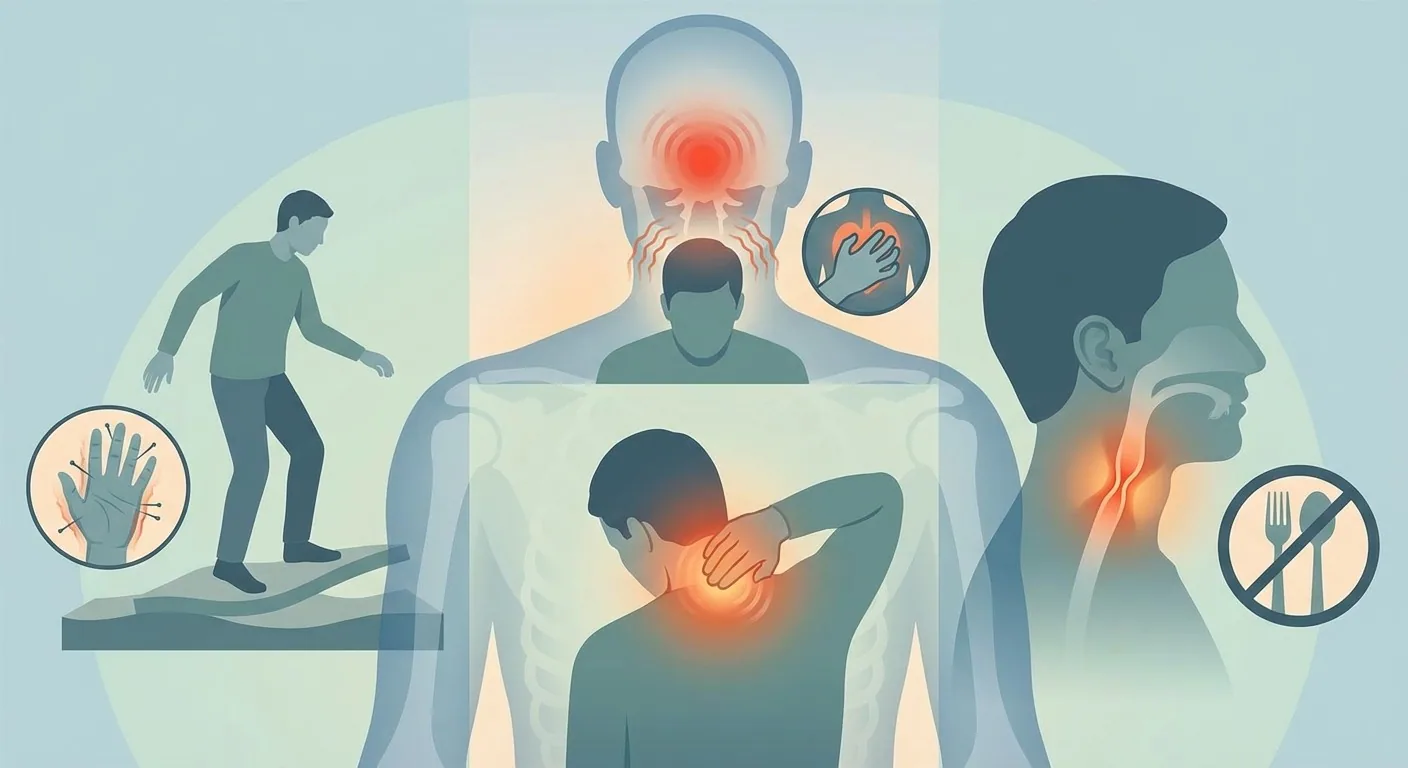
Headache: The most common symptom. A characteristic pain localised to the back of the neck, which worsens with coughing/straining/bending over (Valsalva-provoked headache).
Neurological Symptoms: Neck pain, imbalance, clumsiness in the hands, difficulty swallowing, hoarseness, numbness/tingling, weakness.
If syringomyelia is present: Loss of pain and temperature sensation in the arms ("cape-like" sensory deficit), scoliosis.
Diagnosis
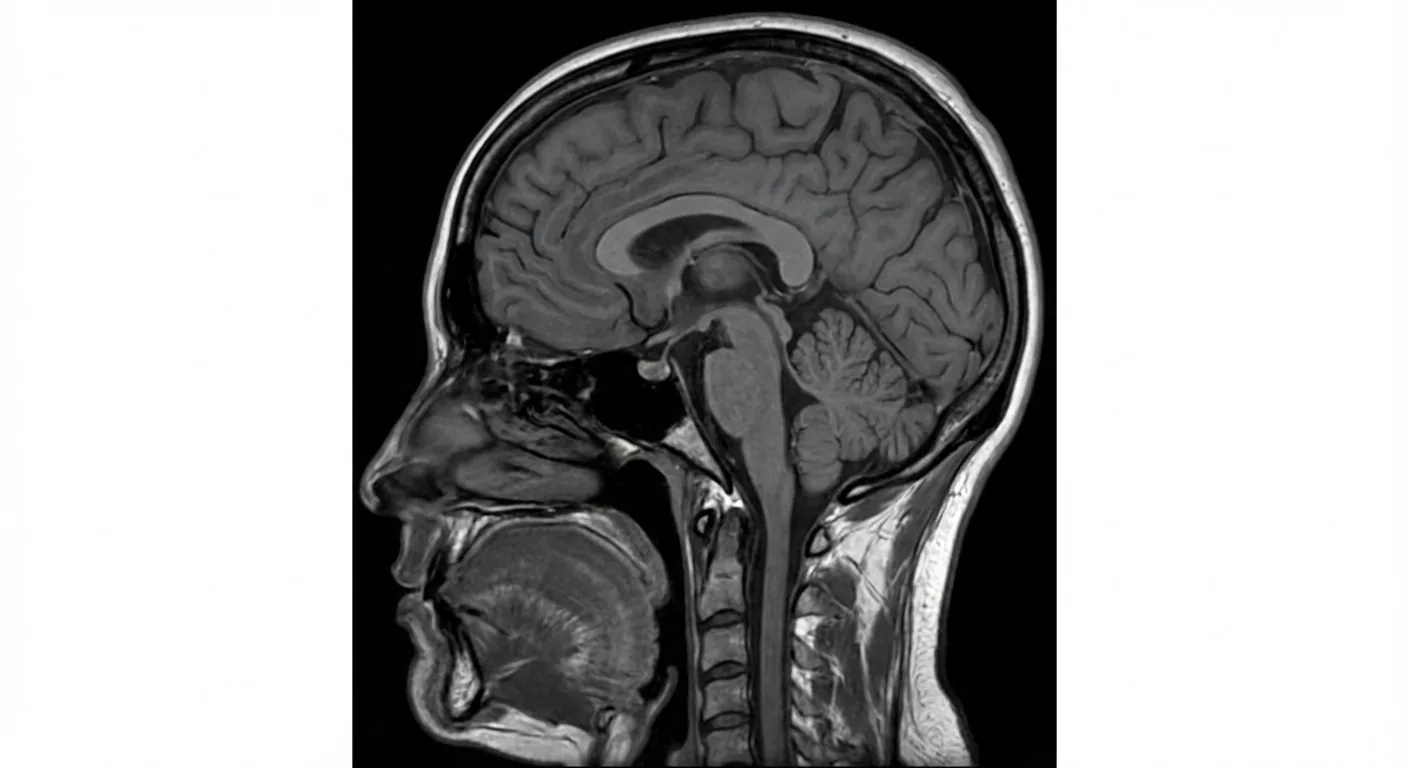
Craniocervical junction MRI is the primary imaging method for diagnosis.2,3 Tonsillar herniation is measured in sagittal sections. Syringomyelia is investigated with a whole spine MRI.
Asymptomatic Chiari
Most incidentally found Chiari Type I cases (incidental MRI finding) are asymptomatic and do not require surgery.4 Surgery is planned if symptoms develop.
→ Next page: S51 — Chiari Decompression Surgery
Kaynaklar
- Morgenstern PF et al. World Neurosurg. 2020. PMID 32204296
- Shen J et al. Biomed Res Int. 2019. PMID 31016190
- Olszewski AM et al. Curr Opin Pediatr. 2018. PMID 30407974
- Zisakis A et al. Adv Tech Stand Neurosurg. 2023. PMID 37318574

Doç. Dr. Özgür Akşan
Beyin ve Sinir Cerrahisi Uzmanı
Beyin ve Sinir · Sorumlu Yazı İşleri Müdürü ve Editör · Künye