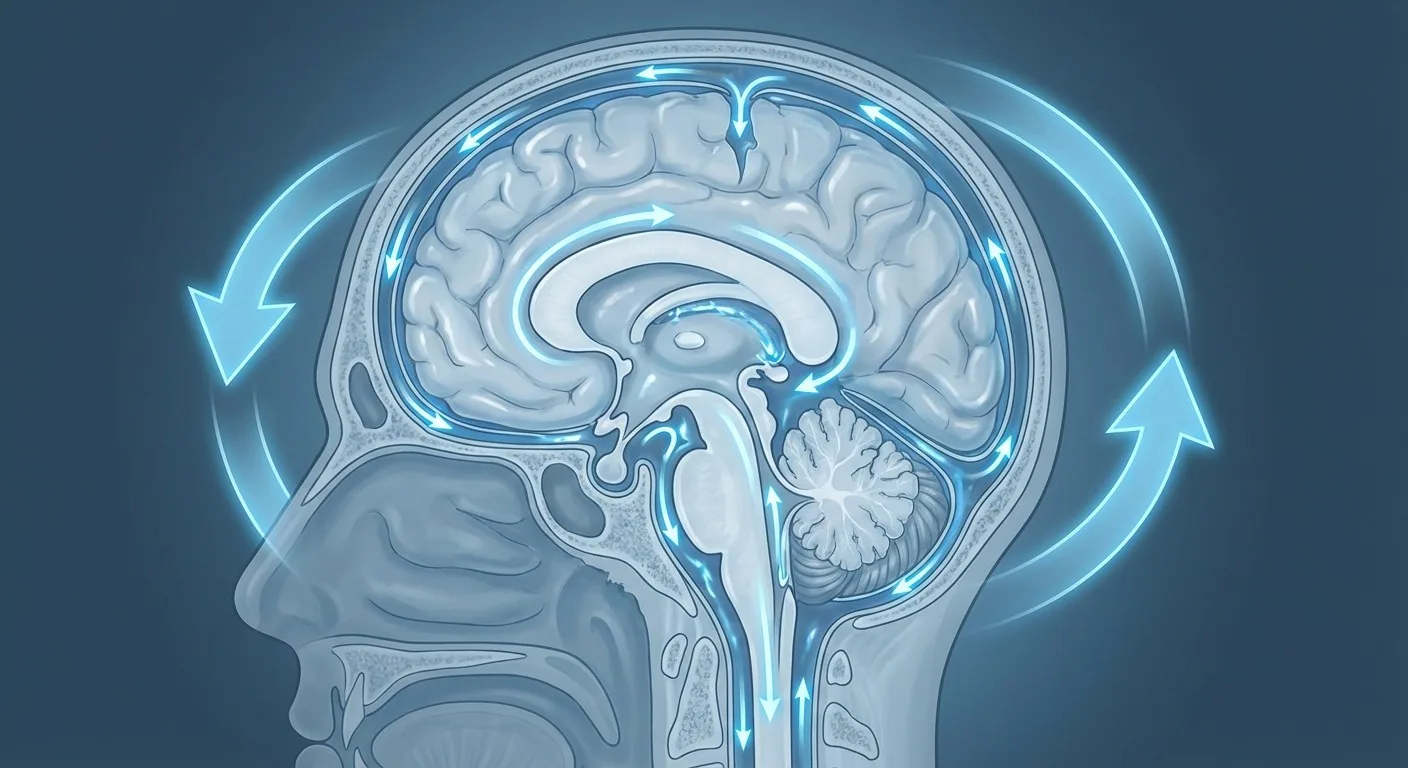
Normal pressure hydrocephalus (NPH) is a condition characterised by the accumulation of cerebrospinal fluid (CSF) within the ventricles while CSF pressure remains within normal limits. It is generally seen in people over 60 years of age and is a treatable cause of dementia.
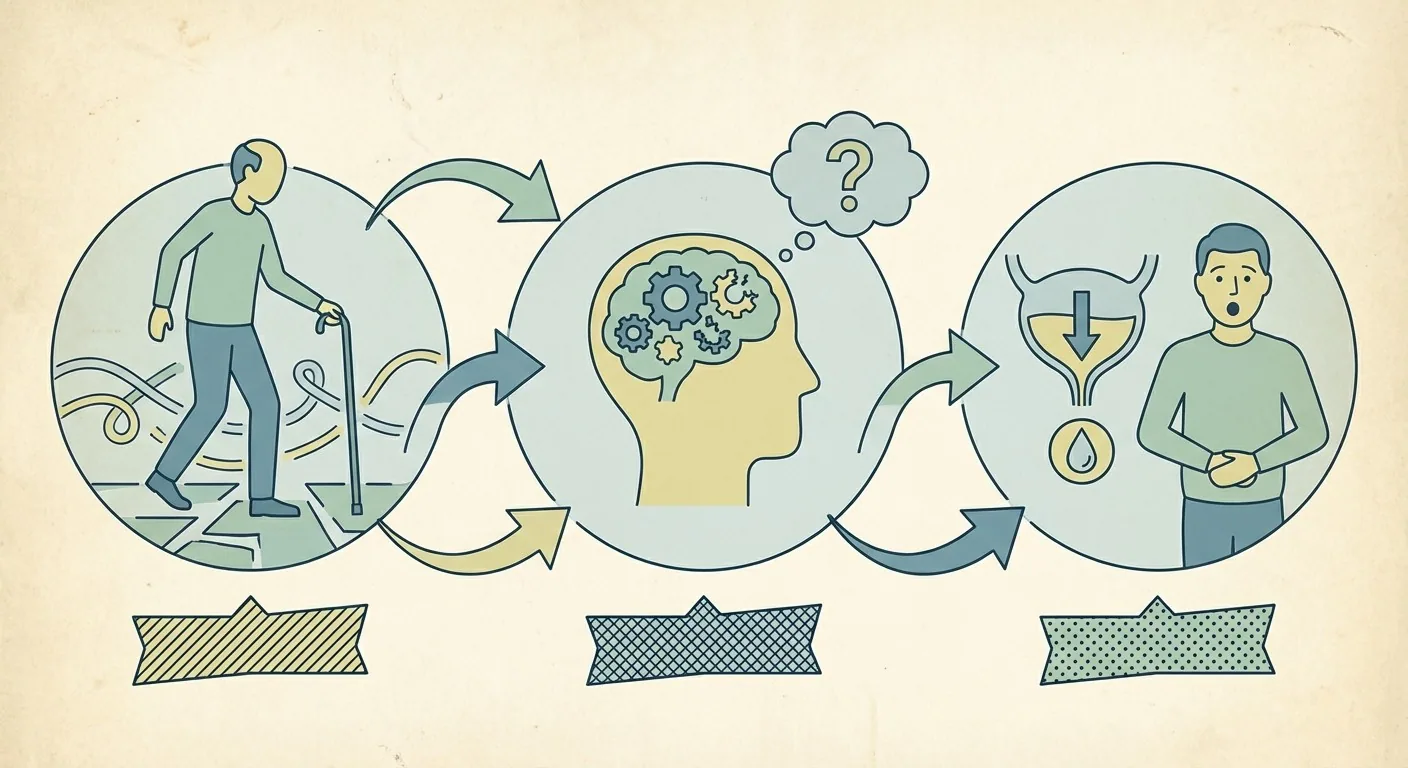
Hakim Triad (Adams-Hakim)
1. Gait Disturbance (earliest and most prominent)
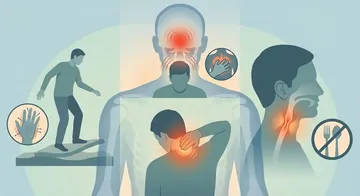
"Magnetic gait" — feet are dragged as if they cannot be lifted from the ground. Broad-based, short-stepped gait. Instability during turns, high risk of falling.
Unlike Alzheimer's, memory loss is not prominent — it is more a matter of "slowing down rather than forgetting".
2. Cognitive Impairment (dementia)
Subcortical type dementia: slowing down, attention deficit, difficulty in planning, apathy. Unlike Alzheimer's, memory loss is not prominent — it is more a matter of "slowing down rather than forgetting".
3. Urinary Incontinence
Initially frequent urination, urgency. Loss of control in the advanced stages. Urinary incontinence is the symptom with the lowest response rate to shunt surgery in NPH.1
Diagnosis
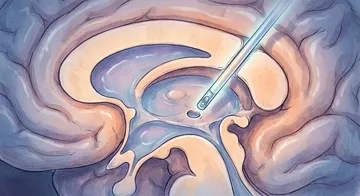
MRI Findings: Disproportionate ventricular enlargement (Evans index > 0.3), DESH (disproportionately enlarged subarachnoid space hydrocephalus) sign, periventricular signal increase (transependymal CSF absorption).2,3
CSF Drainage Test (Tap Test): 30-50 ml of CSF is drained via lumbar puncture. Gait test is evaluated before and after. Improvement in gait predicts the response to shunt surgery. Sensitivity 50-60%.4
Long-Term External Drainage: CSF drainage with a lumbar catheter for 3-5 days (72-120 hours). It is more sensitive than the tap test (50-100%).5,6 Gait and cognitive functions are evaluated daily.
Differential Diagnosis
Alzheimer's disease, Parkinson's disease, vascular dementia, cervical myelopathy. The importance of NPH: it is treatable!
→ Next page: S48 — Endoscopic Ventriculostomy and Shunt
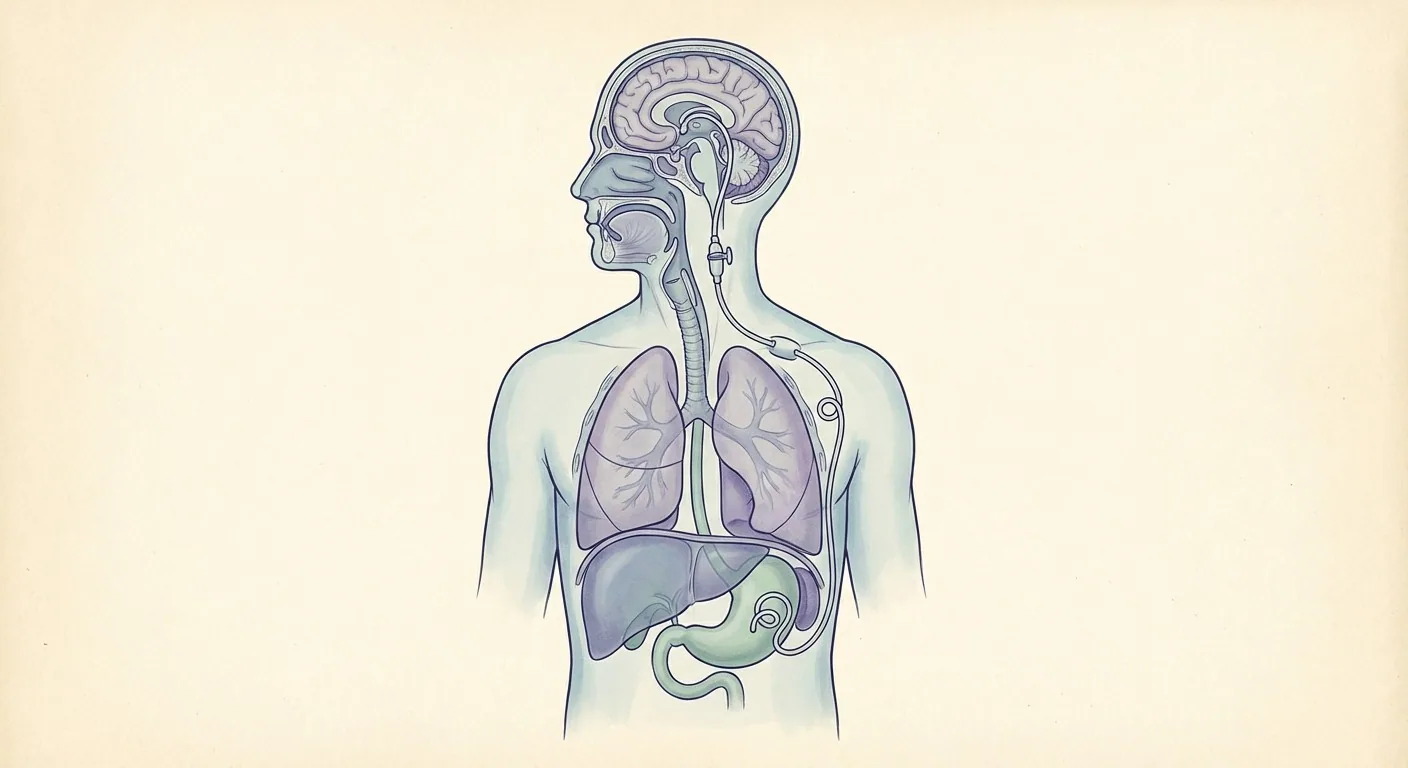
Urinary incontinence is the symptom with the lowest response rate to shunt surgery in NPH.
Kaynaklar
- Kilic K et al. J Clin Neurosci. 2007. PMID 17223561
- Nakajima M et al. Neurol Med Chir (Tokyo). 2021. PMID 33455998
- Lieb JM et al. Radiologe. 2015. PMID 25957009
- Mihalj M et al. J Neurol Sci. 2016. PMID 26944123
- Damasceno BP. Dement Neuropsychol. 2015. PMID 29213984
- Marmarou A et al. Neurosurgery. 2005. PMID 16160426

Doç. Dr. Özgür Akşan
Beyin ve Sinir Cerrahisi Uzmanı
Beyin ve Sinir · Sorumlu Yazı İşleri Müdürü ve Editör · Künye