Question 11: In lumbar disc herniation, does every herniation seen on an MRI require surgery?
No. Seeing a "herniation" on an MRI is not an indication for surgery on its own. Disc bulging or protrusion can frequently be detected in the MRI scans of people with no complaints.1,2 What is important is clinical-radiological correlation: the patient's complaints and examination findings must be consistent with the pathology on the MRI. The principle of "We do not operate on the herniation, we operate on the patient" applies.

Question 12: Does an epidural injection (needle treatment) cure the herniation?
An epidural steroid injection does not shrink the herniation itself, but it relieves pain by reducing the oedema and inflammation around the nerve root. It can be used as a "bridge treatment" in the process leading up to surgery or can be part of conservative treatment in patients who do not require surgery.
Question 13: Does "hardware" (screw-rod system) stay for a lifetime? Does it need to be removed?
Once bone fusion is complete, the implant has actually fulfilled its mechanical duty. Indications for removal are: infection, screw loosening or breakage, soft tissue irritation over the implant, or if required for adjacent segment surgery. Titanium implants are MRI-compatible; an MRI can be taken safely.
Disc bulging or protrusion can frequently be detected in the MRI scans of people with no complaints.
Question 14: Are nucleoplasty and laser treatment effective for lumbar disc herniation?
Nucleoplasty can be effective in small, bulging discs by reducing intradiscal pressure. Laser discectomy works on a similar principle. Your surgeon will determine the most appropriate method for you.
Question 15: Will getting a second opinion offend my surgeon?
Absolutely not. Getting a second opinion is a patient's right, and an ethical surgeon supports this. Especially in major surgery decisions, a second opinion confirms the diagnosis, expands treatment options, and increases the patient's confidence. Many insurance companies also recommend a second opinion before major surgery.
→ Next page: S60 — General Neurosurgery Questions (16-20)

Kaynaklar
- Kim SJ et al. J Korean Neurosurg Soc. 2013. PMID 23440899
- Brinjikji W et al. AJNR Am J Neuroradiol. 2015. PMID 26359154
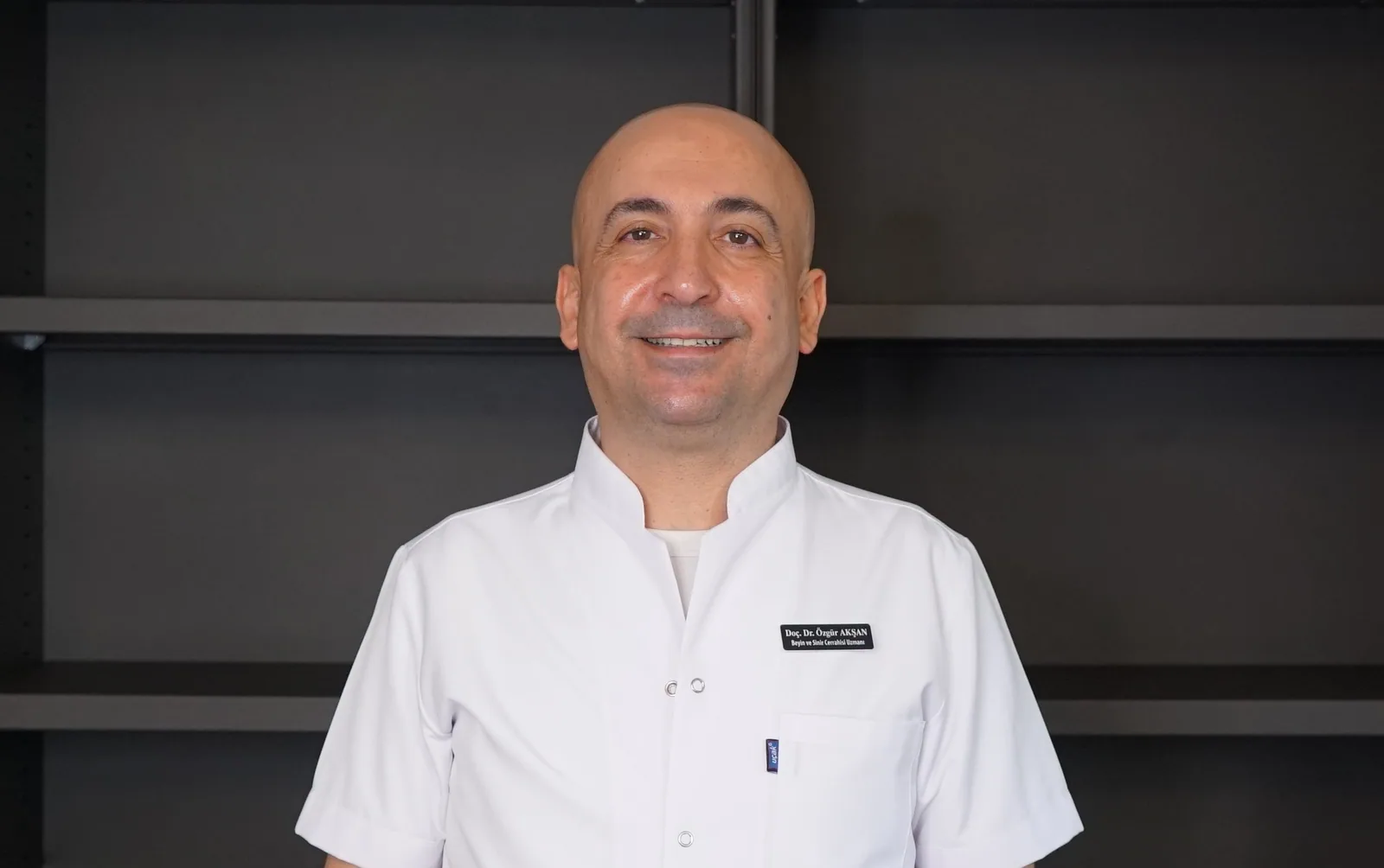
Doç. Dr. Özgür Akşan
Beyin ve Sinir Cerrahisi Uzmanı
Beyin ve Sinir · Sorumlu Yazı İşleri Müdürü ve Editör · Künye