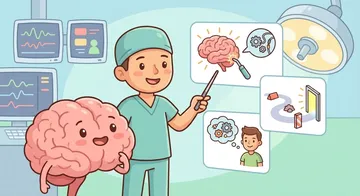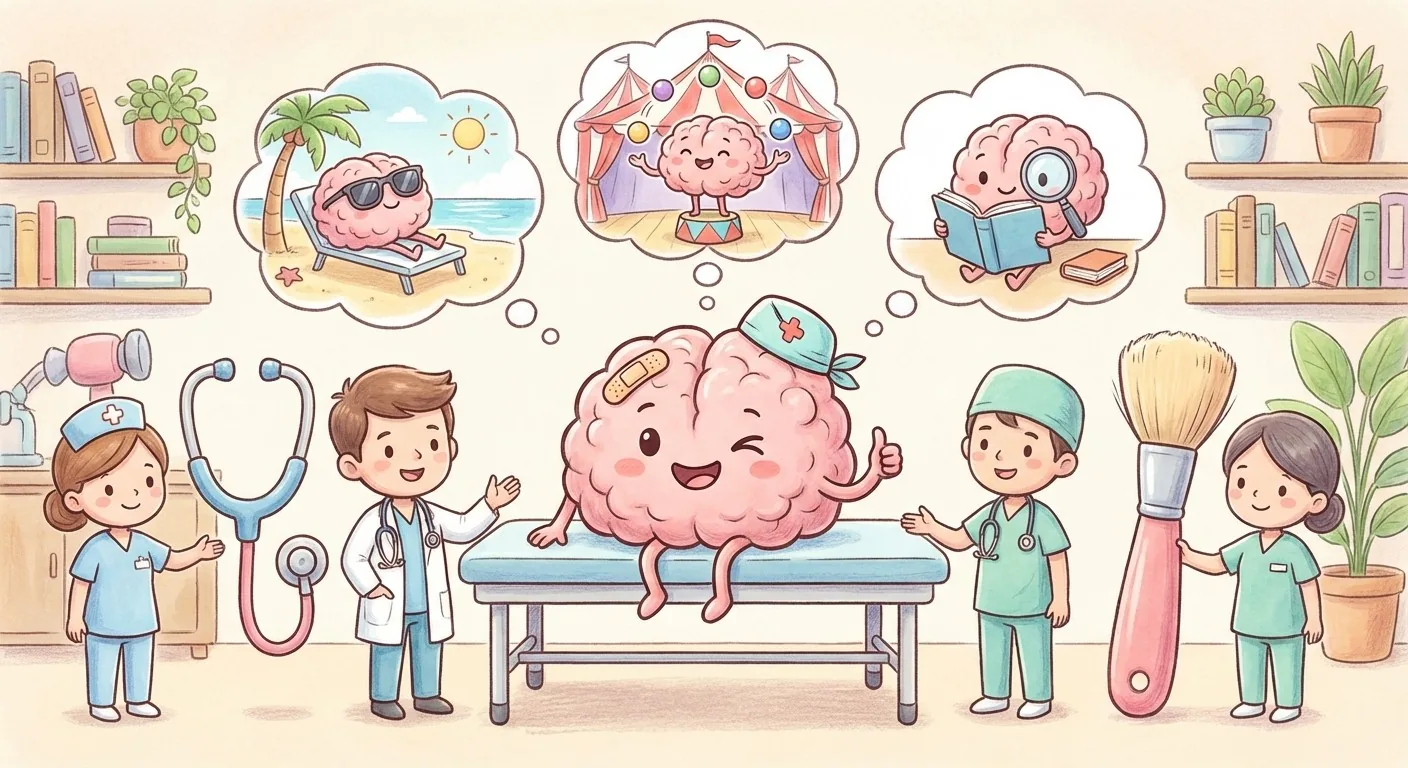
Myth 1: "Brain surgery is very dangerous, it is possible not to make it off the operating table"
Fact: Advances in neuronavigation, intraoperative monitoring, and microsurgical techniques have dramatically increased surgical safety. Of course, every surgery carries risks, but neurosurgery is far beyond the fear of "not making it off the table". For example, mortality in spinal meningioma surgery is generally under 2%.1
Myth 2: "Brain tumour = cancer = death"
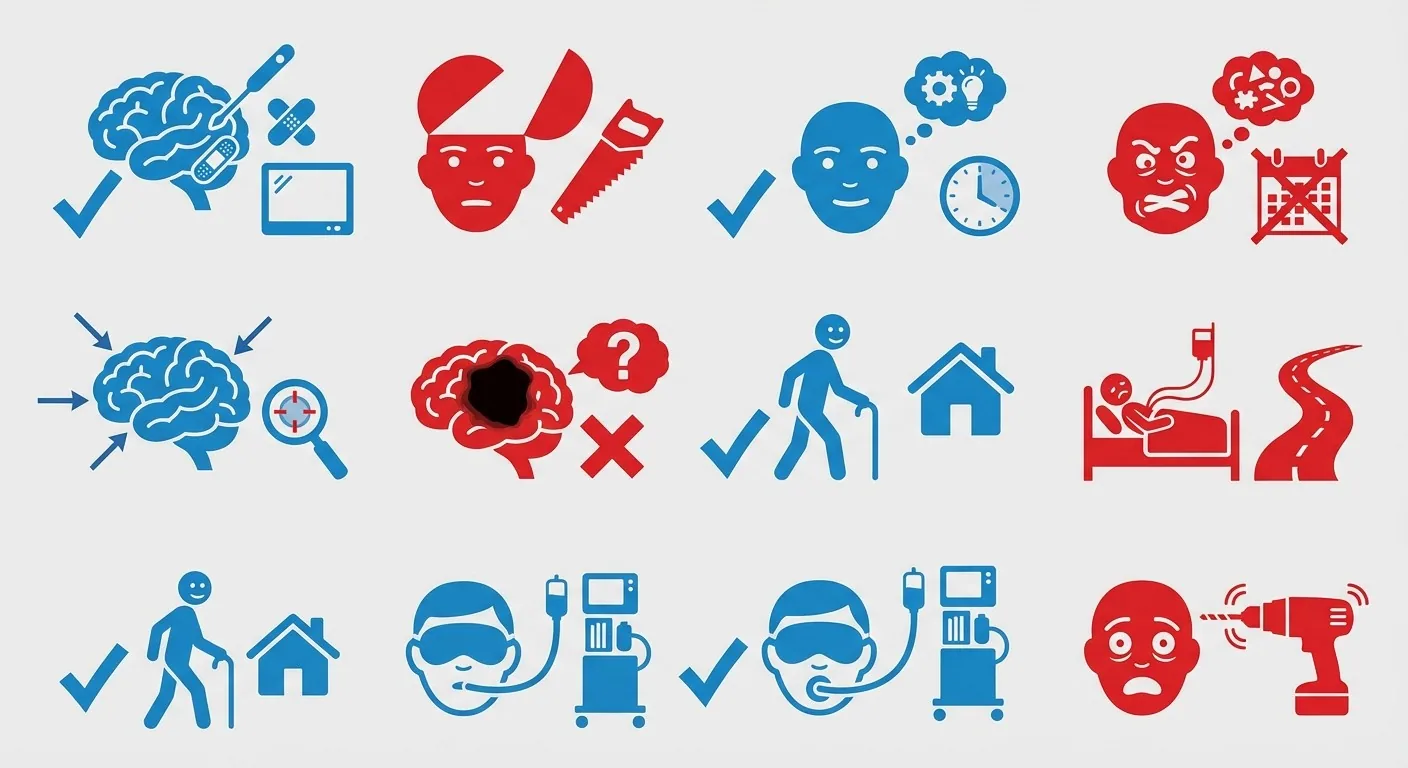
Fact: Meningiomas, schwannomas, and pituitary adenomas can be completely cured with surgery. In malignant brain tumours, treatments like the Stupp protocol and TTFields significantly prolong survival time, while the efficacy of immunotherapy approaches is still being investigated.2,3 A "brain tumour" does not automatically mean a "death sentence".
Myth 3: "Personality changes after brain surgery"
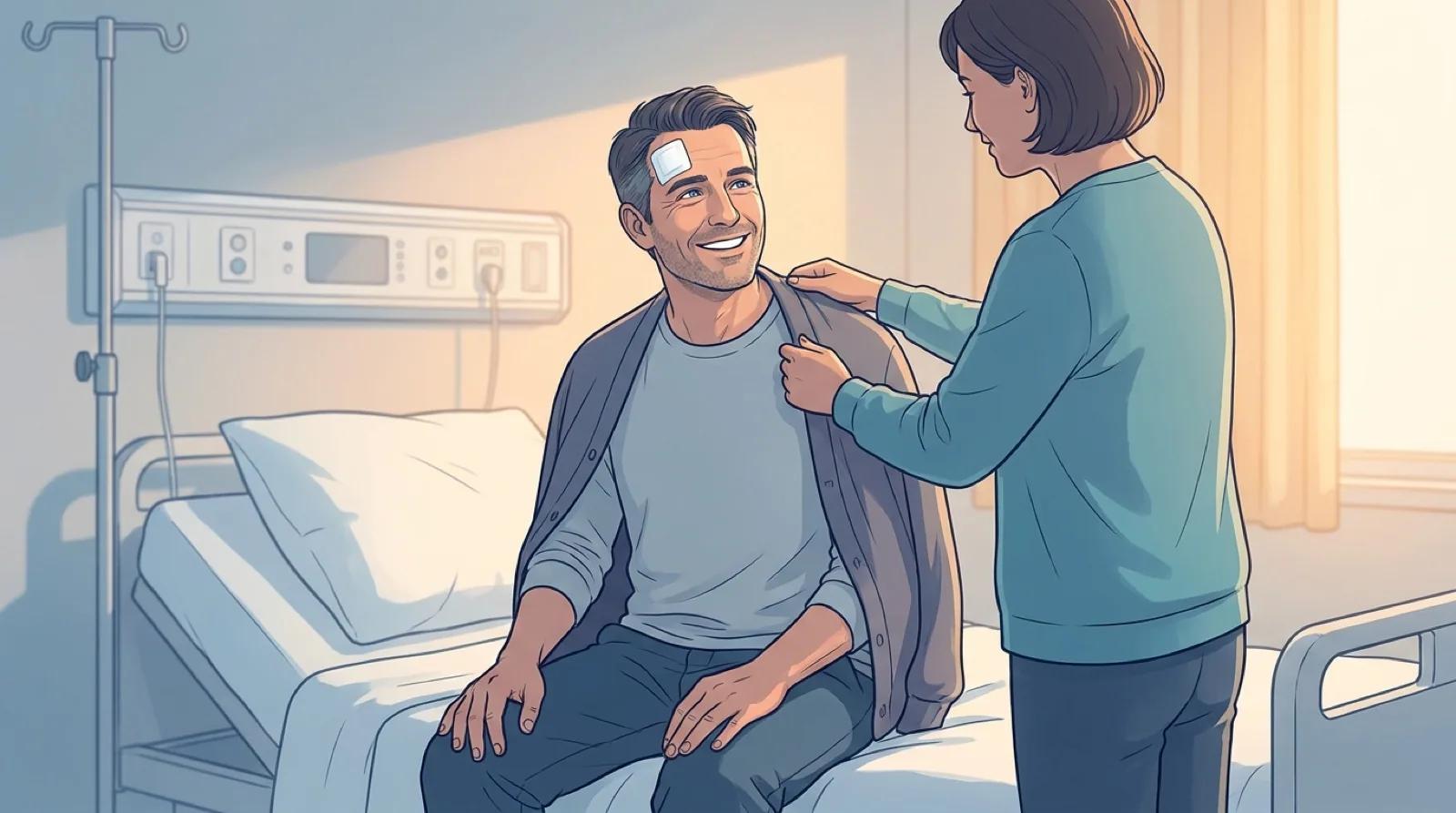
Fact: Even in surgeries involving a large part of the brain, personality is generally preserved. In frontal lobe tumours, pre-existing personality changes before the surgery can improve postoperatively. With the awake craniotomy technique, speech, motor, and cognitive functions are tested and preserved during the surgery.
If we only used 10% of it, damage to the other 90% should cause no problems at all — whereas even a tiny stroke can lead to severe deficits.
Myth 4: "We only use 10% of our brain"
Fact: This is the most common neuroscience myth and it is completely false. Different regions are activated during different tasks, but the entire brain is used within a 24-hour period. If we only used 10% of it, damage to the other 90% should cause no problems at all — whereas even a tiny stroke can lead to severe deficits.
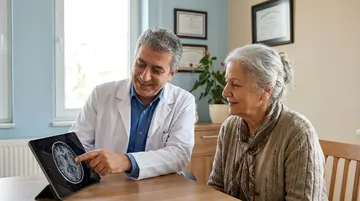
Myth 5: "If something shows up on the MRI, I must definitely have surgery"
Fact: Not every finding detected on an MRI requires surgery. Incidental (random) findings are quite common — unexpected findings are detected in 2-5% of asymptomatic individuals.4 Small, asymptomatic meningiomas or arachnoid cysts generally only require follow-up. The decision is made by evaluating the tumour's type, size, localisation, the patient's symptoms, and overall condition.
→ Next page: S54 — Neurosurgery Myths (6-10)
Kaynaklar
- Jecko V et al. Asian Spine J. 2022. PMID 35051328
- Ballo MT et al. J Neurooncol. 2023. PMID 37493865
- Obrador E et al. Int J Mol Sci. 2024. PMID 38473776
- Skotting MB et al. Ugeskr Laeger. 2024. PMID 38808758
Doç. Dr. Özgür Akşan
Beyin ve Sinir Cerrahisi Uzmanı
Beyin ve Sinir · Sorumlu Yazı İşleri Müdürü ve Editör · Künye