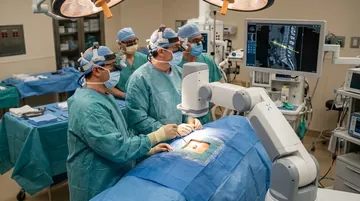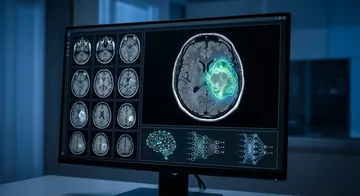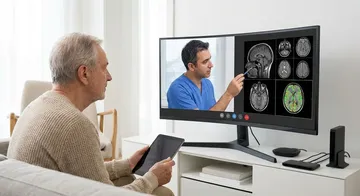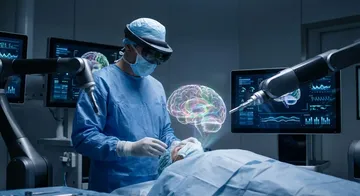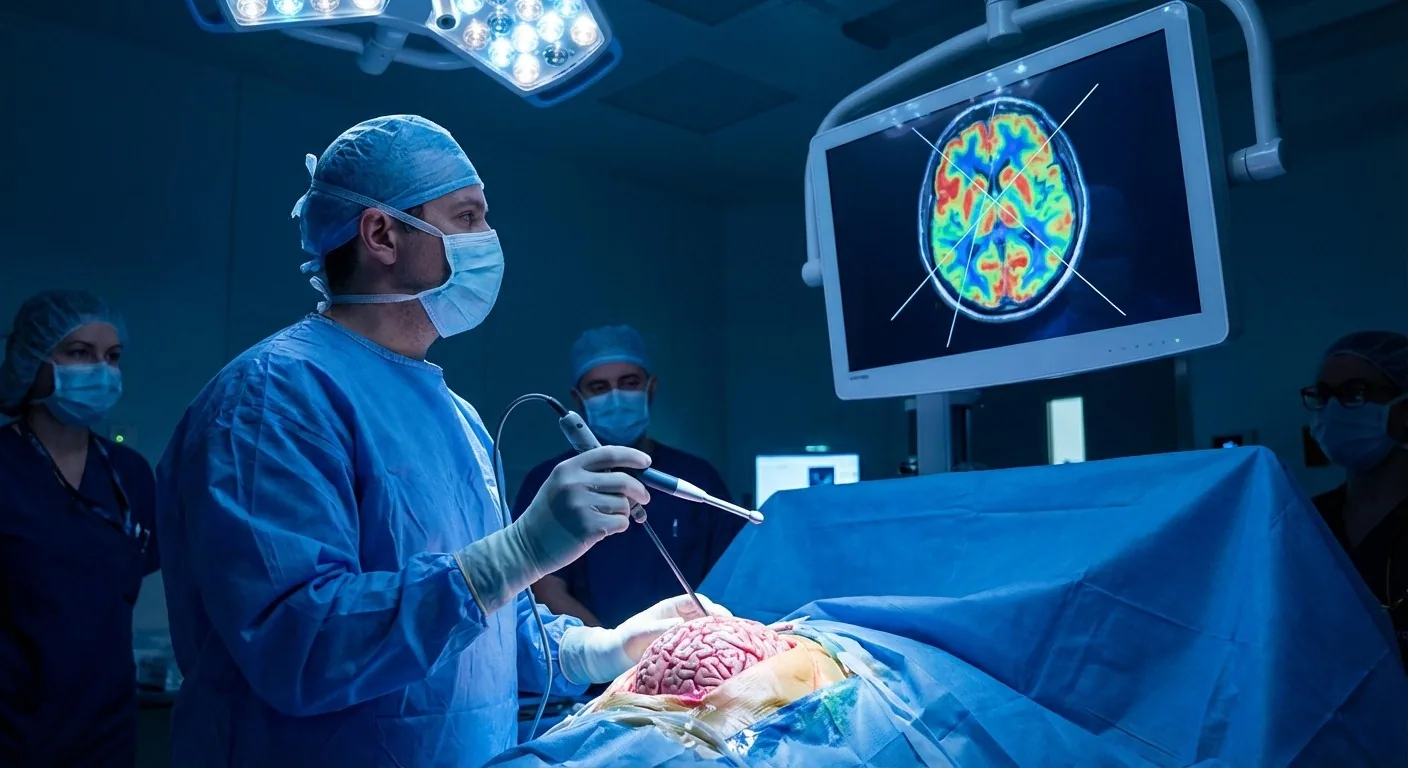
Neuronavigation is a technological system that allows the surgeon to use pre-operative MRI or CT images in real time during surgery. Just as GPS in traffic shows your location on a map, neuronavigation shows the position of the surgeon's instrument in the brain on MRI images.
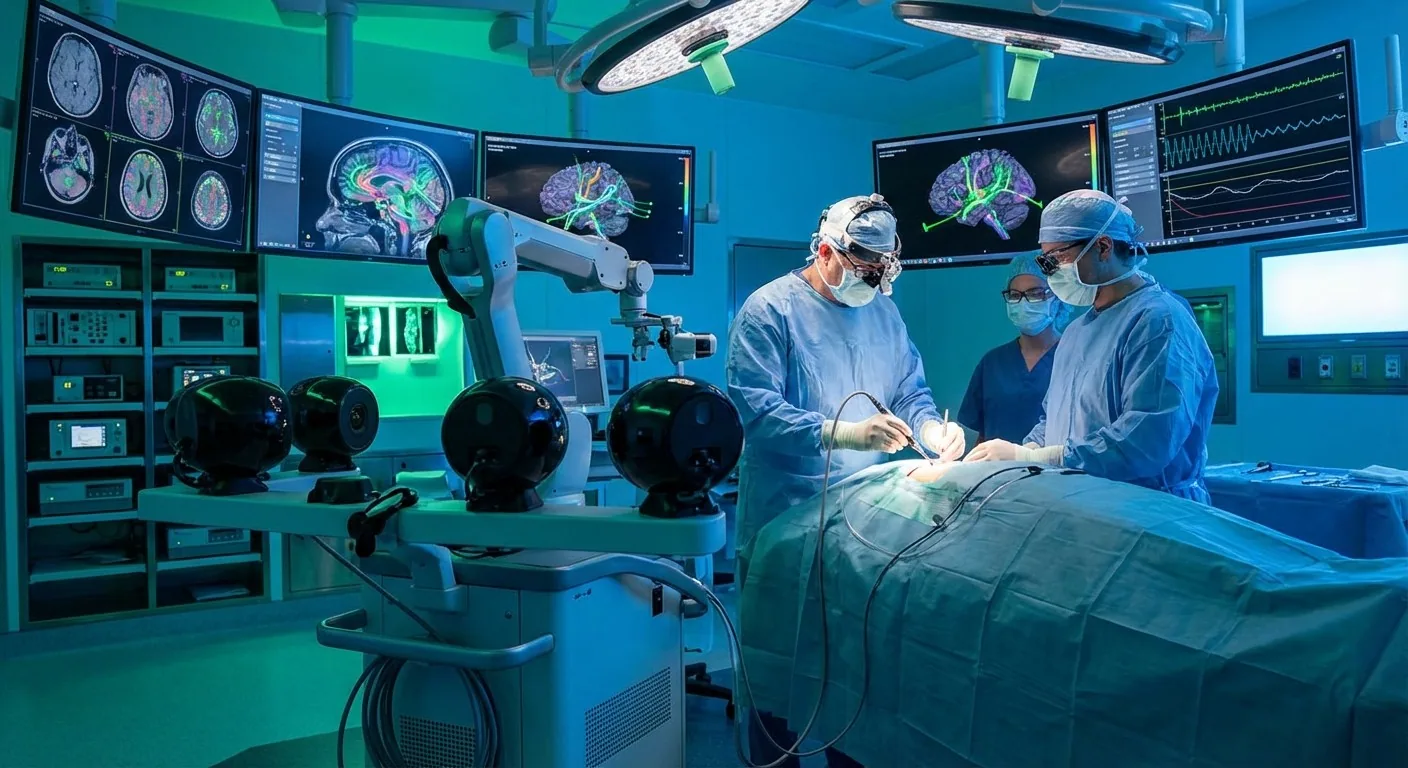
How Does It Work?
Reference points are placed on the patient's head or spine. These points are marked on pre-operative MRI/CT images. The system calculates the 3D position of the instrument via reflective spheres or electromagnetic sensors at the tip of the surgical instruments and displays it on the screen. The accuracy of neuronavigation systems during surgery is around 2.5-2.6 mm on average.1,2
Areas of Use
Brain Tumour Surgery: It identifies the borders of the tumour, eloquent areas (speech, motor cortex), and vascular structures. Real-time imaging methods such as neuronavigation and intraoperative ultrasound play an important role in planning and safe guidance in the surgery of deep-seated brain tumours.3
Biopsy: Precise determination of the target point for stereotactic biopsy. The safest path to the lesion is planned.
The use of navigated robotic systems in spine surgery can increase pedicle screw placement accuracy to rates of 95-96%.4,5 It is especially valuable in deformity surgery and revision cases.
Endoscopic Surgery: It provides safe navigation by showing the paranasal sinus anatomy in pituitary surgery.
The system calculates the 3D position of the instrument via reflective spheres or electromagnetic sensors at the tip of the surgical instruments and displays it on the screen.
Limitations
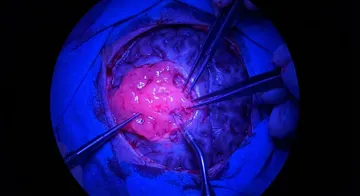
Brain shift (brain displacement): After the dura is opened, brain tissue may shift, and navigation accuracy decreases.6,7 Solution: updating with intraoperative ultrasound or intraoperative MRI.7,8
→ Next page: S63 — Robotic Surgery
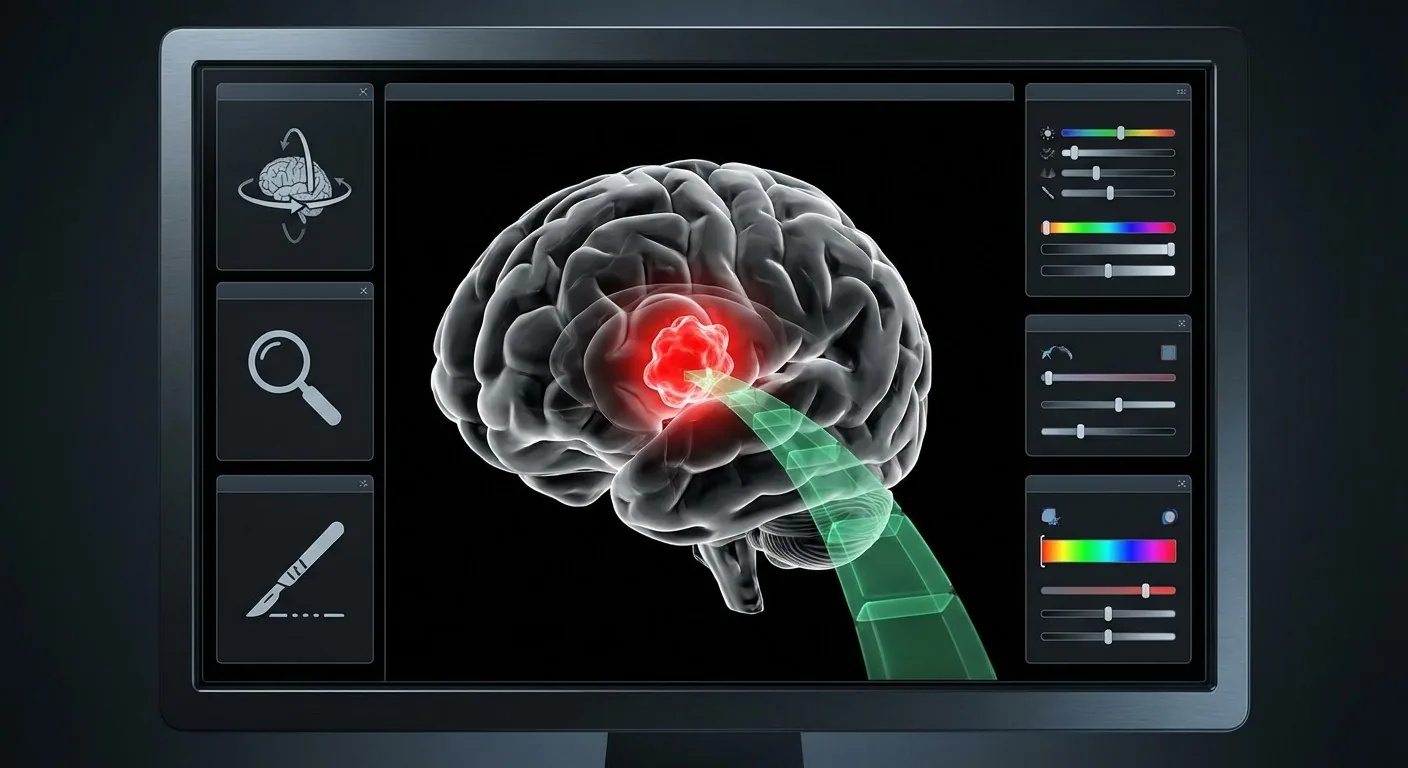
Neuronavigation technology helps to increase surgical safety.
Kaynaklar
- Sefcik RK et al. Interdiscip Neurosurg. 2017. PMID 28451520
- Fick T et al. World Neurosurg. 2021. PMID 33197631
- García Pérez F et al. J Ultrasound. 2024. PMID 38308121
- Gabrovsky N et al. Brain Spine. 2023. PMID 37383441
- Tarawneh AM et al. J Neurosurg Spine. 2021. PMID 34144517
- Motomura K et al. No Shinkei Geka. 2025. PMID 40155343
- Matsumae M et al. Magn Reson Med Sci. 2022. PMID 34880193
- Noh T et al. Neurosurg Clin N Am. 2021. PMID 33223025
- Tanioka D et al. J Clin Med. 2026. PMID 41753192
- Dellaretti M et al. Asian J Neurosurg. 2024. PMID 39205891
Doç. Dr. Özgür Akşan
Beyin ve Sinir Cerrahisi Uzmanı
Beyin ve Sinir · Sorumlu Yazı İşleri Müdürü ve Editör · Künye