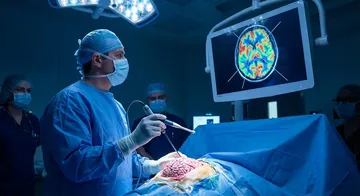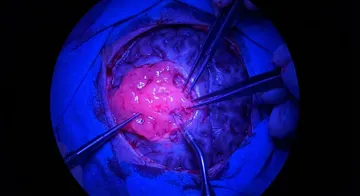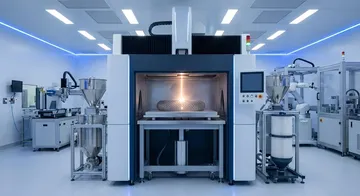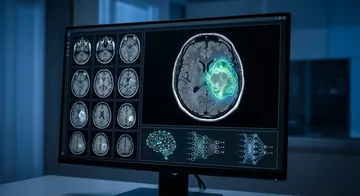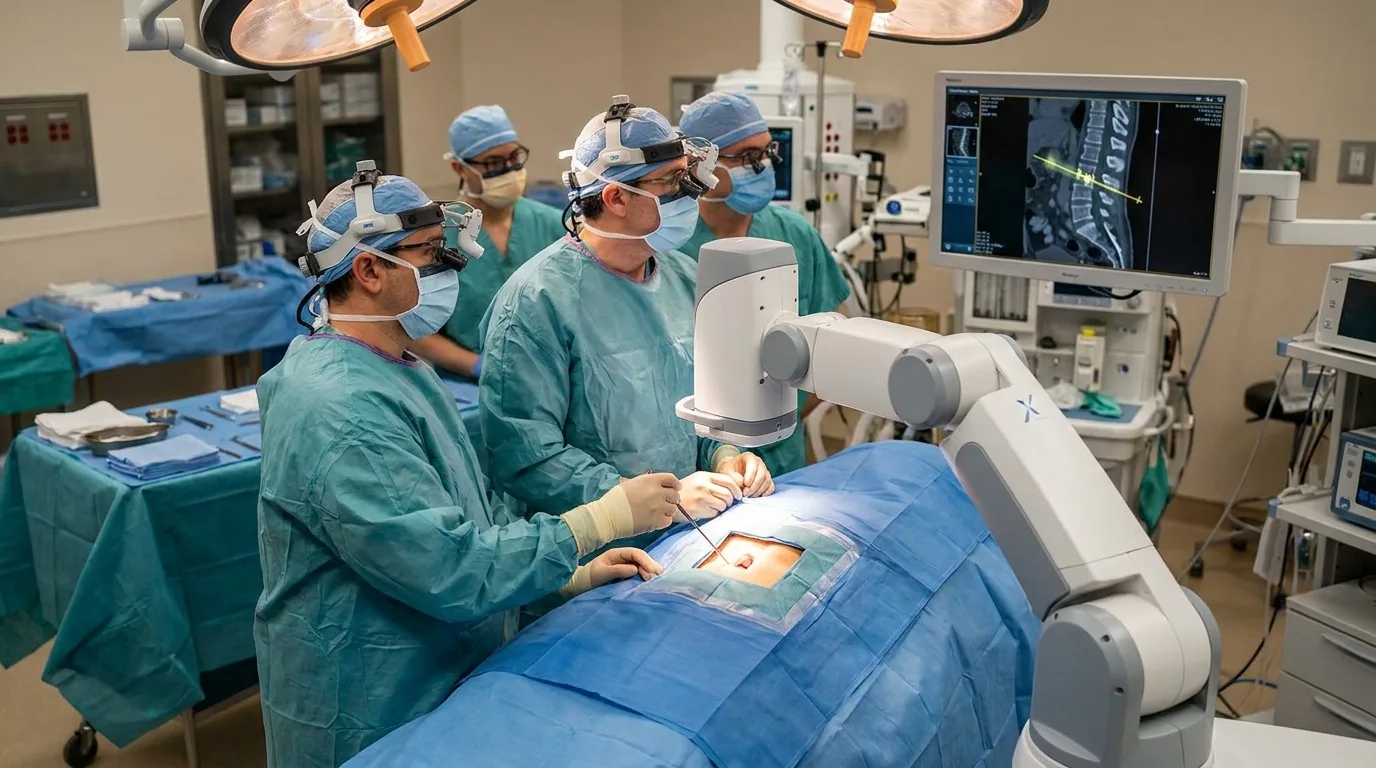
Robotic surgery systems are technologies that make the surgeon's movements more precise, smaller, and more controlled. In neurosurgery, they are used especially in spine surgery and stereotactic applications.
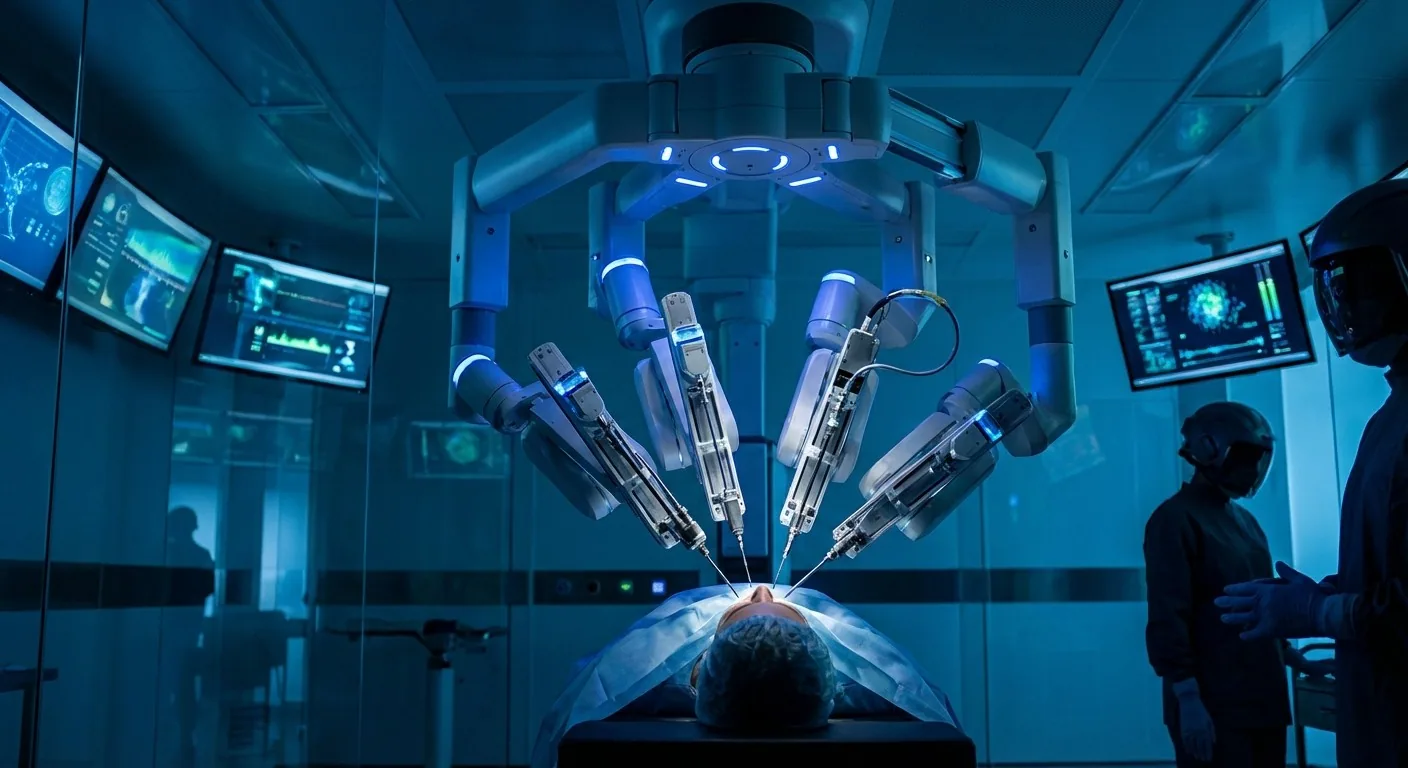
Spine Robots
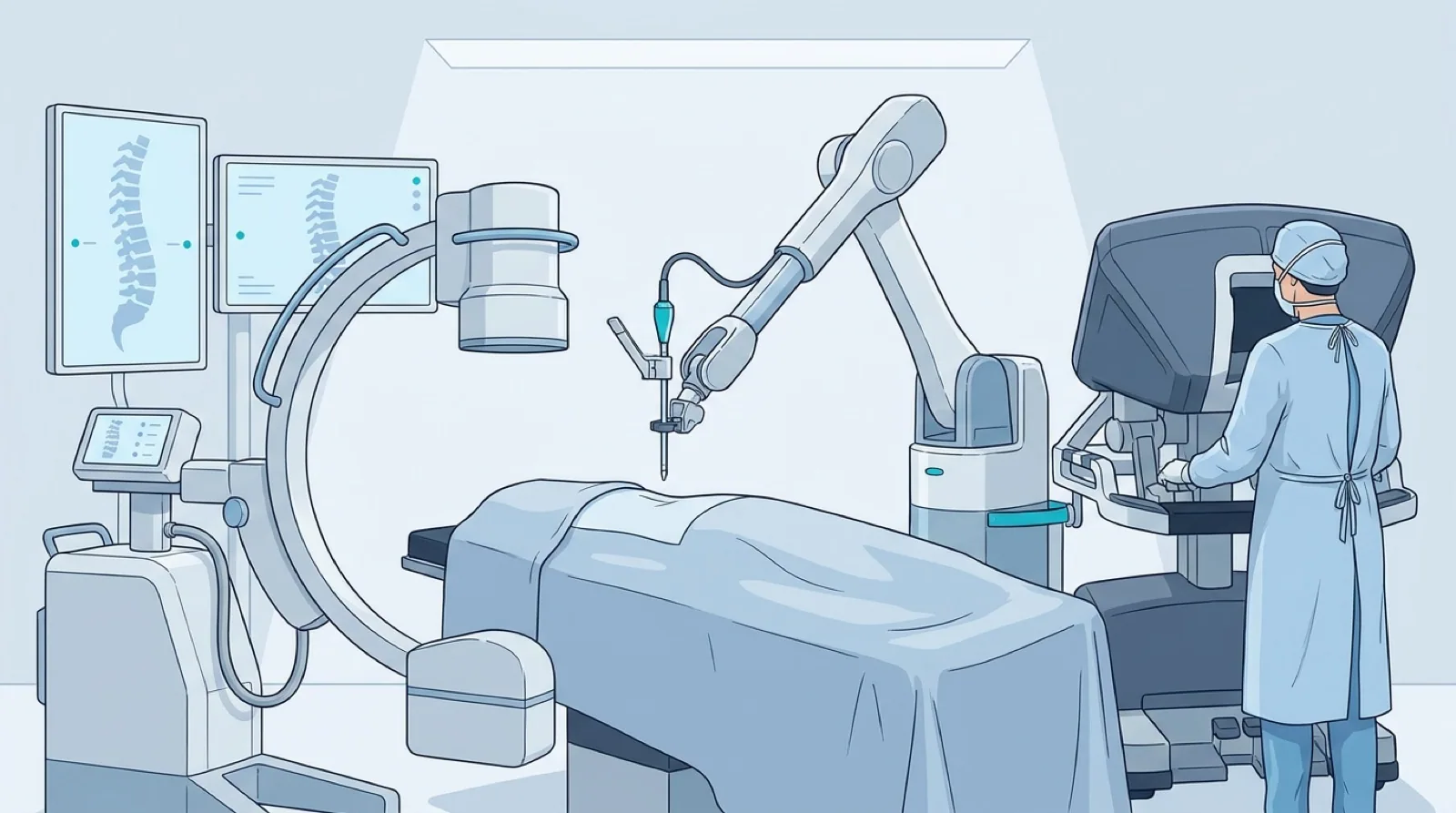
Mazor X / ExcelsiusGPS: A screw placement plan is made on preoperative CT images. The robotic arm positions the guide tube according to the planned trajectory. The surgeon places the screw through this guide. Although the clinically acceptable accuracy rate in screw placement in robotic spine surgery can reach 99%, the perfect accuracy rate is around 94-96%.1,2
ROSA Spine: A robotic platform that works on a similar principle and can also be used in biopsy and DBS (deep brain stimulation) applications.3,4
Advantages
Robotic spine surgery reduces radiation exposure and lowers the need for revision surgery, but it requires a significant learning curve.5,6
ROSA Spine: A robotic platform that works on a similar principle and can also be used in biopsy and DBS (deep brain stimulation) applications.
The Operating Room of the Future
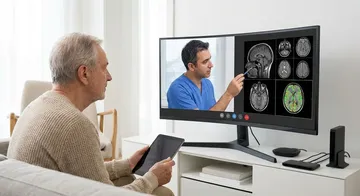
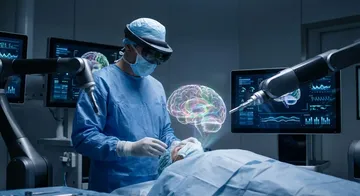
Hybrid operating room concept: intraoperative MRI + navigation + robotics + neuromonitoring all together. 5G-supported remote surgical consultation (telementoring). Artificial intelligence-supported decision support systems. Surgical planning and execution with augmented reality (AR).
Limitations
The cost of robotic systems is high; setup and preparation can prolong the surgery time. There is a significant learning curve for the team to use the system safely.5,6 Since small deviations that may occur in matching the image with the patient (registration) can affect accuracy, the robot operates under the surgeon's supervision at every stage.
→ Next page: S64 — Intraoperative MRI and Fluorescence Surgery
Kaynaklar
- Kanhangad MP et al. Asian Spine J. 2024. PMID 39434223
- Ogolo DE et al. J Robot Surg. 2025. PMID 40875149
- Zhao J et al. J Robot Surg. 2025. PMID 40991094
- Neudorfer C et al. Stereotact Funct Neurosurg. 2018. PMID 30481770
- Antonacci CL et al. J Spine Surg. 2024. PMID 38974496
- Davidar AD et al. Neurosurg Clin N Am. 2024. PMID 38423742
Doç. Dr. Özgür Akşan
Beyin ve Sinir Cerrahisi Uzmanı
Beyin ve Sinir · Sorumlu Yazı İşleri Müdürü ve Editör · Künye