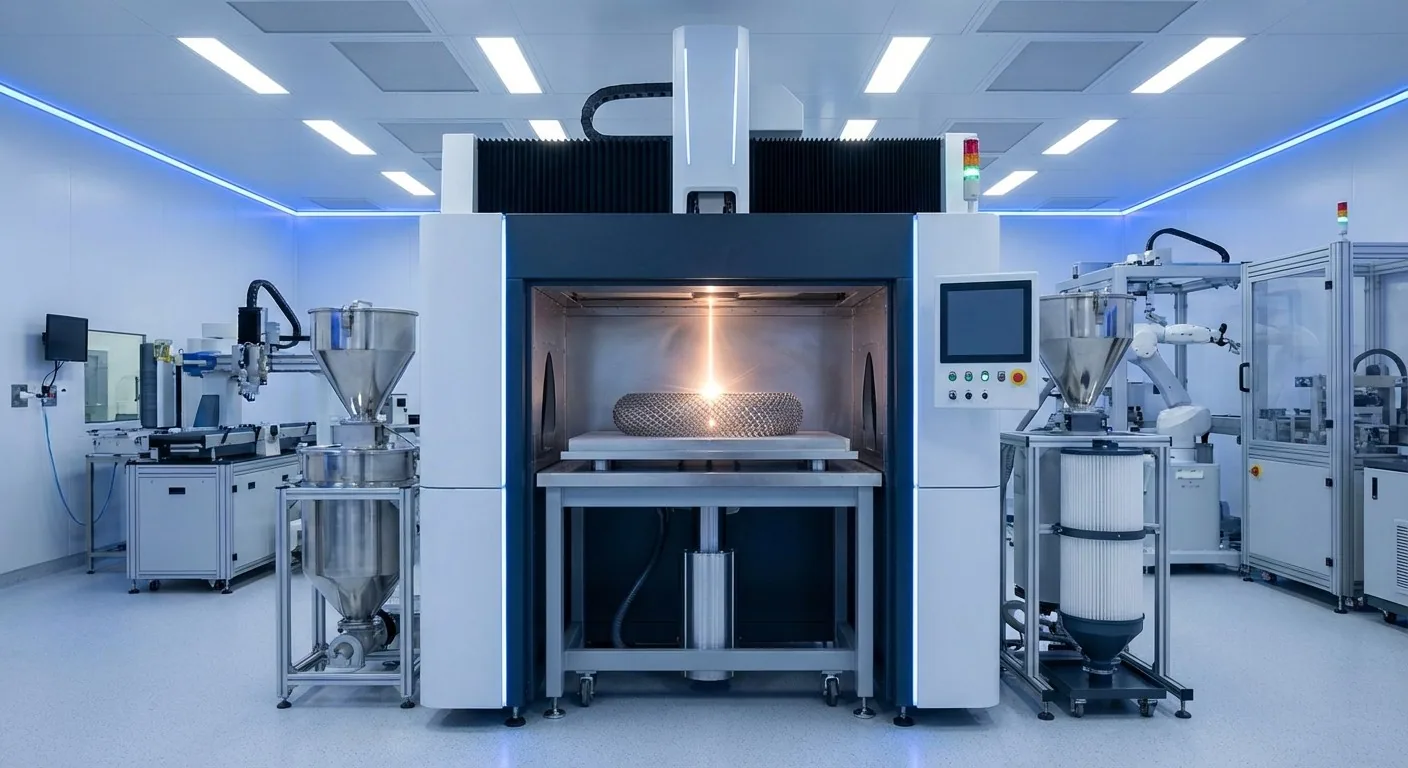
3D printing (additive manufacturing) technology makes it possible to produce exact anatomical models from the patient's CT or MRI scans. These models are used in surgical planning, education, and the production of custom-made implants.
Preoperative Planning
The patient's tumour, vascular, and bone anatomy is printed with a 3D printer. The surgeon examines this model before the surgery to determine the approach strategy.
Custom-Made Implants
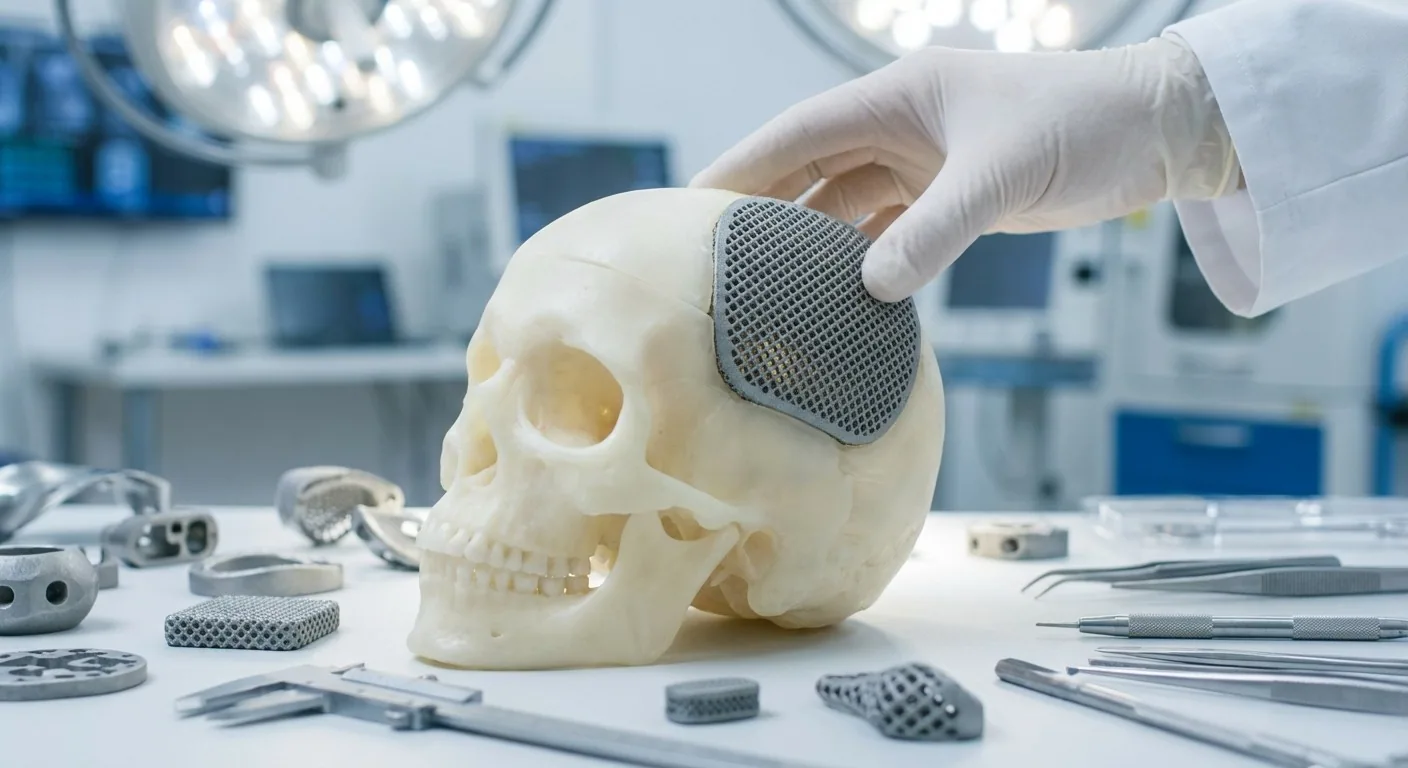
Cranioplasty Plates: For skull defects, an exact titanium or PEEK (polyether ether ketone) plate is produced from the patient's CT data. It provides excellent cosmetic results and anatomical fit.1,2
Spinal Cages: Interbody cages specifically designed for the patient's vertebral anatomy. They are especially valuable for reconstruction after tumour resection.3,4
Surgical Guides: Screw placement guides, osteotomy templates — auxiliary tools that increase the surgeon's precision.5,6
3D printing (additive manufacturing) technology makes it possible to produce exact anatomical models from the patient's CT or MRI scans.
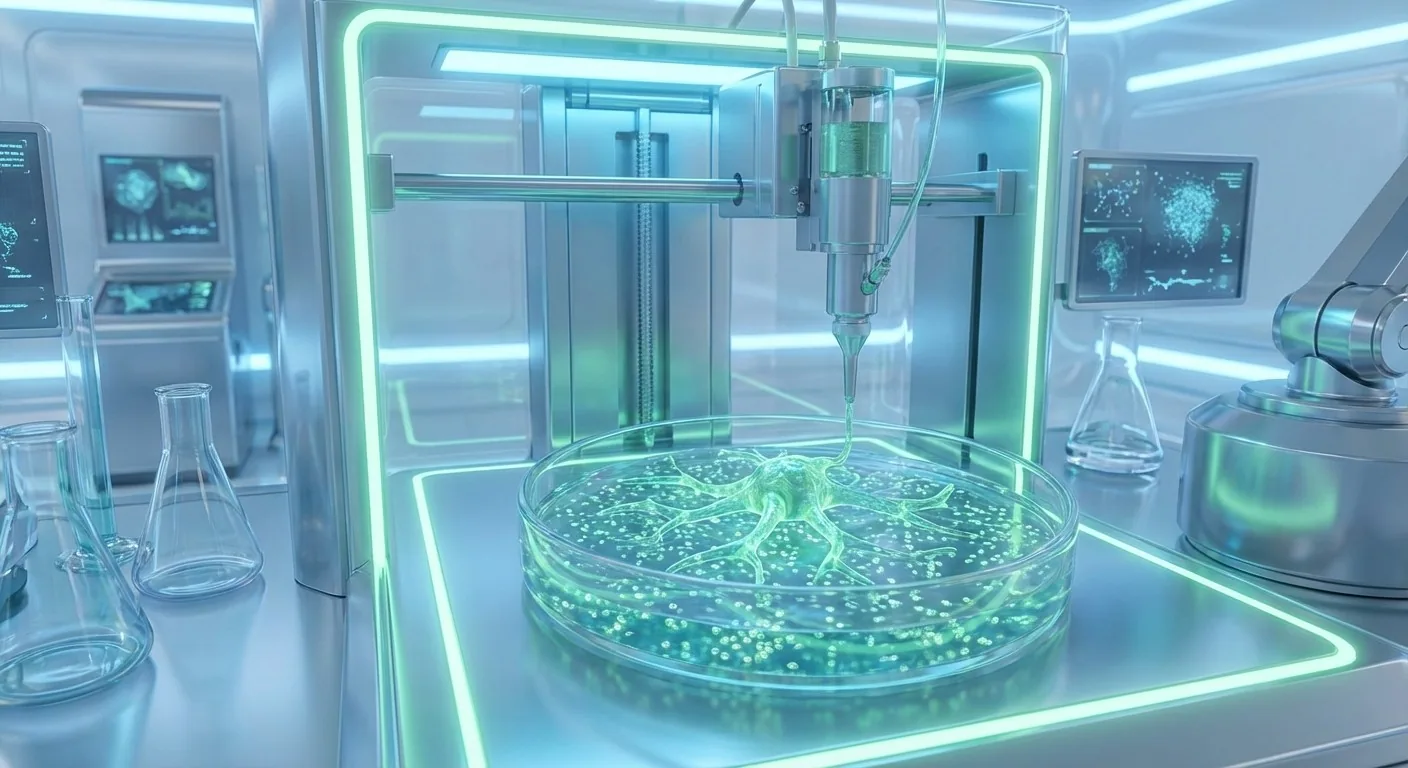
Bioprinting — The Future
Research on tissue and organ printing using bioinks containing live cells is ongoing. Bioprinting studies for nerve grafts, bone tissue, and vascular structures are promising. Although it has not yet transitioned to clinical application, it may form the foundation of regenerative neurosurgery in the future.
→ Next page: S66 — Neuroimaging with AI
Kaynaklar
- Nolden EL et al. J Clin Med. 2025. PMID 41464559
- Dash C et al. Oral Maxillofac Surg. 2022. PMID 34159502
- Wang Q et al. J Orthop Surg Res. 2026. PMID 42050704
- Dong M et al. Front Oncol. 2024. PMID 38380368
- Fernandes RJR et al. World Neurosurg. 2022. PMID 35259502
- Farshad M et al. N Am Spine Soc J. 2022. PMID 35602175

Doç. Dr. Özgür Akşan
Beyin ve Sinir Cerrahisi Uzmanı
Beyin ve Sinir · Sorumlu Yazı İşleri Müdürü ve Editör · Künye