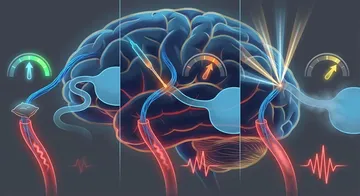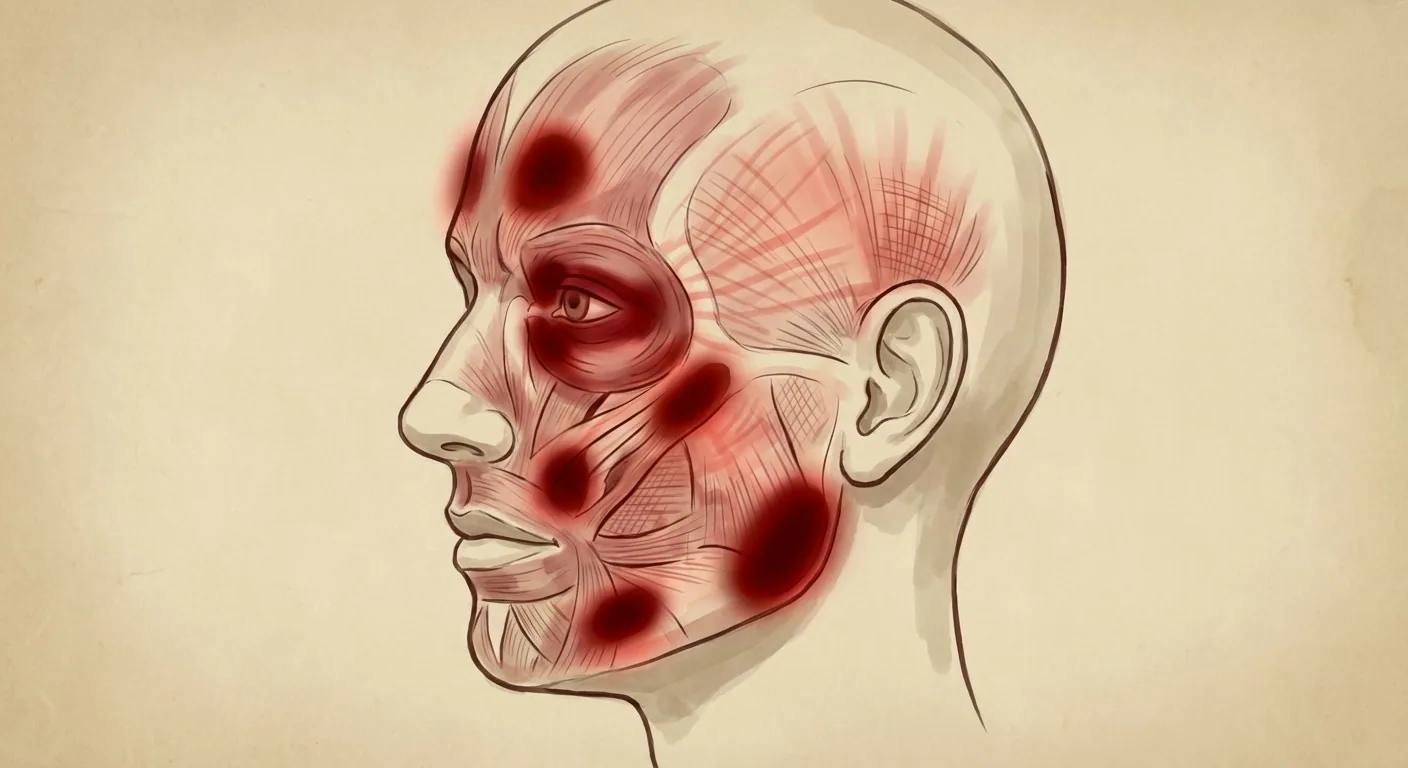
Trigeminal neuralgia (TN) is a condition that develops due to the irritation of the 5th cranial nerve (trigeminal nerve), characterised by sudden, severe, electric shock-like pain attacks on one half of the face. It is described as "the most severe pain in medicine."
Epidemiology
It is more common over the age of 50, and seen slightly more often in women. The right side is affected more frequently than the left side.1,2
Pathophysiology
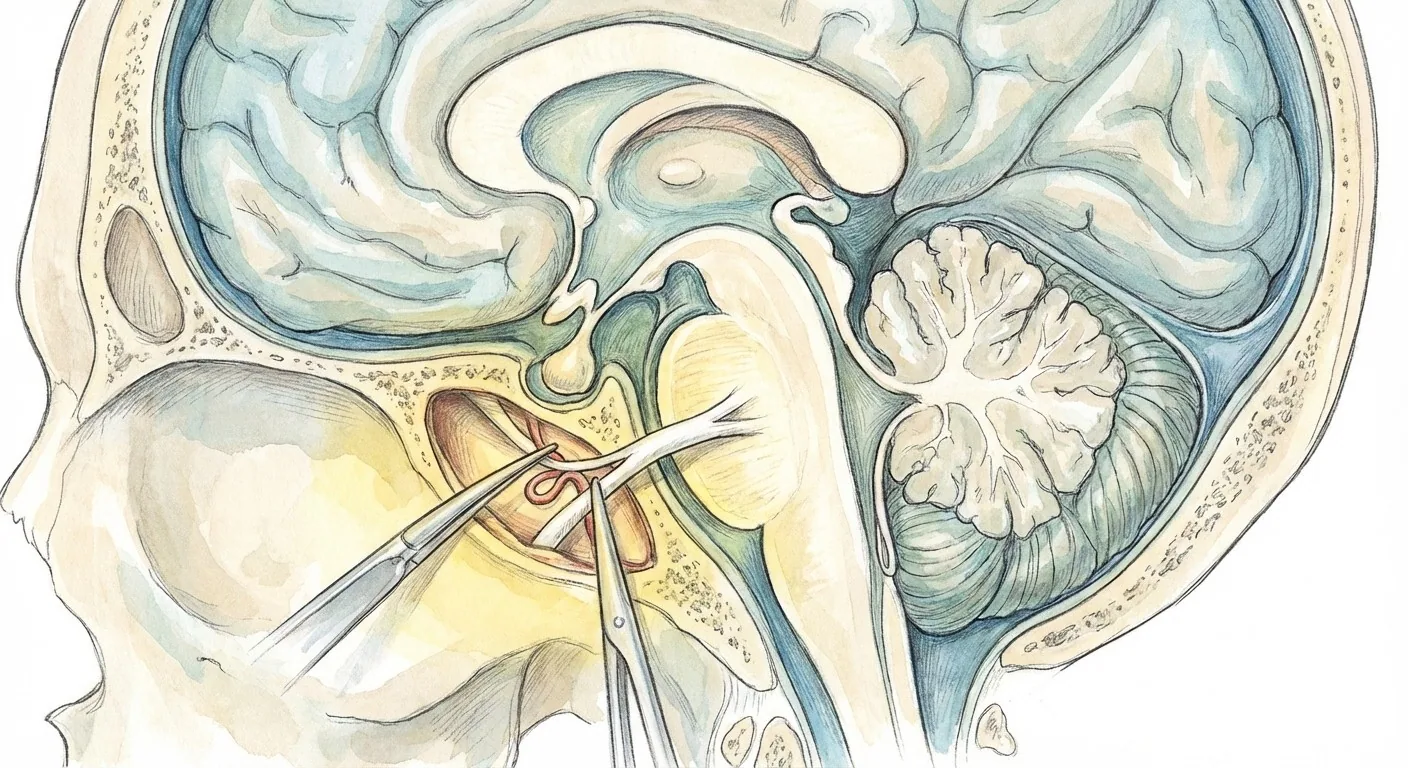
An important cause (in approximately half of the patients): the trigeminal nerve root undergoes neurovascular compression at the brainstem exit point (root entry zone), leading to demyelination.3 As a result of this neurovascular conflict, the nerve becomes hypersensitive.
Other causes: multiple sclerosis (2-4%, bilateral TN should be suspected especially in young patients), cerebellopontine angle tumours, arteriovenous malformations.4,5
Symptoms
There is usually a pain-free period between attacks.
Triggers: Touching the face, eating, brushing teeth, talking, cold air, shaving. Even a light touch can trigger an attack.
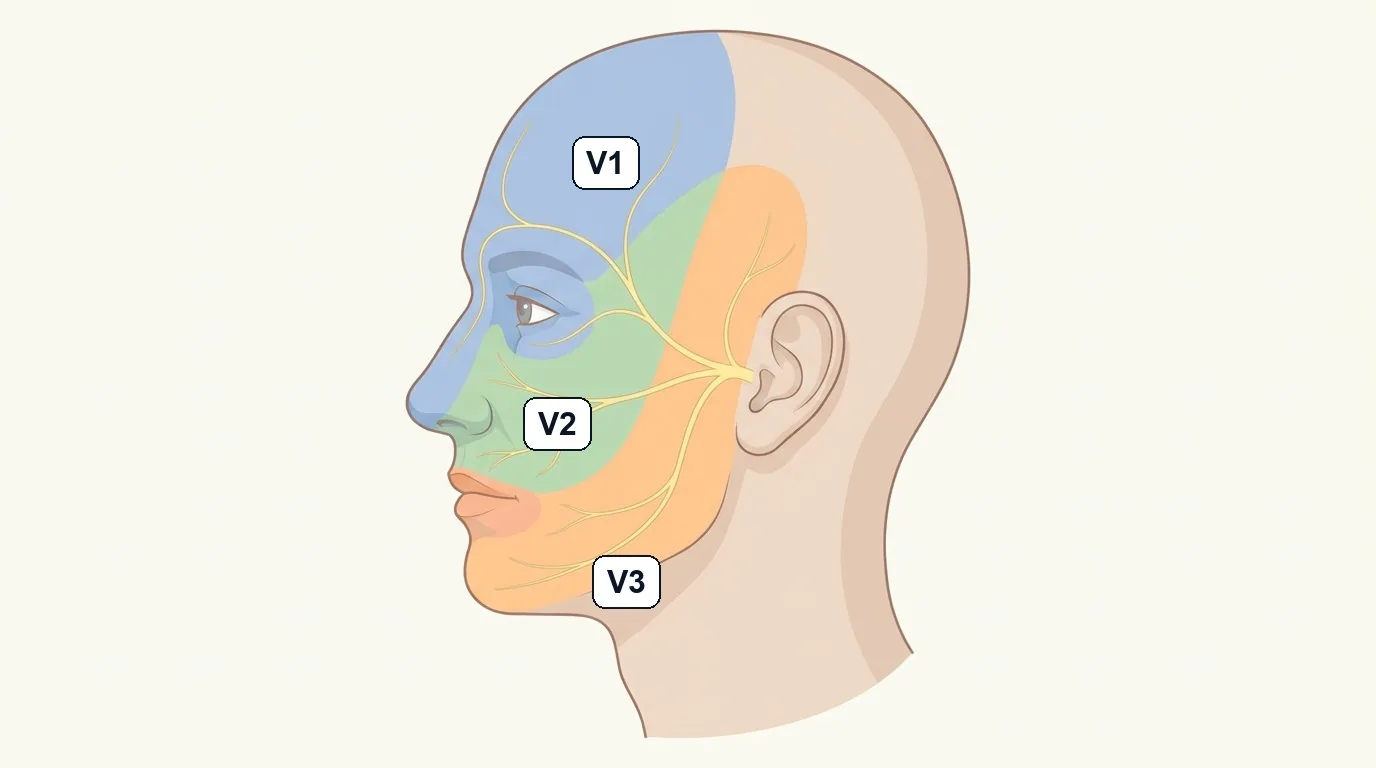
Distribution: The V2 (maxillary) and V3 (mandibular) branches are most commonly affected. The involvement of both branches together is frequent (V2 and V3).6
Diagnosis
Diagnosis is largely clinical — the patient's description of the pain is pathognomonic. Neurovascular conflict can be demonstrated with MRI (CISS or FIESTA sequences). White matter lesions are investigated to rule out MS plaques.
→ Next page: S42 — Trigeminal Neuralgia Treatment
Kaynaklar
- Zhang F et al. Eur Radiol. 2022. PMID 35320409
- Prasad H et al. Neurol India. 2026. PMID 42700130
- Maarbjerg S et al. Cephalalgia. 2017. PMID 28076964
- Laakso SM et al. Acta Neurol Scand. 2020. PMID 32187387
- Houshi S et al. Mult Scler Relat Disord. 2022. PMID 34986455
- Kulkarni A. J Neurosci Rural Pract. 2022. PMID 35694065
- Cruccu G et al. Handb Clin Neurol. 2010. PMID 20816462
- Cruccu G et al. Eur J Neurol. 2008. PMID 18721143
Doç. Dr. Özgür Akşan
Beyin ve Sinir Cerrahisi Uzmanı
Beyin ve Sinir · Sorumlu Yazı İşleri Müdürü ve Editör · Künye