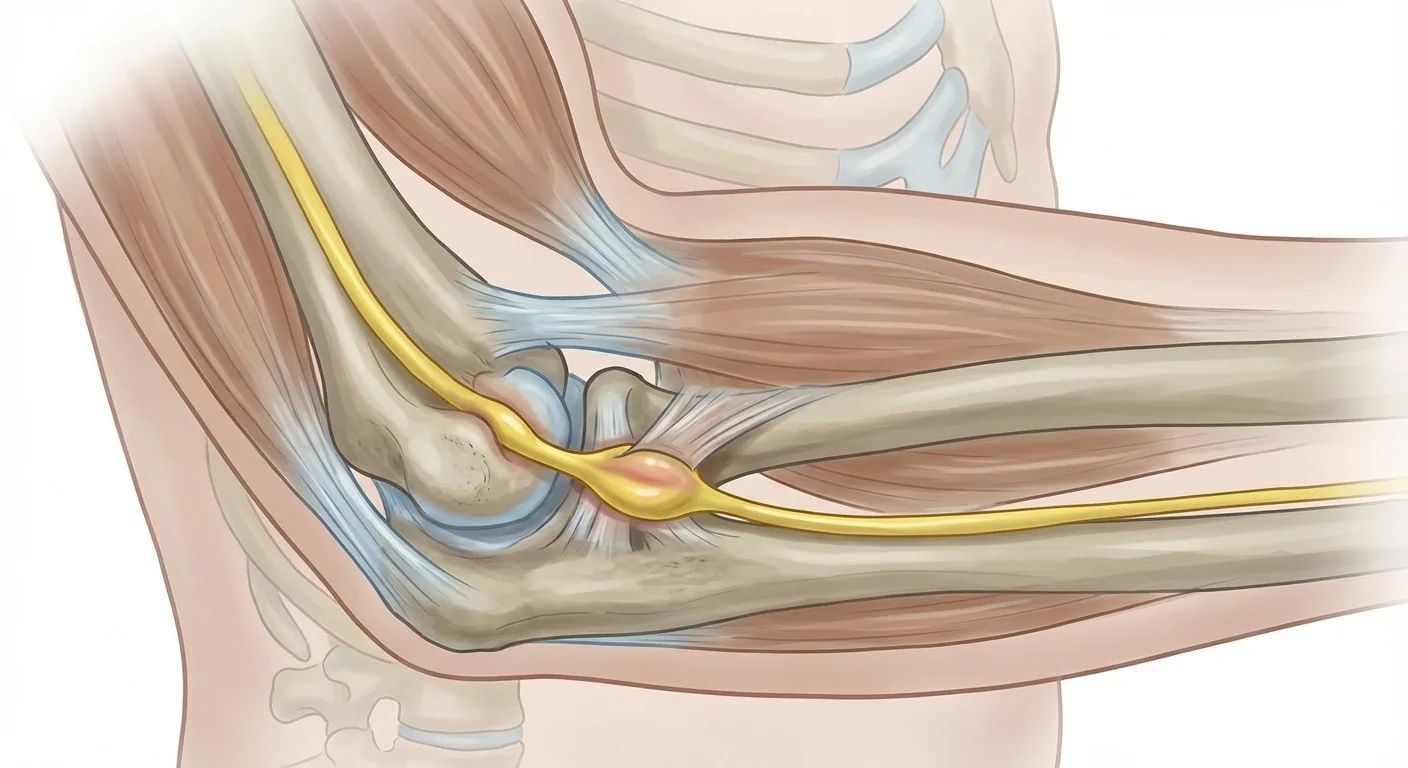
Cubital tunnel syndrome is the second most common entrapment neuropathy after carpal tunnel syndrome, developing due to the compression of the ulnar nerve in the elbow region (cubital tunnel).1,2 The annual incidence is 25 per 100,000 people.3
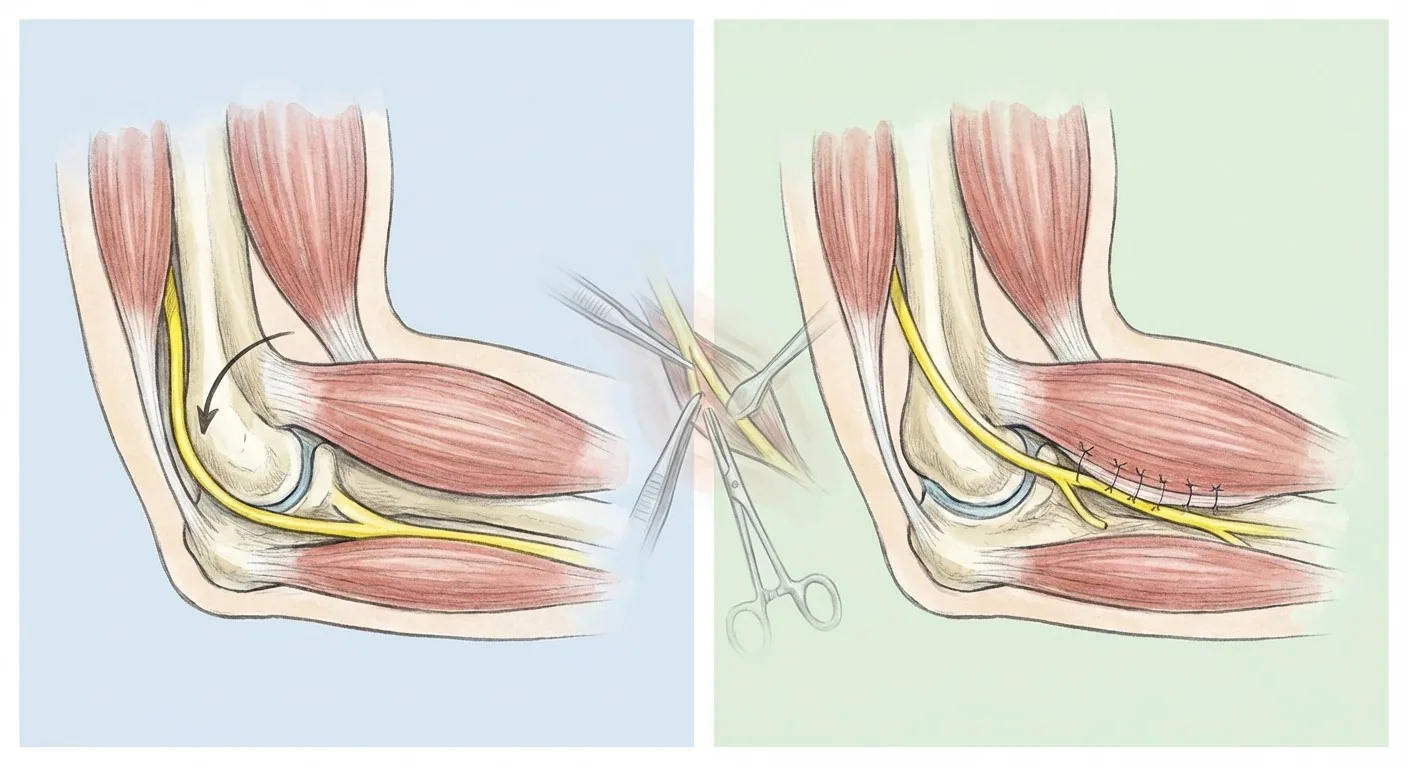
Anatomy
The ulnar nerve passes through the cubital tunnel behind the medial epicondyle on the inner side of the elbow. Because this area is quite superficial, it is vulnerable to external pressure. This is exactly the place known as the "funny bone" — the electric shock sensation you feel when you bump your elbow is ulnar nerve irritation.
Symptoms
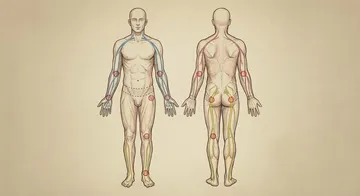
Numbness and Tingling: In the ulnar half of the ring finger and the little finger. It increases especially when keeping the elbow in a bent position (talking on the phone, sleeping).
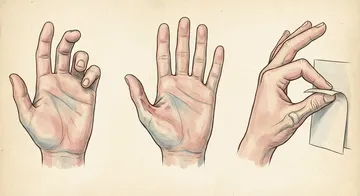
Weakness: Decrease in fine motor skills — turning a key, opening a jar, or holding a bottle cap becomes difficult. In advanced stages, a claw hand deformity develops.
Pain: Pain on the inner side of the elbow, which may radiate to the forearm. Leaning directly on the elbow provokes the pain.
Physical Examination: Tinel's test (numbness upon tapping behind the elbow), elbow flexion test (holding the elbow bent for 60 seconds), Froment's sign (paper test — compensation with thumb flexion).
Risk Factors
Working with prolonged elbow flexion (computer use), the habit of leaning on the elbow, a history of elbow fracture or dislocation, diabetes, obesity, and rheumatoid arthritis.
Diagnosis
Physical Examination: Tinel's test (numbness upon tapping behind the elbow), elbow flexion test (holding the elbow bent for 60 seconds), Froment's sign (paper test — compensation with thumb flexion).
EMG/Nerve Conduction Study: Confirms the diagnosis and determines the severity. Slowing of the ulnar nerve conduction velocity in the elbow segment.
Ultrasound: Shows the thickening of the ulnar nerve in the cubital tunnel and its possible subluxation. Dynamic evaluation is possible.
→ Next page: S44 — Ulnar Nerve Transposition

Kaynaklar
- Osei DA et al. Neurosurgery. 2017. PMID 28362959
- Sprangers PN et al. BMC Musculoskelet Disord. 2023. PMID 36810082
- Law TY et al. Hand (N Y). 2017. PMID 28644930
- Shah CM et al. J Hand Surg Am. 2013. PMID 23647638

Doç. Dr. Özgür Akşan
Beyin ve Sinir Cerrahisi Uzmanı
Beyin ve Sinir · Sorumlu Yazı İşleri Müdürü ve Editör · Künye