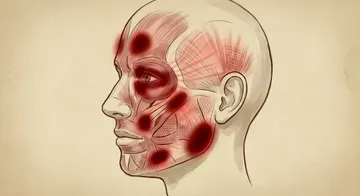
Carbamazepine is one of the first-choice drugs in trigeminal neuralgia.1,2 The starting dose is 200 mg/day, increased gradually. Side effects: drowsiness, dizziness, elevated liver enzymes, leukopenia.
Oxcarbazepine and carbamazepine are first-line treatments in trigeminal neuralgia and have similar efficacy, but both can cause side effects that may limit treatment.2,3
Gabapentin, pregabalin, baclofen: Used as second-line treatments or in combination.
Over time, drug efficacy may decrease (development of tolerance) — in this case, surgical options are considered.
Microvascular Decompression (MVD)
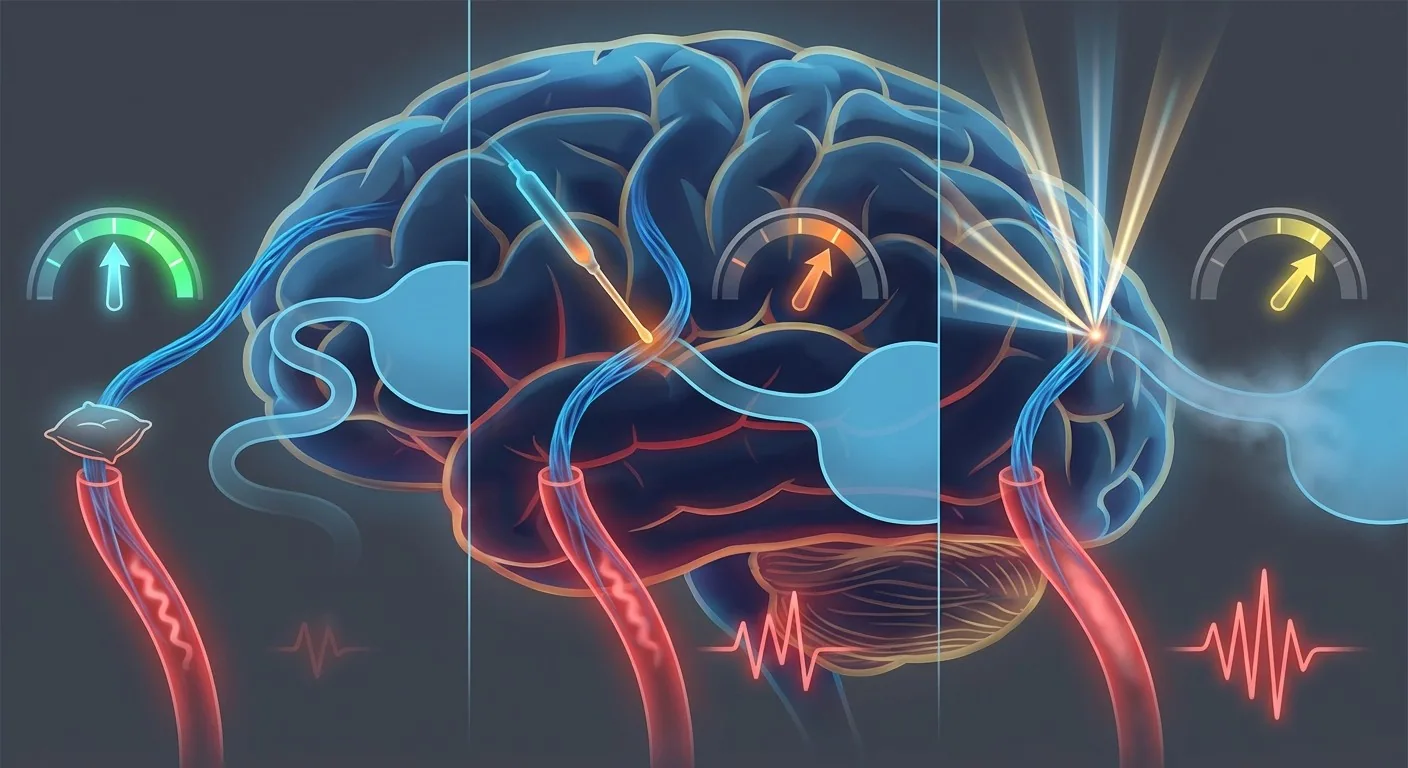
It is the surgical treatment that provides the most effective and longest-lasting results. The trigeminal nerve root is visualised via a retrosigmoid craniotomy, the compressing blood vessel is moved away from the nerve, and a Teflon sponge is placed in between.
The initial success rate of microvascular decompression (MVD) surgery is over 90%, and a success rate of around 93% is reported in follow-ups of up to 5 years.4,5 Advantage: It does not leave facial numbness (the nerve is not touched).
Percutaneous Methods
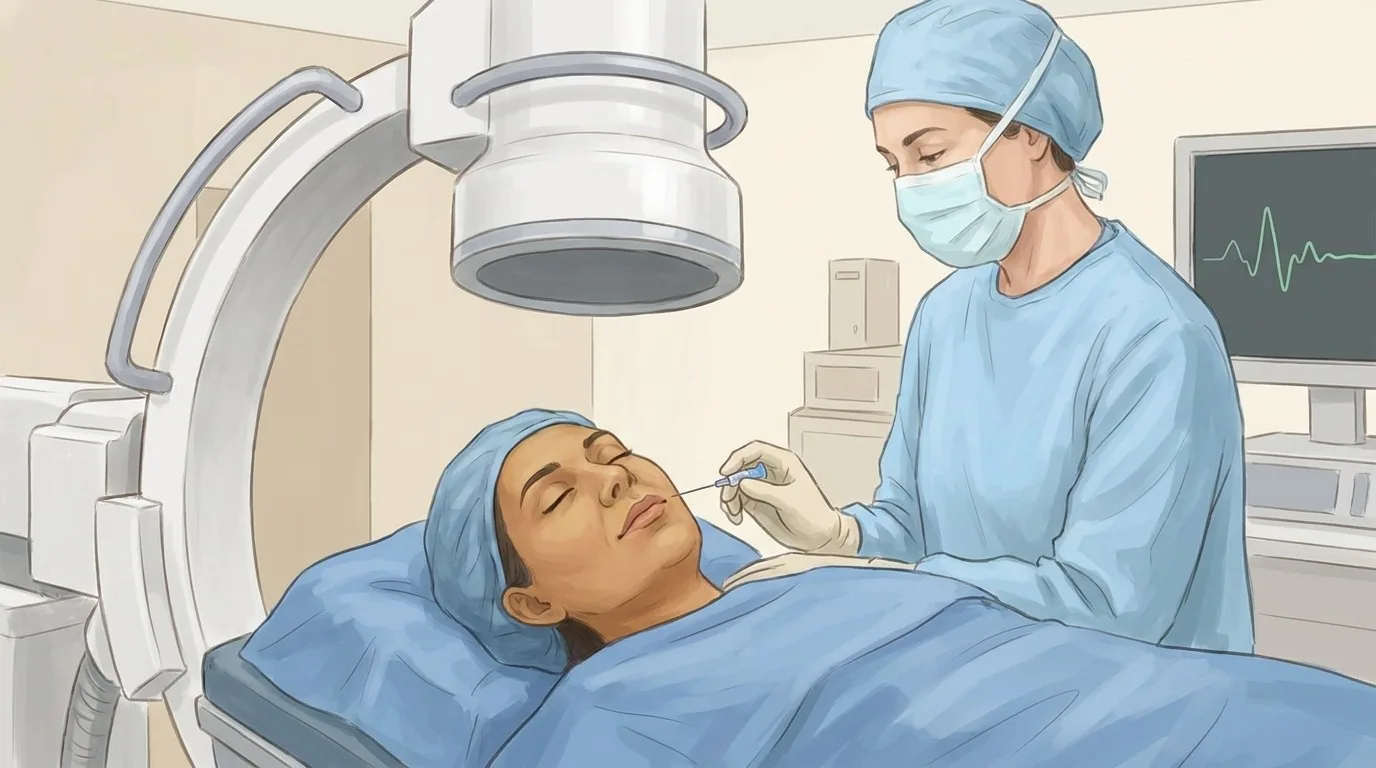
Radiofrequency Thermocoagulation (RFT): Meckel's cave is reached with a needle, and controlled heat is applied to the nerve ganglion. The success rate of radiofrequency thermocoagulation (RFT) is high, but the risk of facial numbness and the recurrence rate are also high.6,7
Glycerol Injection: Chemical lesioning via glycerol injection around the ganglion. The least invasive percutaneous method.
Disadvantage: facial numbness — seen to some degree in most patients, significant numbness is around 50%; the recurrence rate is higher.
Gamma Knife Radiosurgery
High-dose radiation (80-85 Gy) is focused on the nerve root using a stereotactic frame. It is a non-surgical method. Ideal for patients with advanced age or poor general condition.
Treatment Algorithm
Medical treatment → insufficient or intolerable → young/healthy patient: MVD → advanced age/comorbidity: percutaneous methods or Gamma Knife.8
→ Next page: S43 — Cubital Tunnel Syndrome
Significant facial numbness occurs at a rate of approximately 50% in radiofrequency treatment.
Kaynaklar
- Snel BJ et al. Pain Pract. 2025. PMID 40384548
- Rana MH et al. Biomedicines. 2023. PMID 37892981
- Di Stefano G et al. Expert Rev Neurother. 2017. PMID 28829200
- Ahmadi R et al. Dtsch Arztebl Int. 2024. PMID 39475707
- Park CK et al. J Korean Neurosurg Soc. 2022. PMID 35430788
- Liu G et al. Front Neurol. 2018. PMID 30713521
- Li Y et al. J Pain Res. 2019. PMID 31303785
- Toda K. Oral Surg Oral Med Oral Pathol Oral Radiol Endod. 2008. PMID 18657454

Doç. Dr. Özgür Akşan
Beyin ve Sinir Cerrahisi Uzmanı
Beyin ve Sinir · Sorumlu Yazı İşleri Müdürü ve Editör · Künye