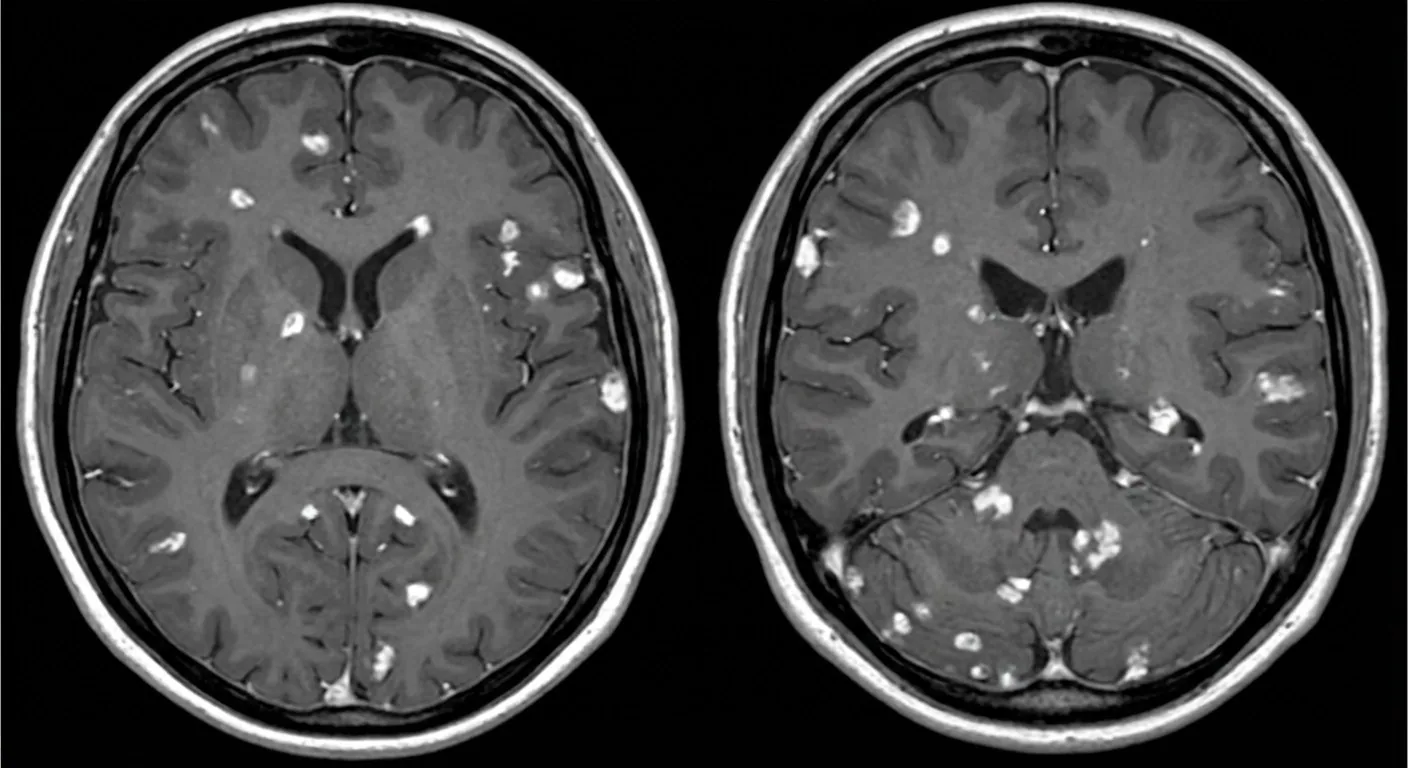
Brain metastases are tumours formed by the spread of cancer from another organ to the brain. In fact, they are the most common type of brain tumour.1 Today, with the advancement of cancer treatments, patients are living longer, which increases the incidence of brain metastases.
Which Cancers Metastasize to the Brain?
The cancers that most commonly metastasize to the brain are lung cancer, breast cancer, and melanoma.2,3 Lung cancer is the type of cancer that metastasizes to the brain most frequently and earliest.
Symptoms and Diagnosis
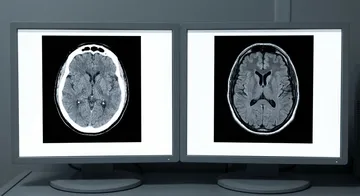
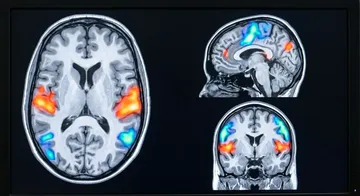
The symptoms of brain metastases are similar to primary brain tumours: headache, seizures, focal neurological deficits, and cognitive changes. Contrast-enhanced brain MRI is the gold standard in diagnosis.4 Metastases are generally seen as well-circumscribed, round, contrast-enhancing lesions. Multiple lesions are a strong finding in favour of metastasis.
Surgical resection is preferred for single or a limited number of large, accessible metastases, and especially if there is a significant mass effect on the surrounding brain tissue.5
Treatment Options
The treatment strategy is determined based on the number, size, and location of the metastases, the control status of the primary cancer, and the patient's overall performance.
Surgical resection is preferred for single or a limited number of large, accessible metastases, and especially if there is a significant mass effect on the surrounding brain tissue. Surgery both confirms the pathological diagnosis and provides rapid symptom relief.
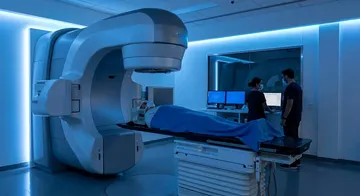
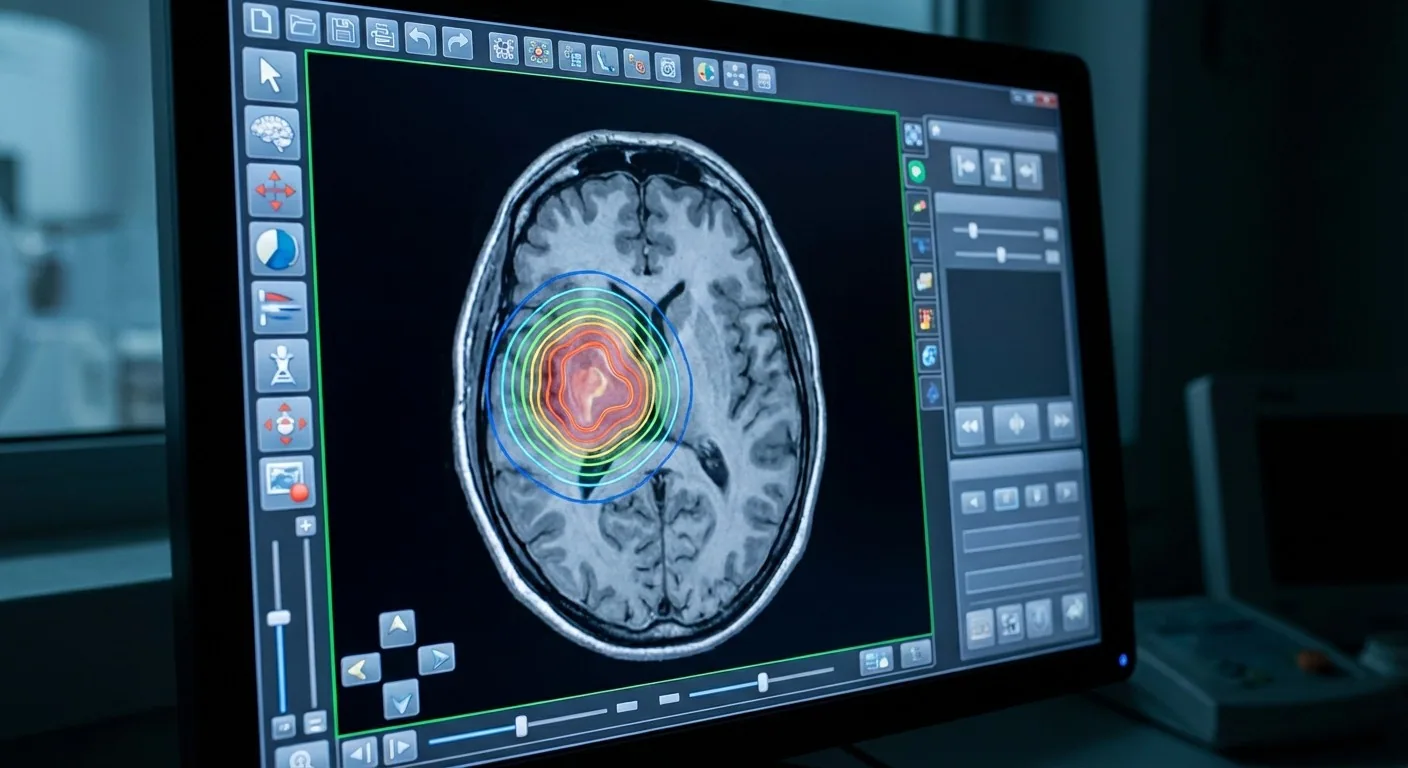
Gamma Knife radiosurgery is a revolutionary treatment method for brain metastases. Hundreds of fine gamma ray beams are focused on a single point, delivering a high dose of radiation to the tumour; the surrounding healthy tissue is preserved. It does not require surgery, is usually performed in a single session, and the patient can be discharged on the same day.
Gamma Knife generally provides a local control rate of around 80-90 percent in brain metastases.6,7 Multiple metastases (up to 10-15 today) can be treated in a single session.8,9
Whole brain radiotherapy (WBRT) is applied in the presence of numerous metastases or leptomeningeal spread.10 However, due to its side effects on cognitive functions, Gamma Knife or surgery is preferred whenever possible.11,12
→ Next page: S15 — Metastasis Treatment Algorithm and Decision Tree
Kaynaklar
- Tosoni A et al. Crit Rev Oncol Hematol. 2004. PMID 15582786
- Eichler AF et al. Curr Treat Options Neurol. 2008. PMID 18579017
- Nayak L et al. Curr Oncol Rep. 2012. PMID 22012633
- Soffietti R et al. J Neurol. 2002. PMID 12382150
- Vogelbaum MA et al. J Clin Oncol. 2022. PMID 34932393
- Vesagas TS et al. J Neurosurg. 2002. PMID 12507086
- Matsunaga S et al. World Neurosurg. 2023. PMID 36529429
- Stambaugh C et al. Cureus. 2023. PMID 37954747
- Kida Y et al. Cureus. 2020. PMID 32133254
- Rush S et al. J Neurosurg. 2011. PMID 21417707
- Brown PD et al. JAMA. 2016. PMID 27458945
- Brown PD et al. Lancet Oncol. 2017. PMID 28687377

Doç. Dr. Özgür Akşan
Beyin ve Sinir Cerrahisi Uzmanı
Beyin ve Sinir · Sorumlu Yazı İşleri Müdürü ve Editör · Künye