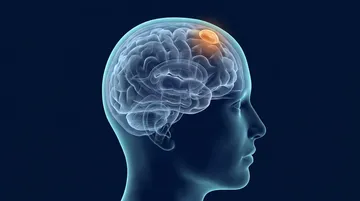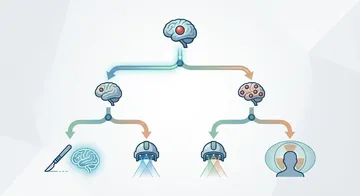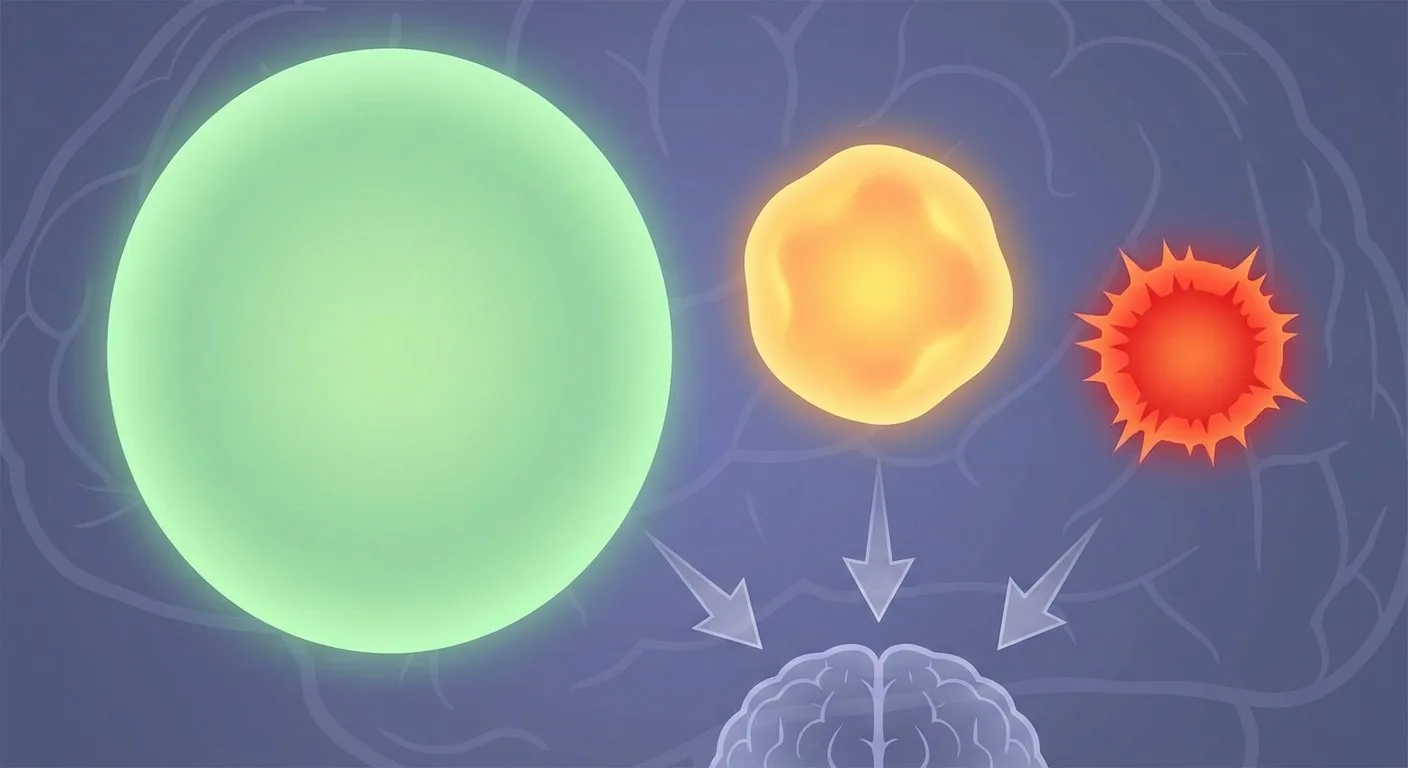
Meningiomas are divided into three grades according to the World Health Organization (WHO) classification. This grading directly determines the treatment plan and prognosis expectation.
| Grade | Frequency | Course |
|---|---|---|
| Grade 1 (benign) | 80 percent | Grows slowly; postoperative recurrence rate is low |
| Grade 2 (atypical) | 15-20 percent | Grows faster; 5-year recurrence is 30-40 percent1,2 |
| Grade 3 (anaplastic) | 1-3 percent | Most aggressive form; can spread to surrounding tissues |
Grade 1 — Benign Meningioma (80 percent)
It makes up the vast majority of all meningiomas. It grows slowly, usually does not invade brain tissue, and the recurrence rate after surgery is low. Its subtypes include meningotheliomatous, fibroblastic, transitional, psammomatous, and angiomatous meningiomas.
Grade 2 — Atypical Meningioma (15-20 percent)
It tends to grow faster and has a high risk of recurrence.
Adjuvant radiotherapy is generally recommended after surgery, especially if a subtotal resection was performed.3,4 The 5-year recurrence rate is between 30-40 percent.1,2
Grade 3 — Anaplastic (Malignant) Meningioma (1-3 percent)
It is the most aggressive form. It grows rapidly, invades surrounding tissues, and can cause distant metastasis.
Surgical resection and adjuvant radiotherapy are standard in treatment. The role of chemotherapy is limited, but it is applied in some centres.
Factors Affecting Prognosis
The extent of surgical resection (Simpson grade), the histological grade of the tumour, its location, the patient's age, and performance status are the main factors affecting prognosis. Complete resection may be technically more difficult in parasagittal and skull base meningiomas, which increases the risk of recurrence.
Follow-up Protocol
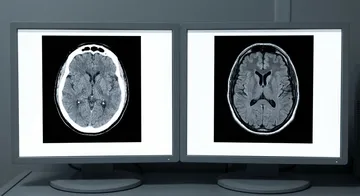
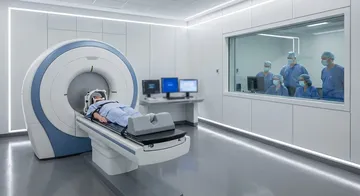
The follow-up plan is determined by the grade of the tumour and how much of it could be removed. The first follow-up MRI is usually taken in the first months after surgery; while the follow-up intervals for Grade 1 meningiomas are extended over the years, more frequent MRI follow-up is required for Grade 2 and 3 tumours.5
→ Next page: S14 — Brain Metastases

Kaynaklar
- Hasan S et al. World Neurosurg. 2015. PMID 25535067
- Li GQ et al. Zhongguo Yi Xue Ke Xue Yuan Xue Bao. 2022. PMID 36065688
- Song D et al. Front Oncol. 2021. PMID 34926303
- Zhi M et al. World Neurosurg. 2019. PMID 30447464
- Goldbrunner R et al. Neuro Oncol. 2021. PMID 34181733
Doç. Dr. Özgür Akşan
Beyin ve Sinir Cerrahisi Uzmanı
Beyin ve Sinir · Sorumlu Yazı İşleri Müdürü ve Editör · Künye