Beyond the standard Stupp Protocol in glioblastoma treatment, remarkable innovations have been taking place in recent years. Immunotherapy, tumour treating fields (TTFields), and targeted therapies are opening new doors in the fight against GBM.
Tumour Treating Fields (TTFields)
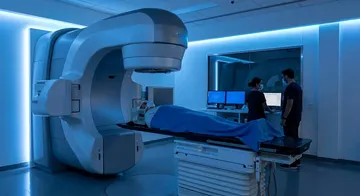
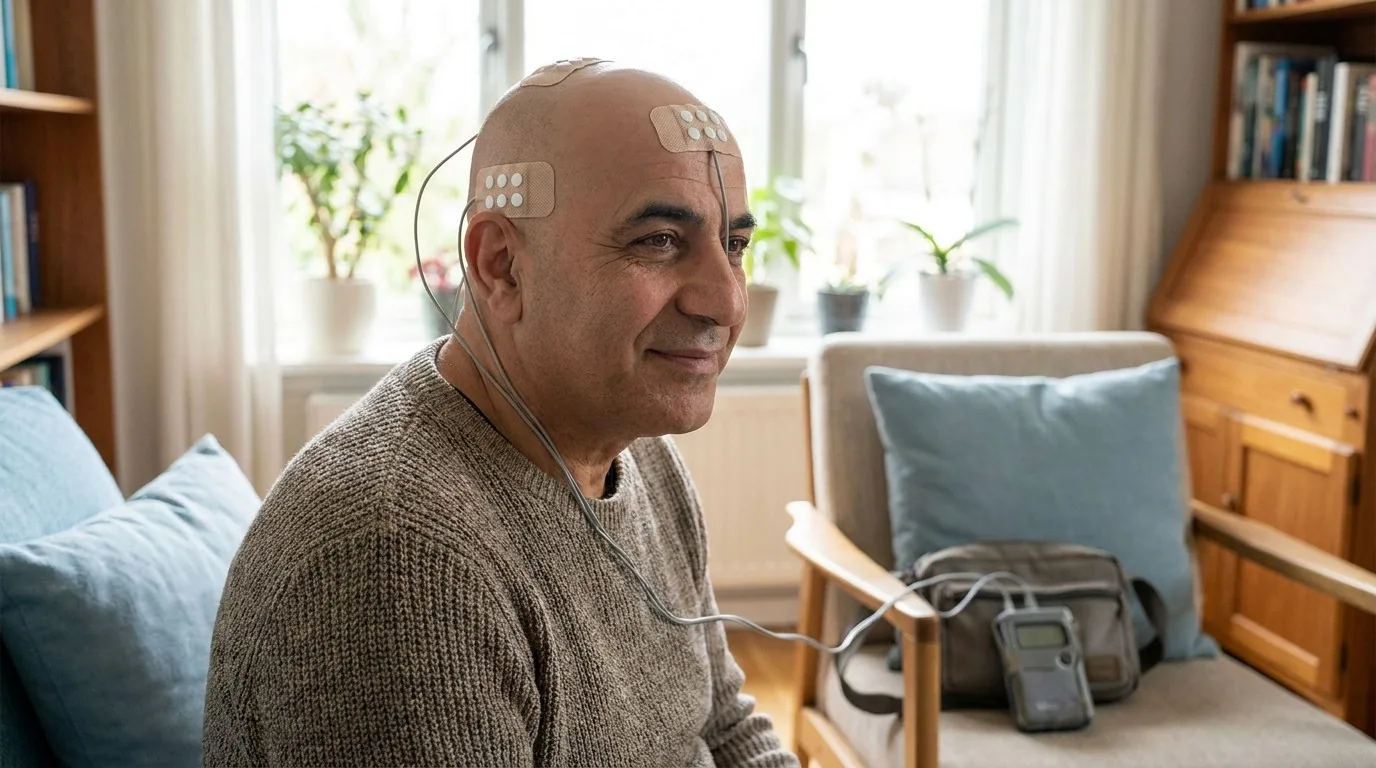
TTFields (Optune) is a treatment method that applies low-intensity alternating electric fields through electrodes placed on the head. These electric fields slow down tumour growth by disrupting the mitosis (division) process of rapidly dividing tumour cells.
The EF-14 study has shown that adding TTFields to temozolomide in newly diagnosed GBM significantly prolongs overall survival.1,2 This result has made TTFields a part of the standard treatment protocol.3,4
Immunotherapy Approaches
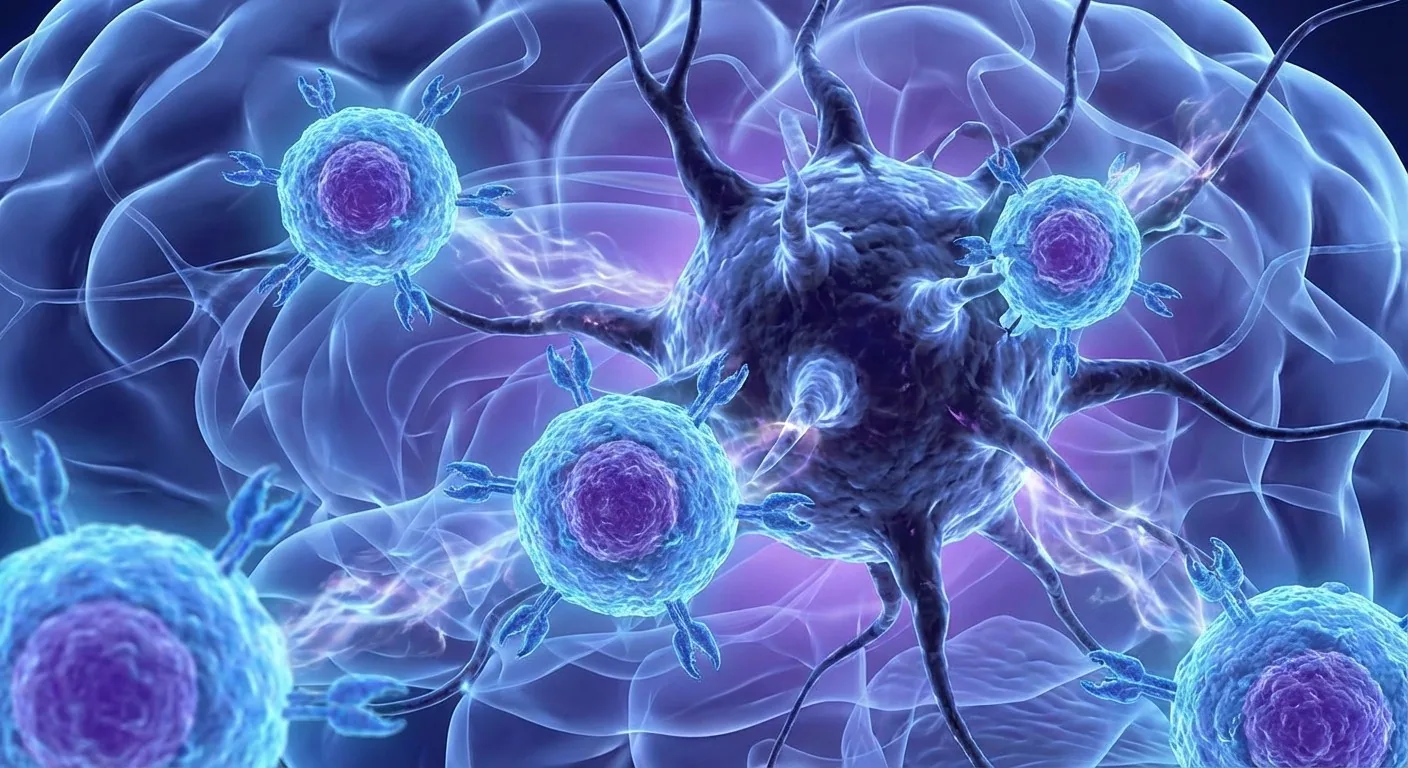
Immunotherapy aims to activate the immune system against the tumour. Various immunotherapy strategies are being investigated in GBM.
Although checkpoint inhibitors (nivolumab, pembrolizumab) have been groundbreaking in other cancer types, they have not yet shown the expected success as a single agent in GBM.5,6 The main reason for this is the strong immunosuppressive microenvironment of GBM.
Among vaccine therapies, rindopepimut (a peptide vaccine targeting EGFRvIII) and dendritic cell vaccines are the most studied. In the DCVax-L study, prolonged survival was reported with the autologous dendritic cell vaccine compared to an external control group; however, the study's methodology is controversial.7,8
CAR-T cell therapy is based on the principle of genetically modifying the patient's own T cells and directing them to the tumour. CAR-T studies targeting EGFRvIII, IL13Rα2, and HER2 in GBM are ongoing.
The EF-14 study has shown that adding TTFields to temozolomide in newly diagnosed GBM significantly prolongs overall survival.
Targeted Therapies
Bevacizumab (Avastin) is an anti-VEGF monoclonal antibody that prevents the formation of tumour blood vessels. It has been approved by the FDA for recurrent GBM.9,10 Although its effect on prolonging survival is controversial, it is effective in reducing brain oedema and improving quality of life.11,12
What to Expect in the Future?
Liquid biopsy (tumour DNA analysis via blood tests), intratumoral drug delivery systems, oncolytic virus therapies, and CRISPR-based gene therapies are the future directions of GBM research. Although more research is needed for these approaches to transition into clinical practice, promising results are being obtained.
Kaynaklar
- Guzauskas GF et al. J Med Econ. 2019. PMID 31050315
- Stupp R et al. JAMA. 2017. PMID 29260225
- Sung JY et al. Mol Biomed. 2026. PMID 42101535
- Kotecha R et al. Neurosurg Clin N Am. 2021. PMID 33781503
- Gómez EG et al. Neurosurg Rev. 2026. PMID 41484472
- Yang T et al. Hum Vaccin Immunother. 2021. PMID 32643507
- Wong CE et al. J Neurooncol. 2024. PMID 39167243
- Liau LM et al. JAMA Oncol. 2023. PMID 36394838
- Zabihi A. Int J Biol Macromol. 2025. PMID 40319984
- Ghiaseddin A et al. CNS Oncol. 2015. PMID 25906439
- Arrillaga-Romany I et al. CNS Oncol. 2014. PMID 25363007
- Thomas AA et al. Curr Treat Options Oncol. 2014. PMID 25173555
Doç. Dr. Özgür Akşan
Beyin ve Sinir Cerrahisi Uzmanı
Beyin ve Sinir · Sorumlu Yazı İşleri Müdürü ve Editör · Künye