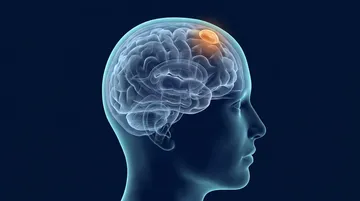
The pituitary gland is known as the "orchestra conductor" of the body; it secretes hormones that control vital functions such as growth, metabolism, reproduction, stress response, and water balance. Hormonal evaluation in pituitary tumours is the cornerstone of diagnosis and treatment planning.
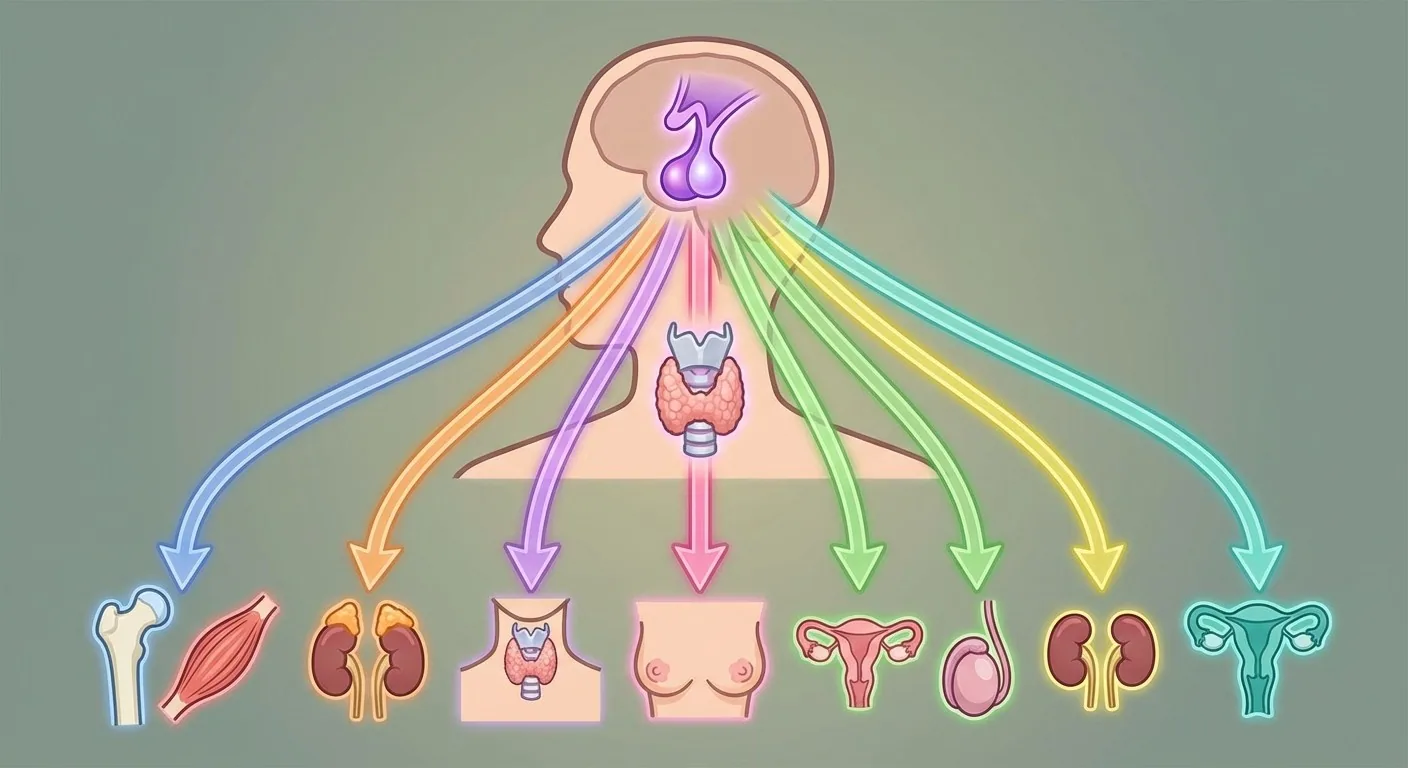
Pituitary Hormones and Target Organs
The anterior pituitary secretes six main hormones. Prolactin stimulates the mammary glands, growth hormone (GH) stimulates growth in bones and muscles, ACTH stimulates the adrenal glands, TSH stimulates the thyroid gland, and FSH and LH stimulate the gonads (ovaries/testicles). The posterior pituitary secretes ADH (water balance) and oxytocin (childbirth/breastfeeding).
Prolactinoma
It is the most common functional pituitary adenoma.1,2 In women, amenorrhea (absence of menstruation), galactorrhea (milk production), and infertility are seen; in men, decreased libido, erectile dysfunction, and gynecomastia are seen. In diagnosis, serum prolactin level is measured; values over 200 ng/mL strongly suggest prolactinoma.3,4 Dopamine agonists (cabergoline, bromocriptine) are the first line of treatment.5,6
Diagnosis is complex; 24-hour urine cortisol, late-night salivary cortisol, and low-dose dexamethasone suppression tests are used.
Acromegaly (GH Adenoma)
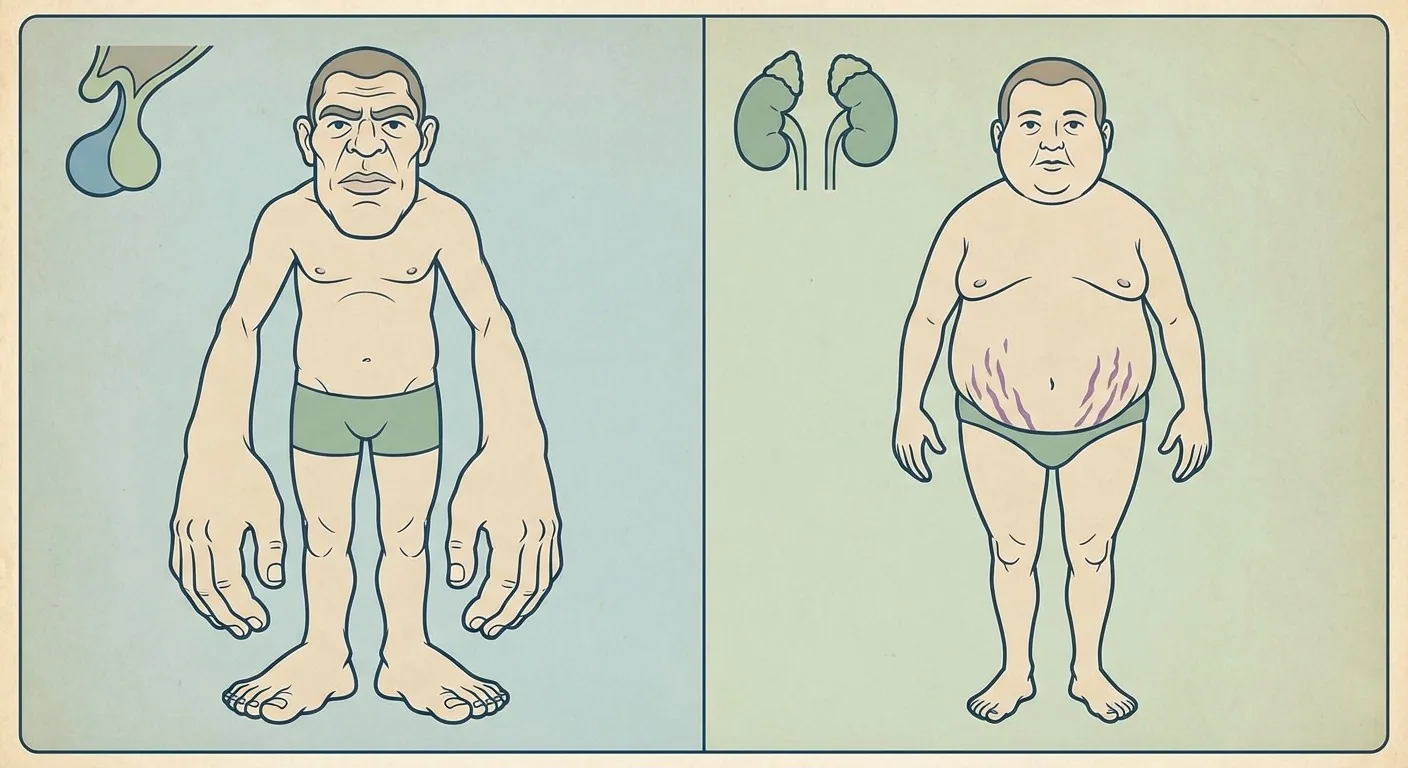
Growth hormone excess causes acromegaly in adults. Enlargement of the hands, feet, and facial features, joint pain, increased sweating, sleep apnoea, and diabetes may develop. In diagnosis, GH level and IGF-1 are measured; the oral glucose tolerance test is the gold standard.7,8 Transsphenoidal surgery is the first line of treatment; somatostatin analogs (octreotide, lanreotide) are used as adjunctive therapy.9,10
Cushing's Disease (ACTH Adenoma)
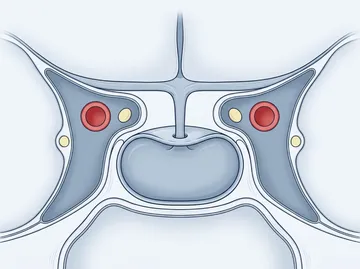
ACTH-secreting adenomas lead to Cushing's disease. Central obesity, round face (moon face), purple striae, osteoporosis, hypertension, and diabetes are typical findings. Diagnosis is complex; 24-hour urine cortisol, late-night salivary cortisol, and low-dose dexamethasone suppression tests are used. Inferior petrosal sinus sampling is important in excluding ectopic ACTH sources.11,12 Transsphenoidal surgery is the standard treatment.13,14
TSH Adenoma
It is rarely seen (1-2 percent).15 It creates a picture of secondary hyperthyroidism. Thyroid hormones are observed to be high, and TSH is unsuppressed (inappropriately high).
Non-functioning Adenomas
Non-hormone-secreting adenomas have an insidious course. By growing, they can compress the optic chiasm and cause vision loss, or compress healthy pituitary tissue and cause hypopituitarism (hormone deficiency). In these patients, a comprehensive evaluation of all pituitary hormones is required before and after surgery.
→ Next page: S18 — Acoustic Neuroma
Kaynaklar
- Ciccarelli A et al. Pituitary. 2005. PMID 16411062
- Vroonen L et al. Neuroendocrinology. 2019. PMID 30731464
- Pereira O et al. Pituitary. 2008. PMID 18338267
- Verhelst J et al. Treat Endocrinol. 2003. PMID 15871552
- Cai X et al. Chin Neurosurg J. 2022. PMID 35395837
- Peng Y et al. Acta Neuropathol Commun. 2025. PMID 40281543
- Dineen R et al. QJM. 2017. PMID 26873451
- Dobri G et al. Endocrine. 2019. PMID 30415402
- Bolanowski M et al. Endokrynol Pol. 2019. PMID 30843181
- Sulu C et al. Endocrine. 2025. PMID 40944885
- Valizadeh M et al. Pituitary. 2024. PMID 39730909
- Wang H et al. BMC Endocr Disord. 2020. PMID 32943040
- Sumisławski P et al. Neurosurg Rev. 2022. PMID 36136255
- Bora SK et al. World Neurosurg. 2020. PMID 31491582
- Azzalin A et al. Pituitary. 2016. PMID 26689573
Doç. Dr. Özgür Akşan
Beyin ve Sinir Cerrahisi Uzmanı
Beyin ve Sinir · Sorumlu Yazı İşleri Müdürü ve Editör · Künye