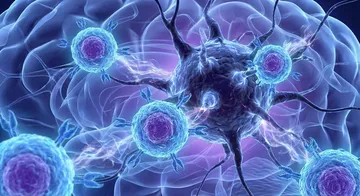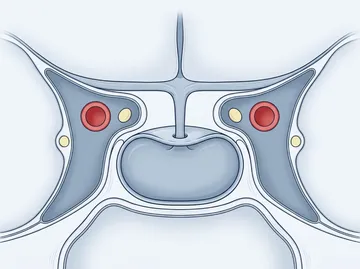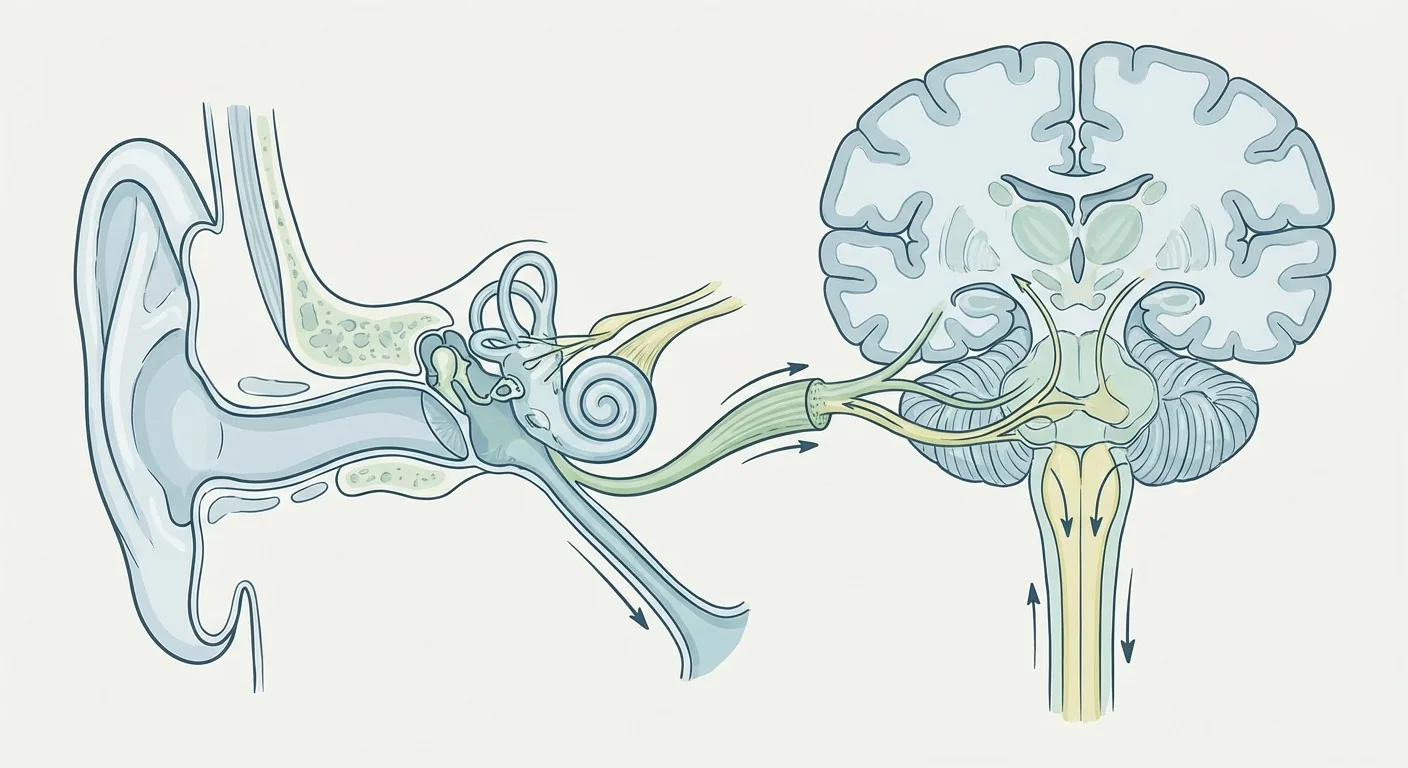
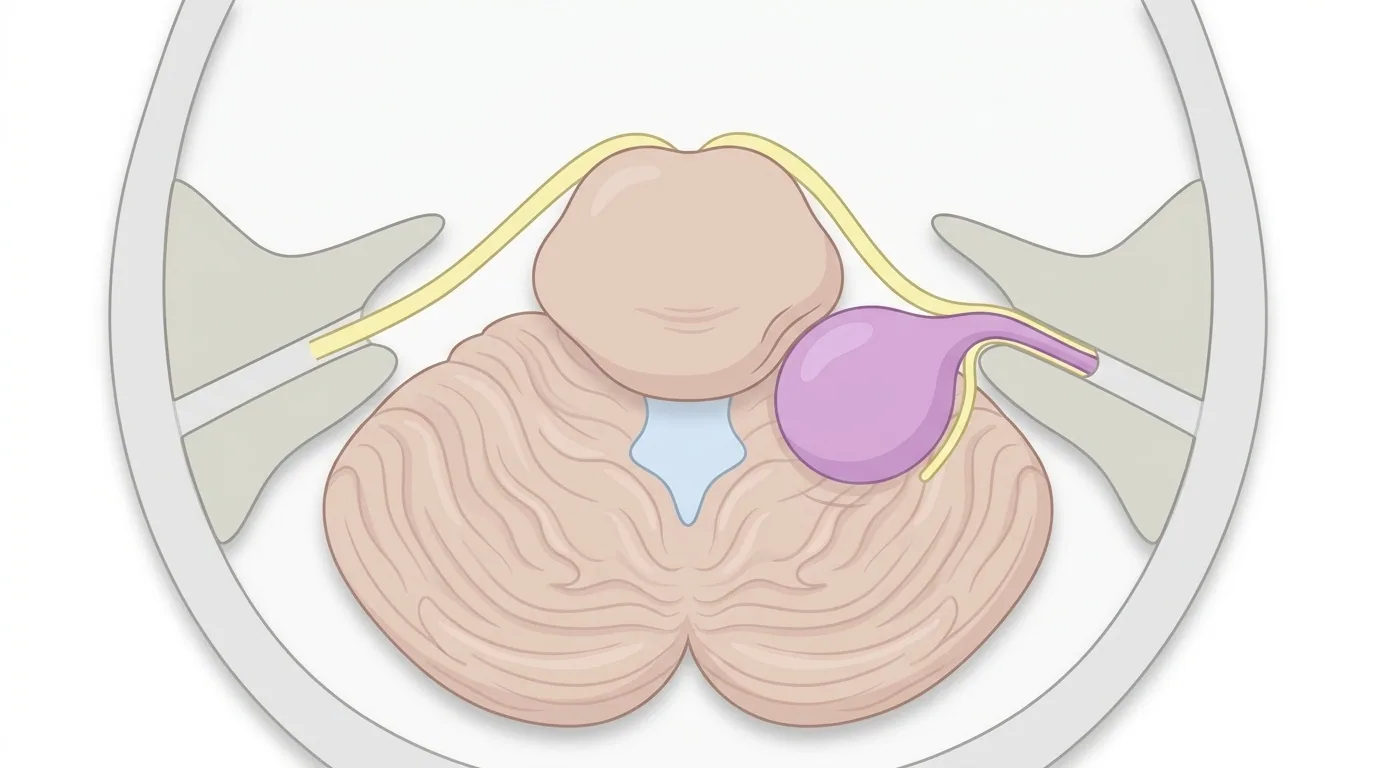
Acoustic neuroma (vestibular schwannoma) is a benign tumour originating from the vestibular branch of the eighth cranial nerve (vestibulocochlear nerve). It is the most common tumour of the cerebellopontine angle (the corner between the pons and the cerebellum) region.
Symptoms
The earliest and most common symptom is unilateral hearing loss; it usually starts at high frequencies and progresses slowly. Tinnitus (ringing in the ears) accompanies it in most patients. Balance disorders, dizziness, and facial numbness (trigeminal nerve compression) may occur as the tumour grows. In large tumours, facial paralysis (facial nerve compression), difficulty swallowing, and even hydrocephalus may develop.
Diagnosis
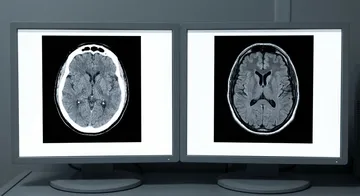
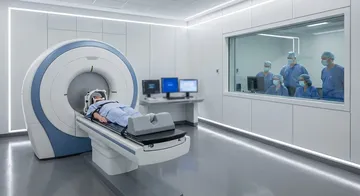
Thin-slice contrast-enhanced brain MRI (especially the internal acoustic canal protocol) is the gold standard in diagnosis.1,2 Audiometry (hearing test) and brainstem auditory evoked potentials (BAEP) provide an objective evaluation of hearing function.
Microsurgery: Surgical resection is preferred in large tumours (over 2.5-3 cm) or in cases with brainstem compression.3,4
Treatment Options
The treatment decision is individualised according to the size of the tumour, hearing status, and the patient's age and preference.
Watch and wait: In small (under 1-1.5 cm), asymptomatic, or minimally symptomatic tumours, especially in elderly patients, follow-up with serial MRI is an appropriate strategy.5,6 Some of these tumours remain stable for years without growing.
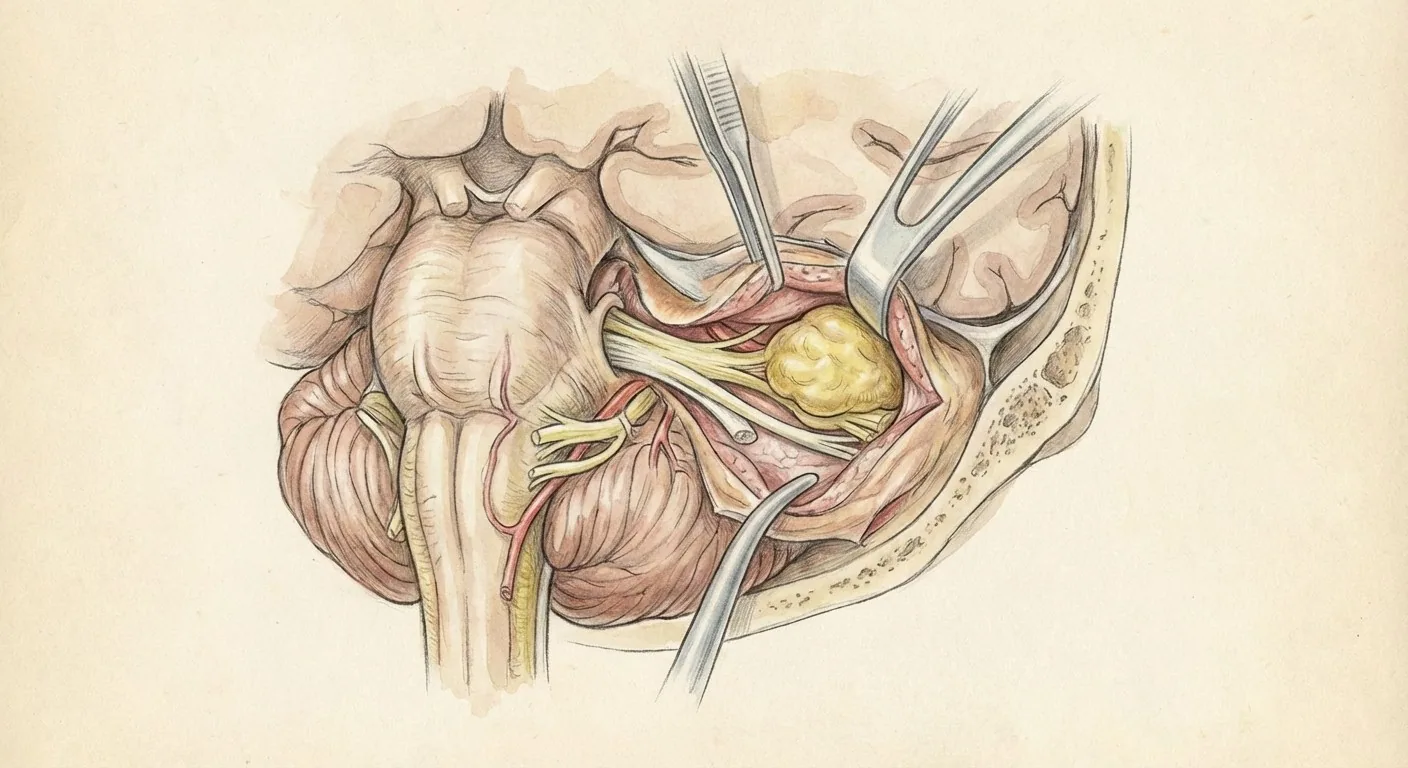
Microsurgery: Surgical resection is preferred in large tumours (over 2.5-3 cm) or in cases with brainstem compression. Retrosigmoid, translabyrinthine, and middle fossa approaches are the most commonly used surgical techniques. The choice of approach depends on the tumour size, hearing status, and the surgeon's experience. Intraoperative facial nerve monitoring is a standard practice during surgery.7,8
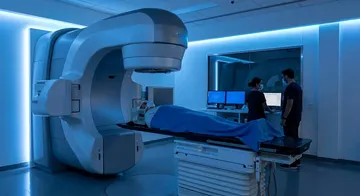
Gamma Knife radiosurgery: It is an effective alternative for small-to-medium-sized (under 3 cm) tumours. Tumour control is at a rate of 90-95 percent.9,10 The hearing preservation rates of radiosurgery and microsurgery are similar in the medium term, but hearing loss may develop in the long term after radiosurgery.9,11
Hearing Preservation
One of the most important goals in the treatment of acoustic neuroma is the preservation of hearing. In small tumours, if hearing is preserved, hearing preservation surgery can be attempted with a retrosigmoid or middle fossa approach.12,13
→ Next page: S19 — Lumbar Disc Herniation
Kaynaklar
- Ji Lee Y et al. J Int Adv Otol. 2025. PMID 40207060
- Kim W et al. Sci Transl Med. 2025. PMID 40700521
- Inoue HK. J Neurosurg. 2005. PMID 15662791
- Kiyofuji S et al. Acta Neurochir (Wien). 2021. PMID 33471207
- Bakkouri WE et al. J Neurosurg. 2009. PMID 19099381
- Sergi B et al. World Neurosurg. 2022. PMID 34710576
- Vivas EX et al. Neurosurgery. 2018. PMID 29309641
- Acioly MA et al. World Neurosurg. 2013. PMID 22120256
- Savardekar AR et al. World Neurosurg. 2022. PMID 34838768
- Persson O et al. Acta Neurochir (Wien). 2017. PMID 28409393
- Daloiso A et al. Otolaryngol Head Neck Surg. 2024. PMID 39045727
- Saliba J et al. J Neurol Surg B Skull Base. 2019. PMID 30931222
- Palavani LB et al. J Clin Neurosci. 2024. PMID 38615371
Doç. Dr. Özgür Akşan
Beyin ve Sinir Cerrahisi Uzmanı
Beyin ve Sinir · Sorumlu Yazı İşleri Müdürü ve Editör · Künye