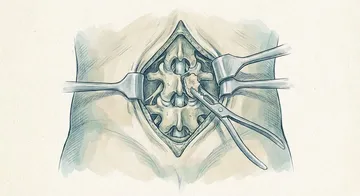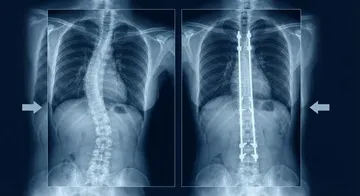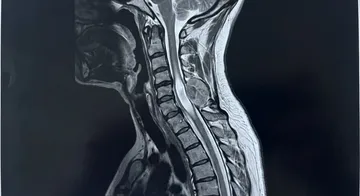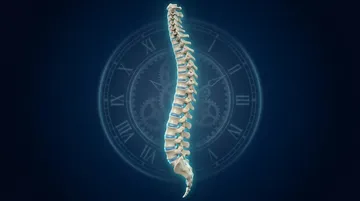
Minimally invasive spine surgery (MISS) aims to achieve the goals of traditional open surgery with smaller incisions, less muscle damage, and faster recovery. It is based on the principle of "performing the same surgery with less damage".
Key Techniques
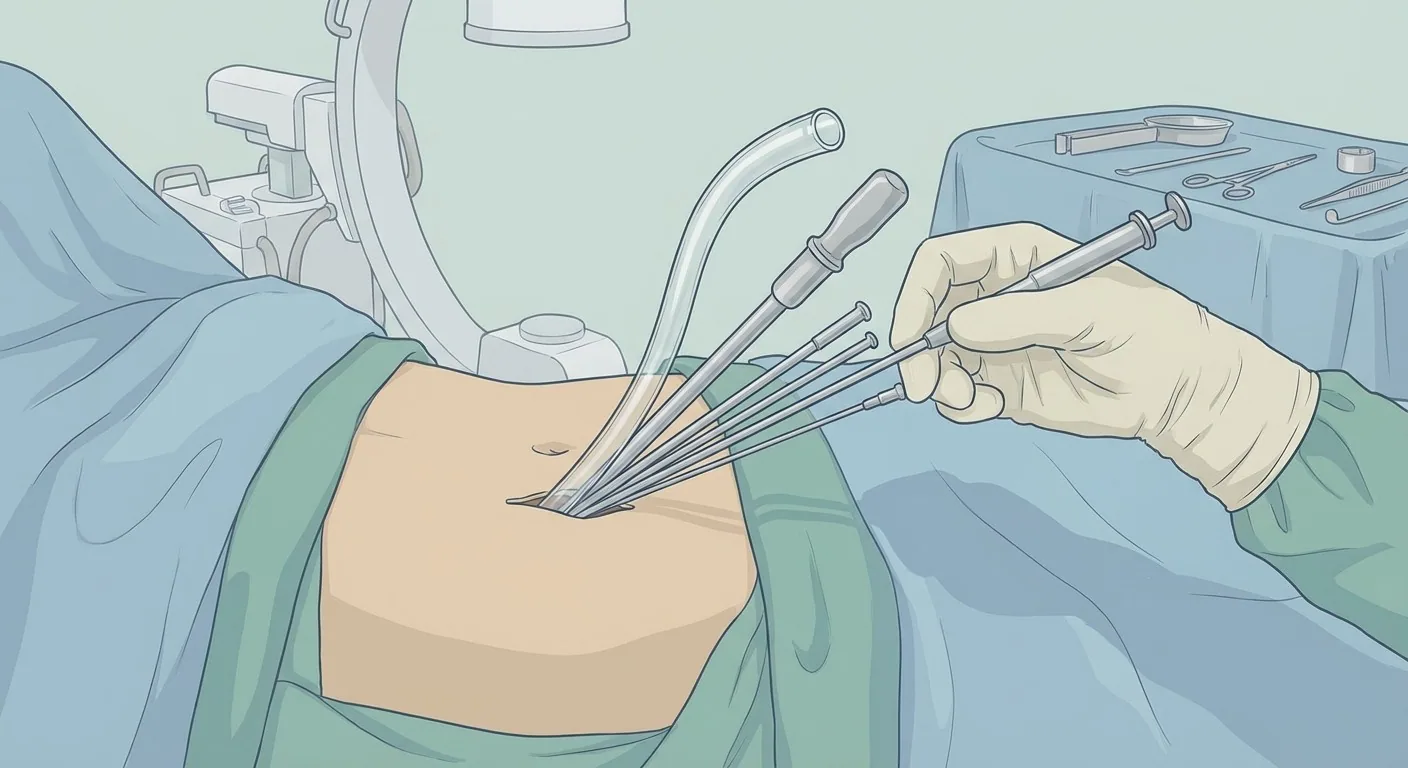
Tubular Retractor System
Instead of being cut, muscle fibres are pushed aside with dilation tubes. The working channel is generally 14-22 mm in diameter, depending on the system and the targeted area. Muscle damage is dramatically reduced, and postoperative pain is significantly decreased.1
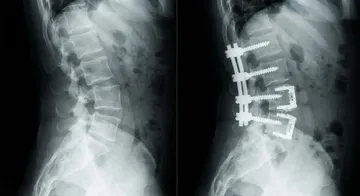
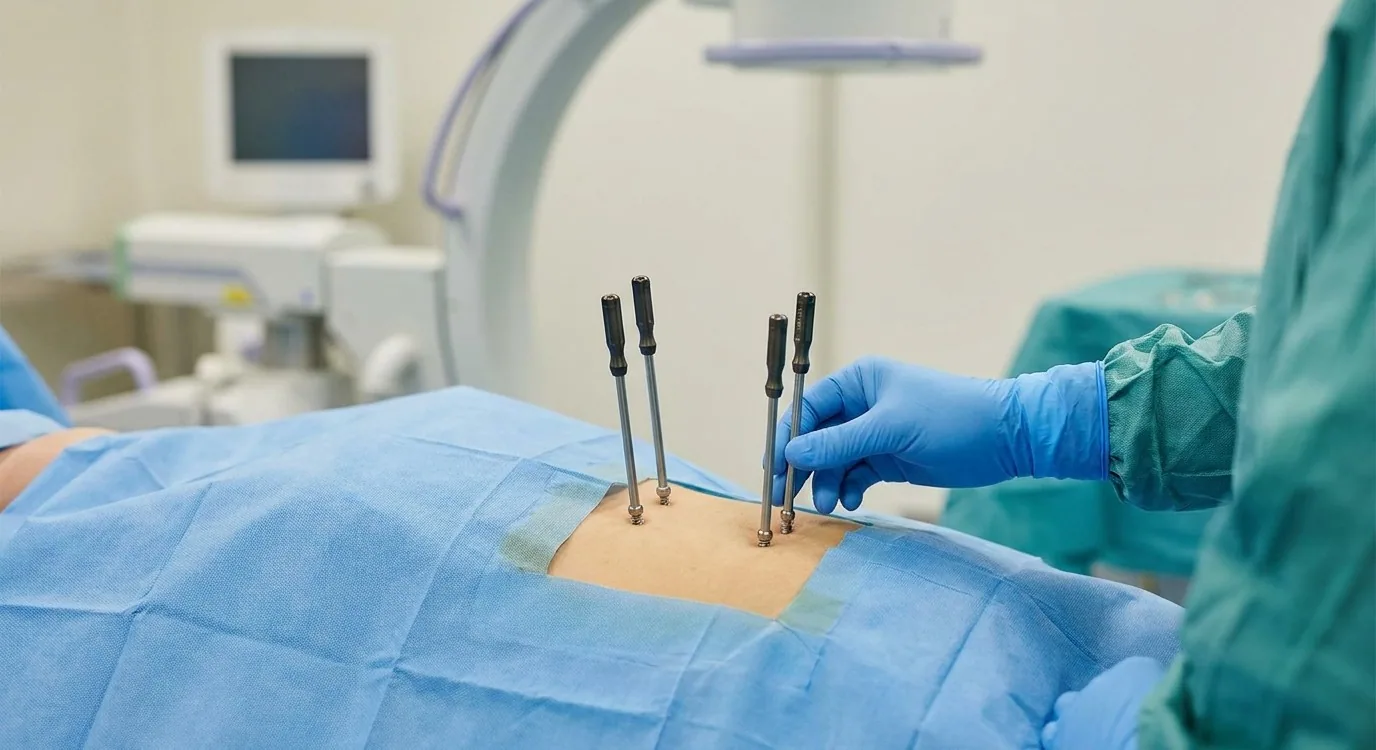
Screws are placed through 1 cm incisions on the skin under fluoroscopy or navigation guidance.
Percutaneous Pedicle Screw
Screws are placed through 1 cm incisions on the skin under fluoroscopy or navigation guidance. Multi-level stabilisation procedures can be performed with minimally invasive surgical methods using percutaneous pedicle screws.2
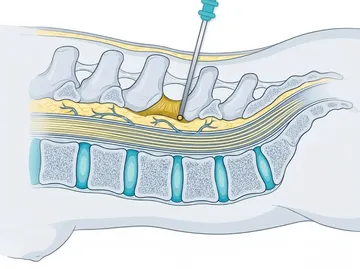
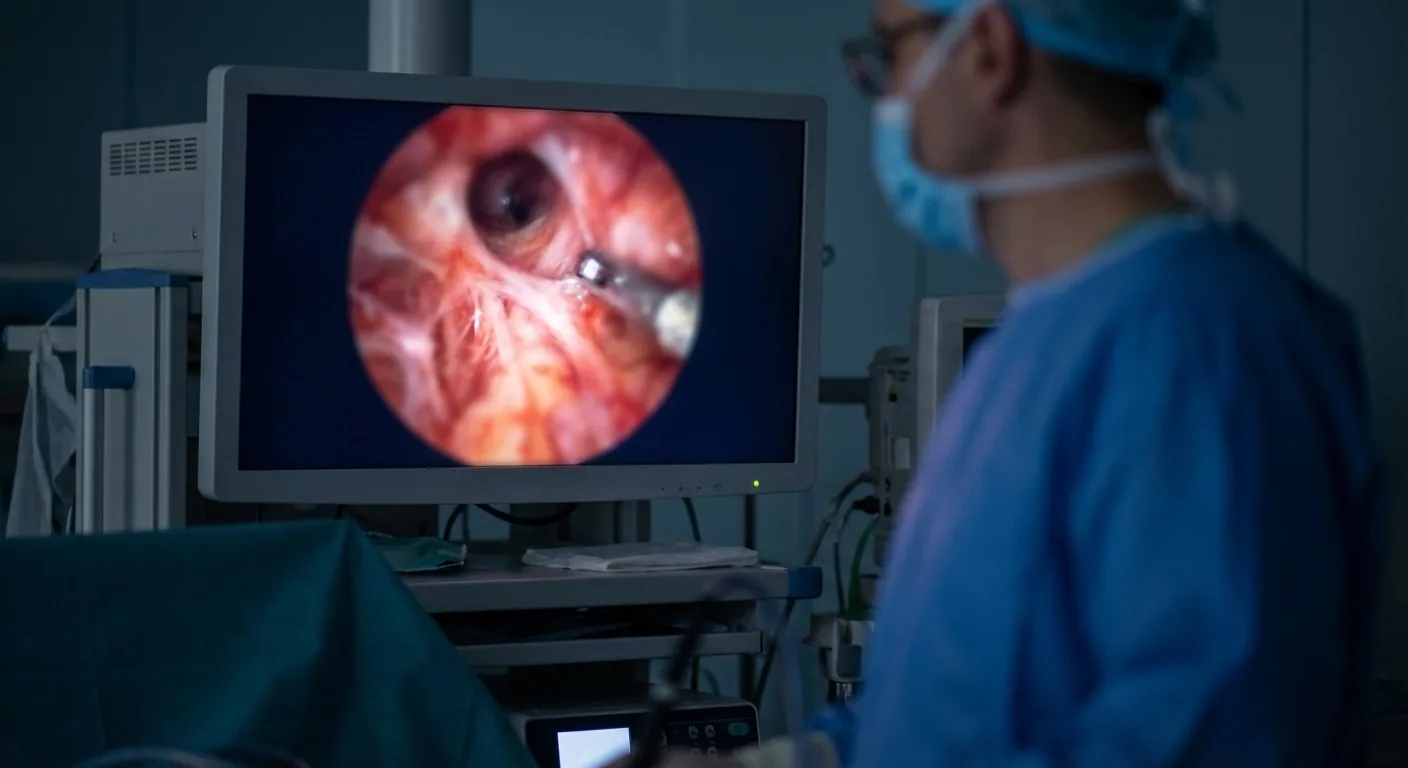
Endoscopic Discectomy
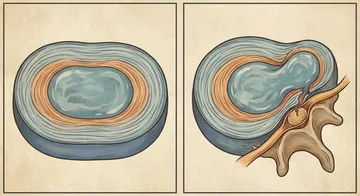
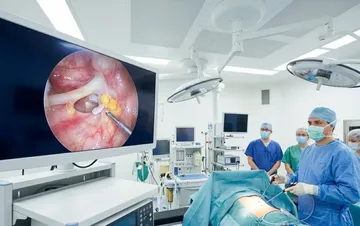
The herniated disc material is removed with an 8 mm diameter endoscope. It can be applied via a transforaminal or interlaminar approach. It can even be performed under local anaesthesia.3,4
Lateral Interbody Fusion (LLIF/XLIF)
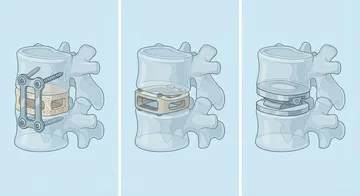
The disc space is accessed from the side via a retroperitoneal approach. Anterior vascular structures and posterior nerve structures are preserved. By placing a large cage into the disc space, both height is gained and fusion is achieved.
Robotic-Assisted Surgery
Screw placement is planned and executed with millimetric precision using a robotic arm. Radiation exposure is reduced, and accuracy is increased.5,6
Advantages
Compared to open surgery, minimally invasive spine surgery provides less blood loss, a shorter hospital stay, a faster return to work, less muscle damage, and less postoperative pain.7,8
→ Next page: S36 — MISS vs. Open Surgery Comparison
Kaynaklar
- Mehdipour M et al. J Neurosurg Case Lessons. 2025. PMID 41569886
- Dangelmajer S et al. Neurosurg Focus. 2014. PMID 24785489
- Han L et al. Clin J Pain. 2023. PMID 36988321
- Zhen Z et al. World Neurosurg. 2022. PMID 35853571
- Khalilullah T et al. Oper Neurosurg. 2026. PMID 41230988
- Boutros M et al. Eur J Orthop Surg Traumatol. 2026. PMID 42257746
- Yolcu YU et al. World Neurosurg. 2021. PMID 33276177
- McClelland S 3rd et al. J Neurosci Rural Pract. 2017. PMID 28479791
- Real M et al. World Neurosurg. 2026. PMID 41490617
- Lak AM et al. Neurosurg Rev. 2021. PMID 32166508
Doç. Dr. Özgür Akşan
Beyin ve Sinir Cerrahisi Uzmanı
Beyin ve Sinir · Sorumlu Yazı İşleri Müdürü ve Editör · Künye