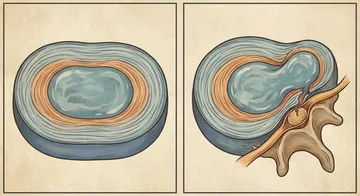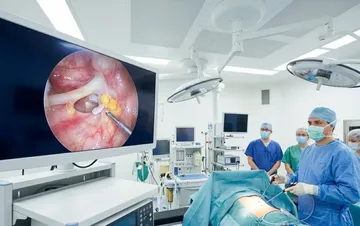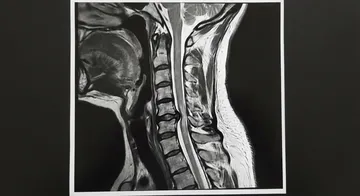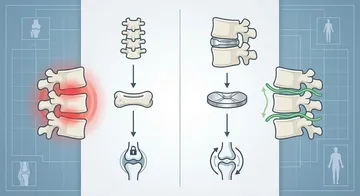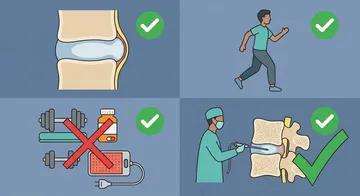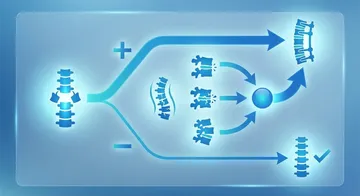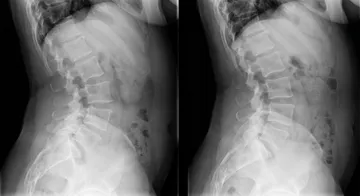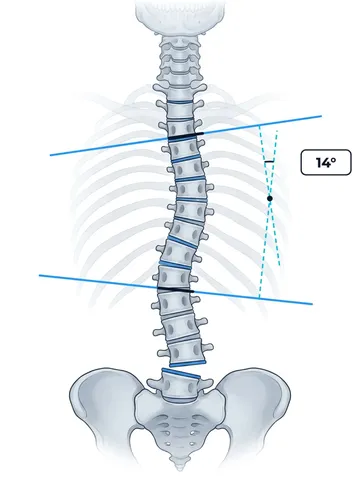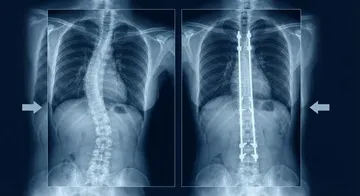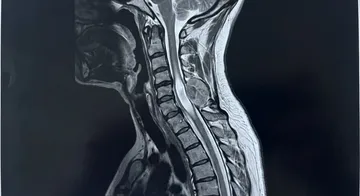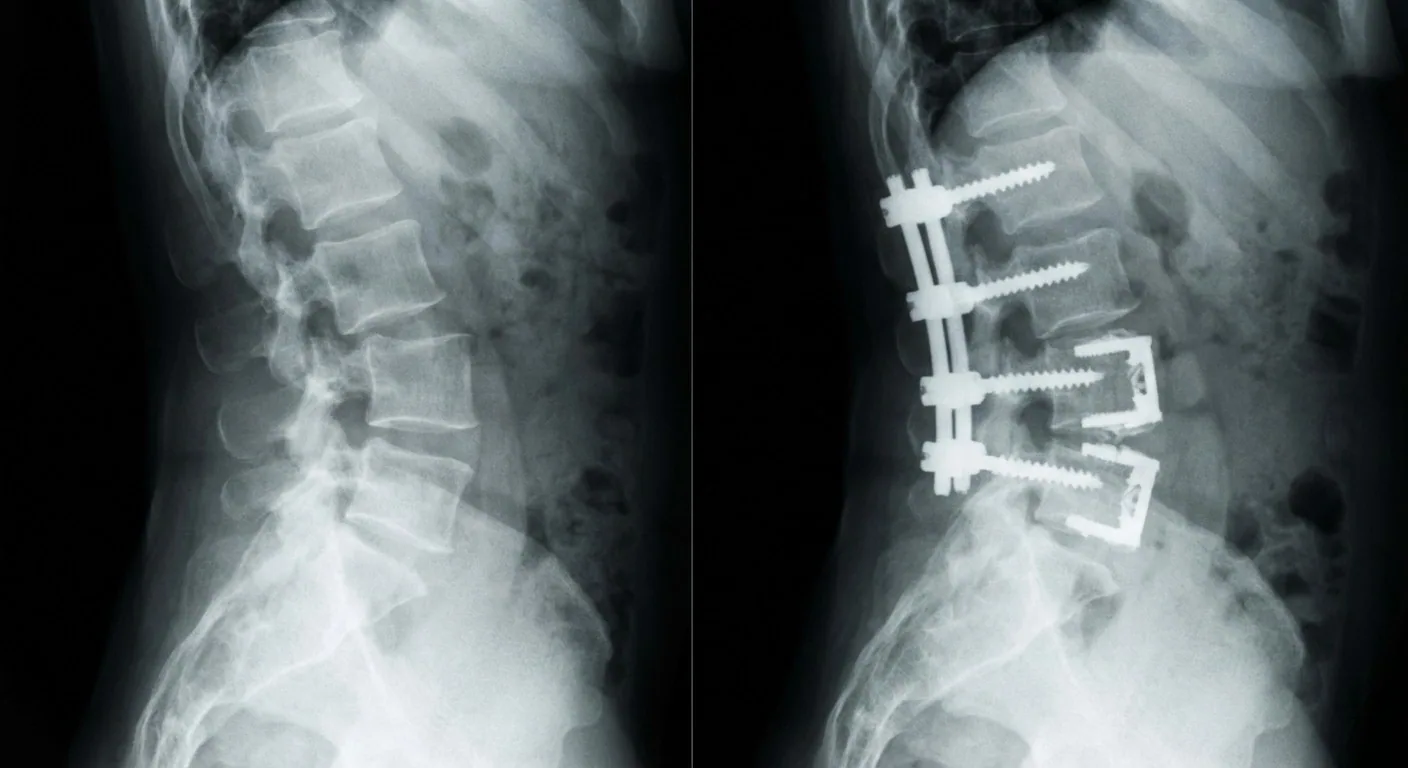
The goal in spondylolisthesis surgery is the stabilisation of the slippage, nerve decompression, and, when necessary, the correction of the slippage (reduction).
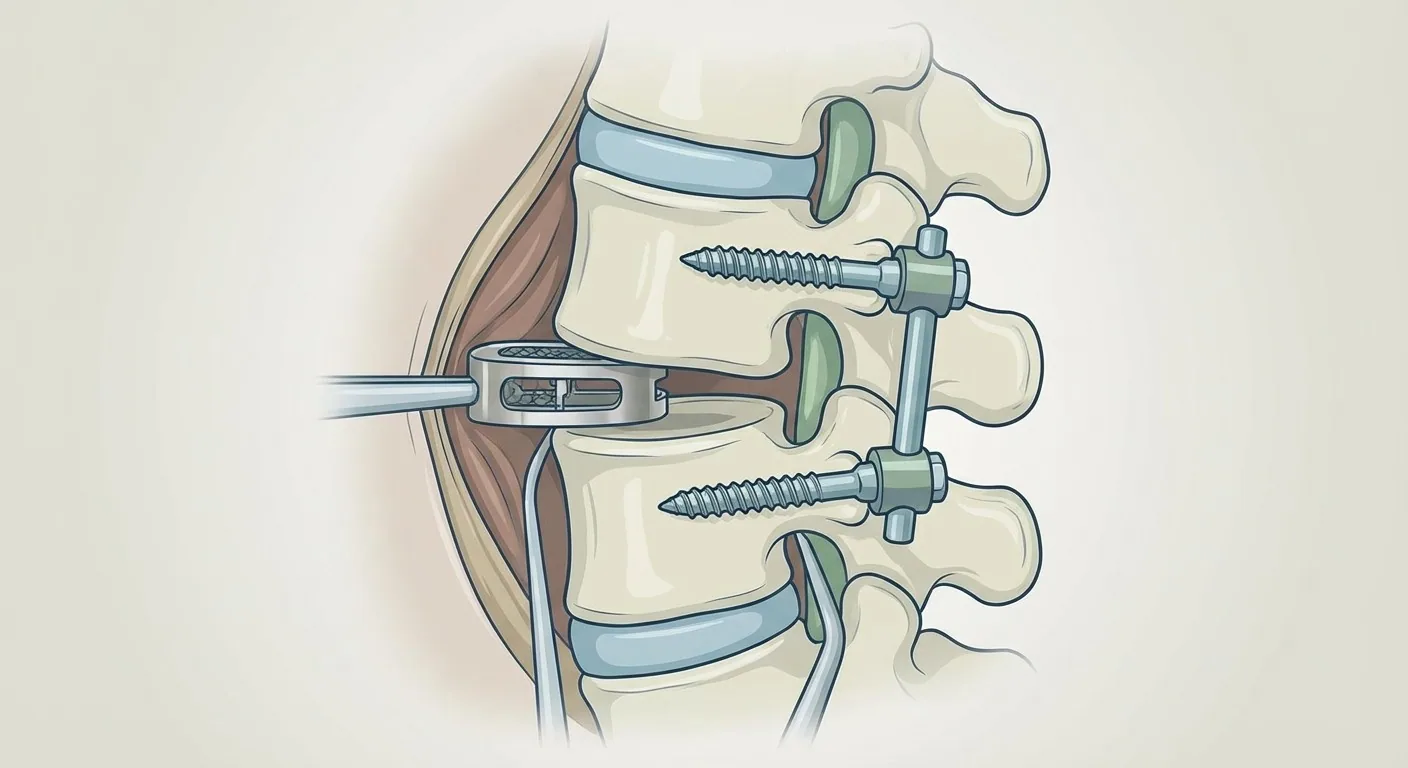
Surgical Techniques
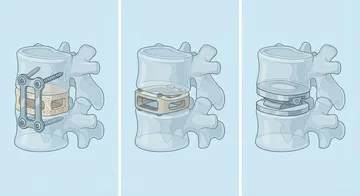
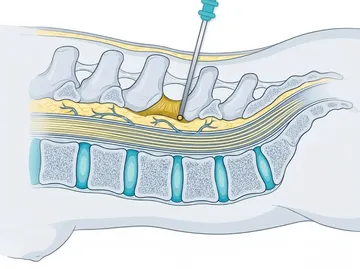
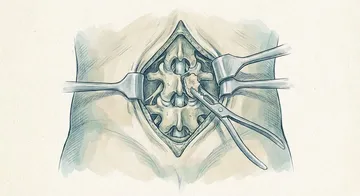
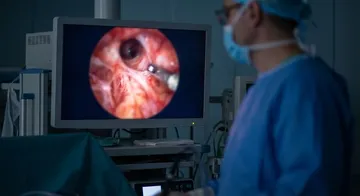
PLIF/TLIF: Posterior or transforaminal lumbar interbody fusion are the most frequently performed techniques. A cage is placed into the disc space, and stabilisation is achieved with transpedicular screws. TLIF reduces the need for retraction with a unilateral approach.1
ALIF: Interbody fusion performed with an anterior approach provides extensive disc height restoration and lordosis correction, especially at the L5-S1 level.2,3
Reduction
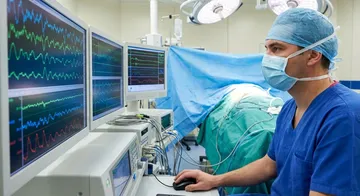
In Grade II and higher slippages, partial or complete correction of the slippage (reduction) is controversial. Correction improves sagittal balance and provides favourable conditions for fusion.4 Intraoperative neuromonitoring is used to reduce this risk.5
ALIF: Interbody fusion performed with an anterior approach provides extensive disc height restoration and lordosis correction, especially at the L5-S1 level.
Outcomes
Pain relief in spondylolisthesis surgery is at a rate of 80-90 percent. The fusion rate can reach up to 96 percent with modern instrumentation.6,7 The most important determinants of surgical success are the correct indication, appropriate technique selection, and the patient's general health status.
→ Next page: S31 — Adult Degenerative Scoliosis

Kaynaklar
- Saela S et al. JBJS Essent Surg Tech. 2023. PMID 38380431
- Cho JY et al. World Neurosurg. 2019. PMID 31129223
- Lightsey HM 4th et al. Spine (Phila Pa 1976). 2022. PMID 35125462
- Caprariu R et al. Int Orthop. 2021. PMID 33394077
- Pickell M et al. J Spine Surg. 2016. PMID 27757429
- Kaneda K et al. Clin Orthop Relat Res. 1986. PMID 3955976
- Fujimori T et al. Global Spine J. 2015. PMID 25844282
Doç. Dr. Özgür Akşan
Beyin ve Sinir Cerrahisi Uzmanı
Beyin ve Sinir · Sorumlu Yazı İşleri Müdürü ve Editör · Künye