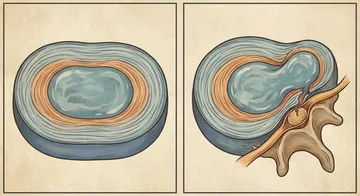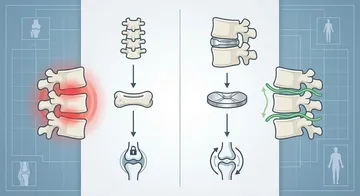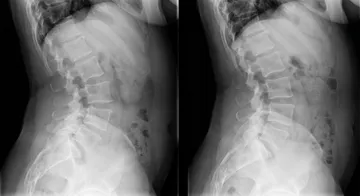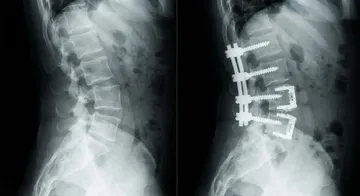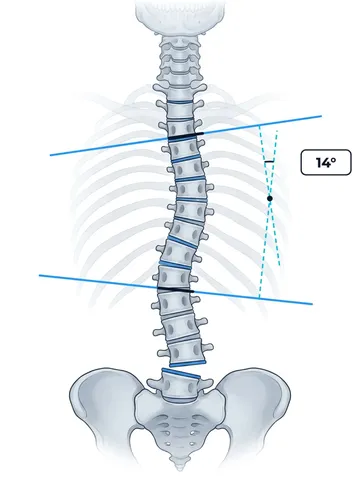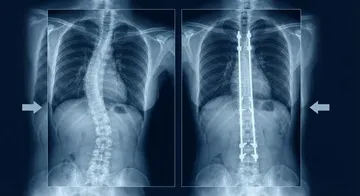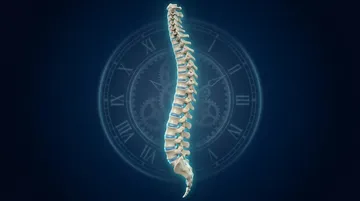
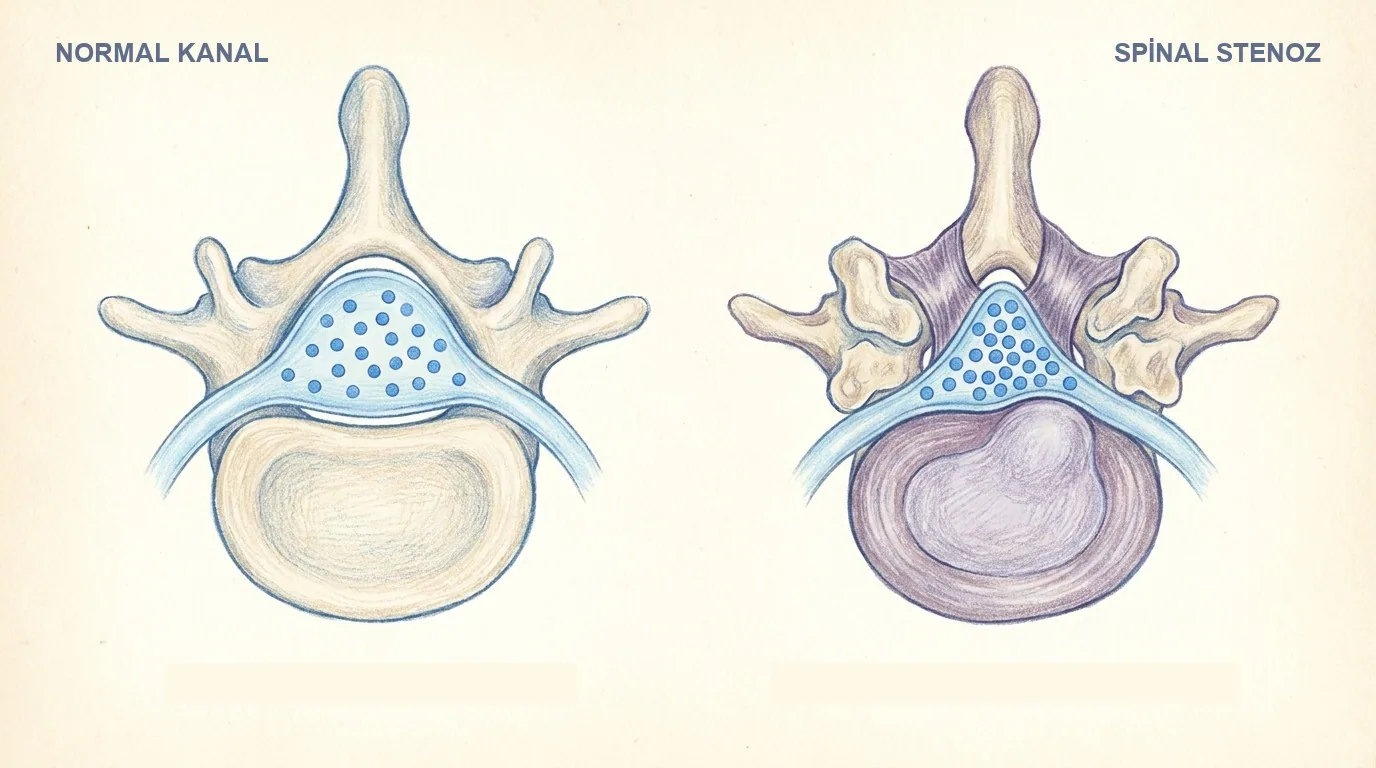
Spinal stenosis is the compression of the spinal cord or nerve roots passing through it as a result of the narrowing of the spinal canal. It is most commonly seen in the lumbar (lower back) region and is the most common cause of lower back surgery in people over 65 years of age.1,2
What Causes It?
Degenerative changes are the most common cause of spinal stenosis.3 With ageing, the thickening of the facet joints (hypertrophy), thickening of the ligamentum flavum, disc loss, and osteophytes (bone spurs) together narrow the canal. A congenital narrow canal structure, spondylolisthesis, and trauma are other causes.
Symptoms
Neurogenic claudication is the most typical symptom of stenosis: pain, numbness, and weakness in the legs begin while walking; it is relieved by sitting or leaning forward (shopping cart posture). Walking distance gradually shortens. This condition must be distinguished from vascular claudication (vascular occlusion).
It is most commonly seen in the lumbar (lower back) region and is the most common cause of lower back surgery in people over 65 years of age.
Diagnosis and Treatment
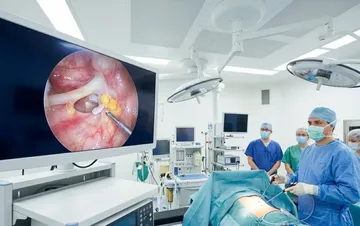
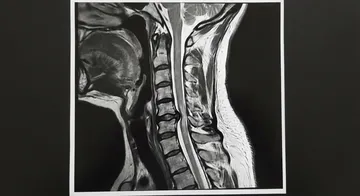
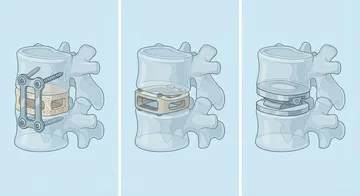
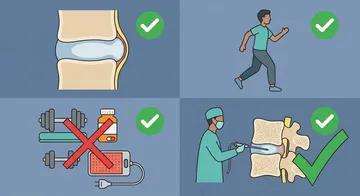
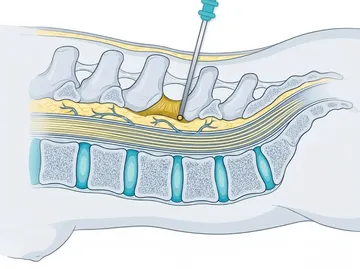
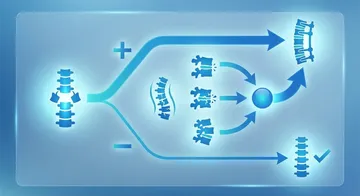
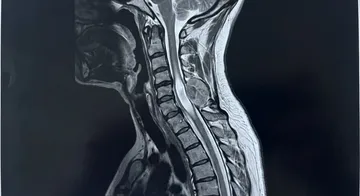
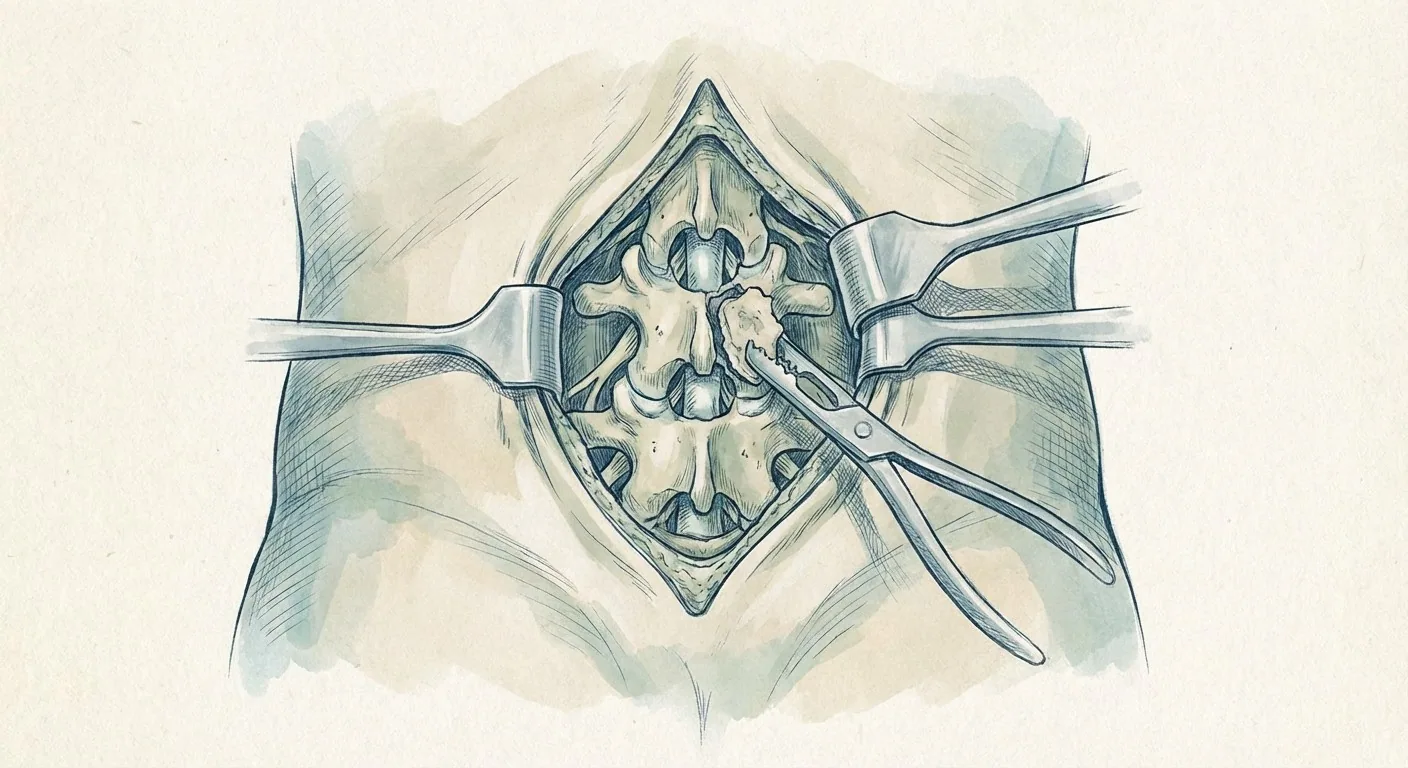
A lumbar MRI shows the level, degree, and cause of the canal narrowing. Conservative treatment (physical therapy, epidural injection, activity modification) is the first step.4 Surgery (decompression via laminectomy or laminotomy) is indicated for patients who do not respond to conservative treatment and whose quality of life is significantly impaired.5,6
→ Next page: S28 — Surgery in Spinal Stenosis

Kaynaklar
- Lurie J et al. BMJ. 2016. PMID 26727925
- Melancia JL et al. Handb Clin Neurol. 2014. PMID 24365318
- Genevay S et al. Best Pract Res Clin Rheumatol. 2010. PMID 20227646
- Fornari M et al. World Neurosurg X. 2020. PMID 32613192
- Feldmann PH et al. Orthopade. 2003. PMID 14579020
- Cadosch D et al. Praxis (Bern 1994). 2008. PMID 19016422
Doç. Dr. Özgür Akşan
Beyin ve Sinir Cerrahisi Uzmanı
Beyin ve Sinir · Sorumlu Yazı İşleri Müdürü ve Editör · Künye