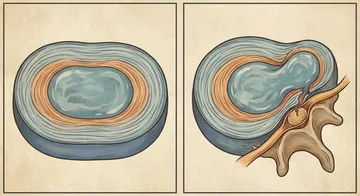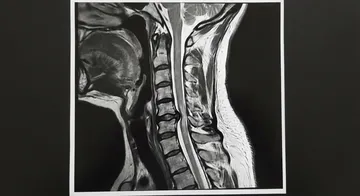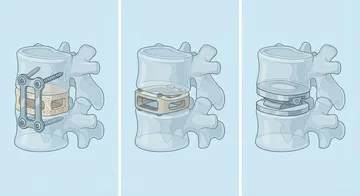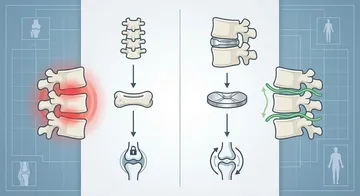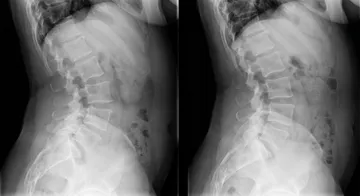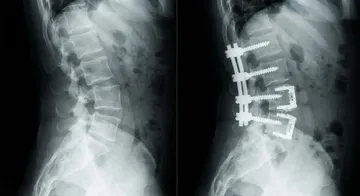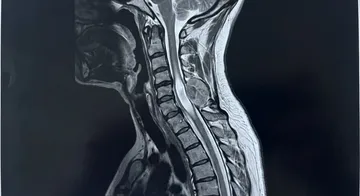
When surgical treatment is required for a lumbar herniated disc, microsurgery and endoscopic techniques are the standard approaches today. Both methods work on the minimally invasive principle; a small incision, minimal tissue damage, and rapid recovery are targeted.
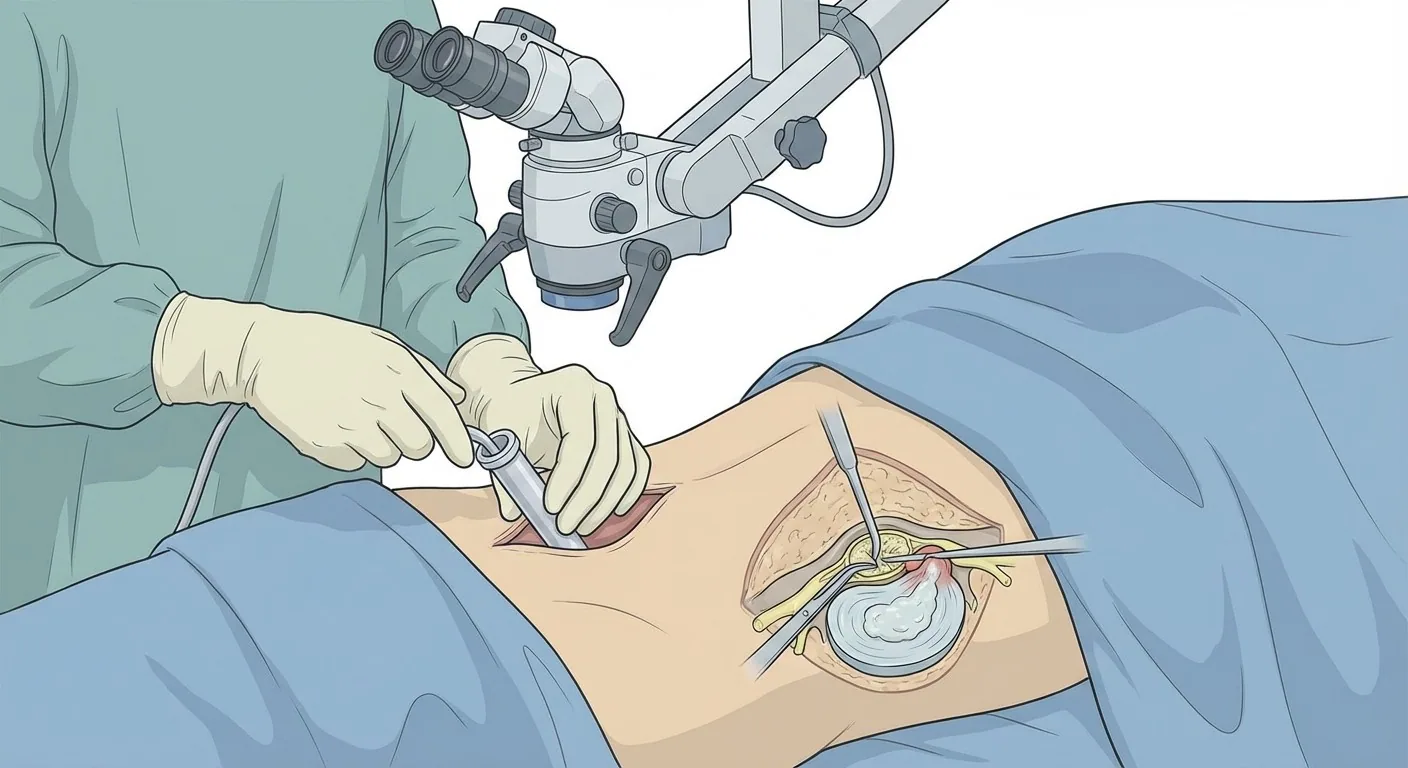
Microdiscectomy
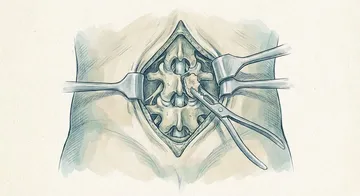
Microdiscectomy is the gold standard of lumbar herniated disc surgery.1,2 It is performed under a surgical microscope with a 2-3 cm skin incision. A small portion of the lamina bone is opened to visualise the nerve root, which is gently retracted, and the herniated disc material is removed.
The success rate is 90-95 percent.3,4 Patients usually stand up on the same day or the day after the surgery and are discharged within 1-3 days.
Transforaminal Microdiscectomy
In this technique, which is an alternative to classical microdiscectomy, the approach is through the foramen (the opening where the nerve root exits the spine). It is especially preferred for foraminal and extraforaminal herniations. Its advantage is that less bone is removed by preserving the ligamentum flavum and lamina.
The general complication risk in microdiscectomy surgeries is approximately between 10.4 percent and 12.5 percent.
Endoscopic Discectomy
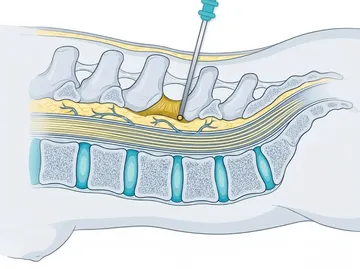
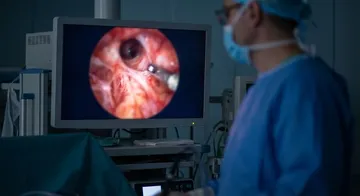
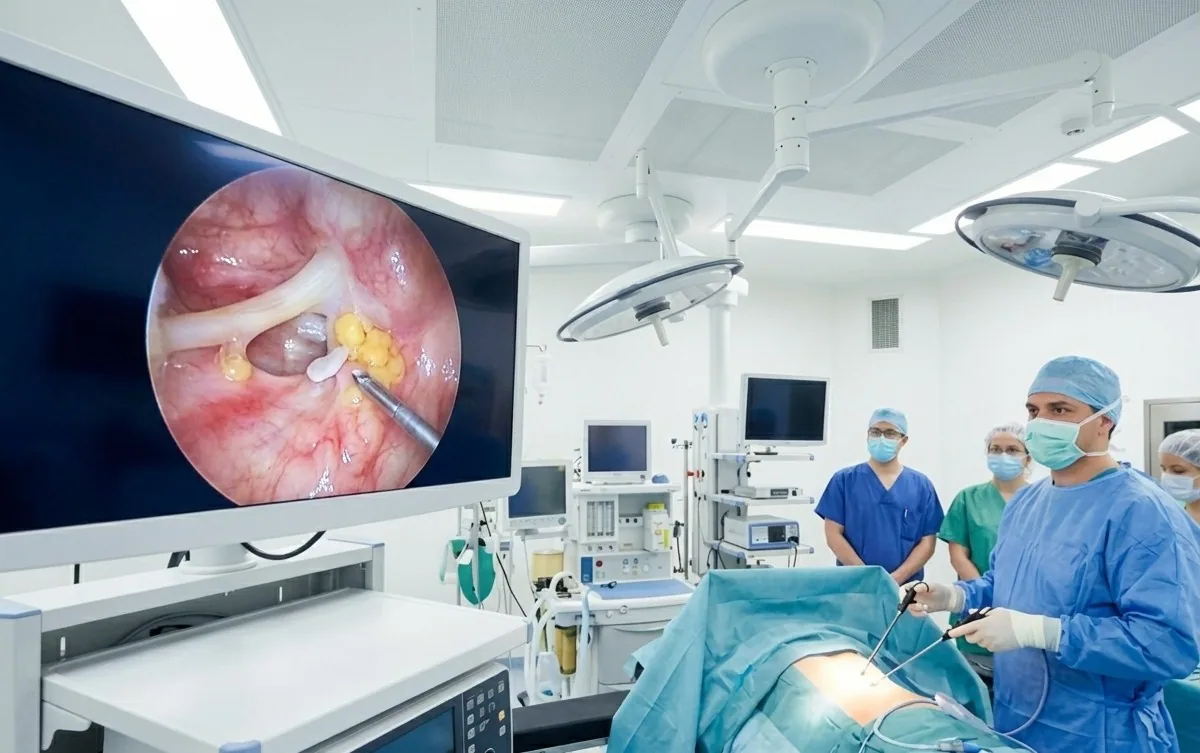
In the endoscopic technique, a tube and camera system with a diameter of 7-8 mm is used. The skin incision is smaller than 1 cm. It has two subtypes: fully endoscopic and semi-endoscopic (microendoscopic).
The main advantage of endoscopic surgery is the shortened hospital stay; similar results to open microdiscectomy have been reported in terms of leg pain, functional recovery, and complications.5,6 However, the learning curve is steeper, and it may not be suitable for every type of herniation.
Which Technique is Suitable for Whom?
The choice of technique depends on the location and type of the herniation, as well as the surgeon's experience. Classical microdiscectomy can be preferred for medial herniations, the transforaminal approach for foraminal herniations, and endoscopic surgery in suitable cases. In terms of results, all techniques have similar success rates in experienced hands.7,8
Complications and Recurrence
The general complication risk in microdiscectomy surgeries is approximately between 10.4 percent and 12.5 percent.9,10 According to studies, the recurrence rate of a lumbar herniated disc after microdiscectomy is reported to be between 3 and 24 percent.11,12
→ Next page: S21 — Conservative Treatment for Lumbar Herniated Disc
In endoscopic discectomy, the skin incision is smaller than 1 cm.
Kaynaklar
- Santipas B et al. Neurospine. 2026. PMID 41666862
- Özer Mİ et al. J Neurosurg Spine. 2024. PMID 38064698
- Hubbe U et al. J Neurosurg Spine. 2016. PMID 26384131
- Park YK et al. Neurosurg Focus. 2002. PMID 15916401
- Zhang B et al. J Orthop Surg Res. 2018. PMID 29976224
- Gibson JNA et al. Eur Spine J. 2017. PMID 27885470
- Kwon O et al. World Neurosurg. 2022. PMID 36527214
- Sharma A et al. Global Spine J. 2026. PMID 42470348
- Yang CC et al. World Neurosurg. 2022. PMID 36527213
- Shriver MF et al. Neurosurg Focus. 2015. PMID 26424346
- Albayrak S et al. Med Sci Monit. 2023. PMID 38158652
- Ravikumar S et al. J Spine Surg. 2025. PMID 40242820
Doç. Dr. Özgür Akşan
Beyin ve Sinir Cerrahisi Uzmanı
Beyin ve Sinir · Sorumlu Yazı İşleri Müdürü ve Editör · Künye