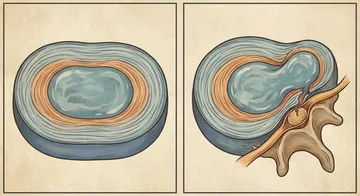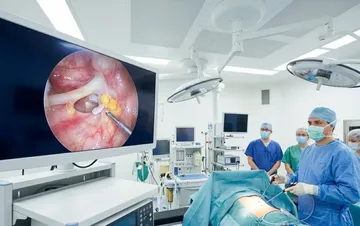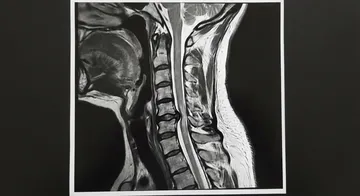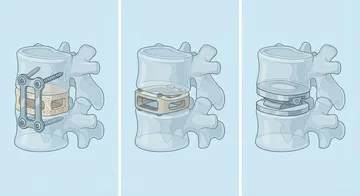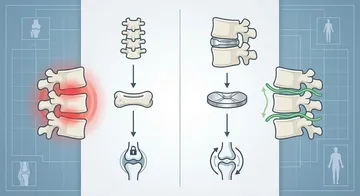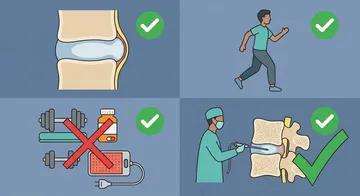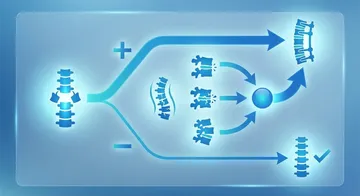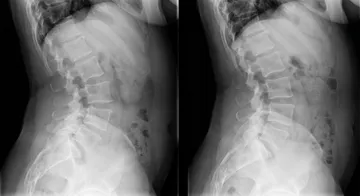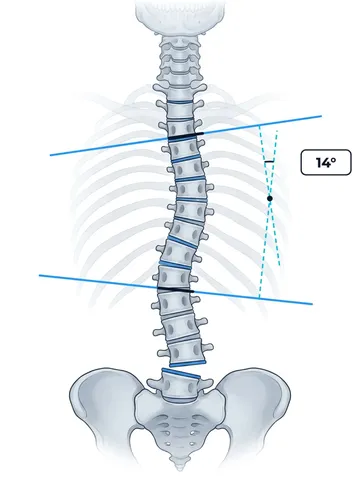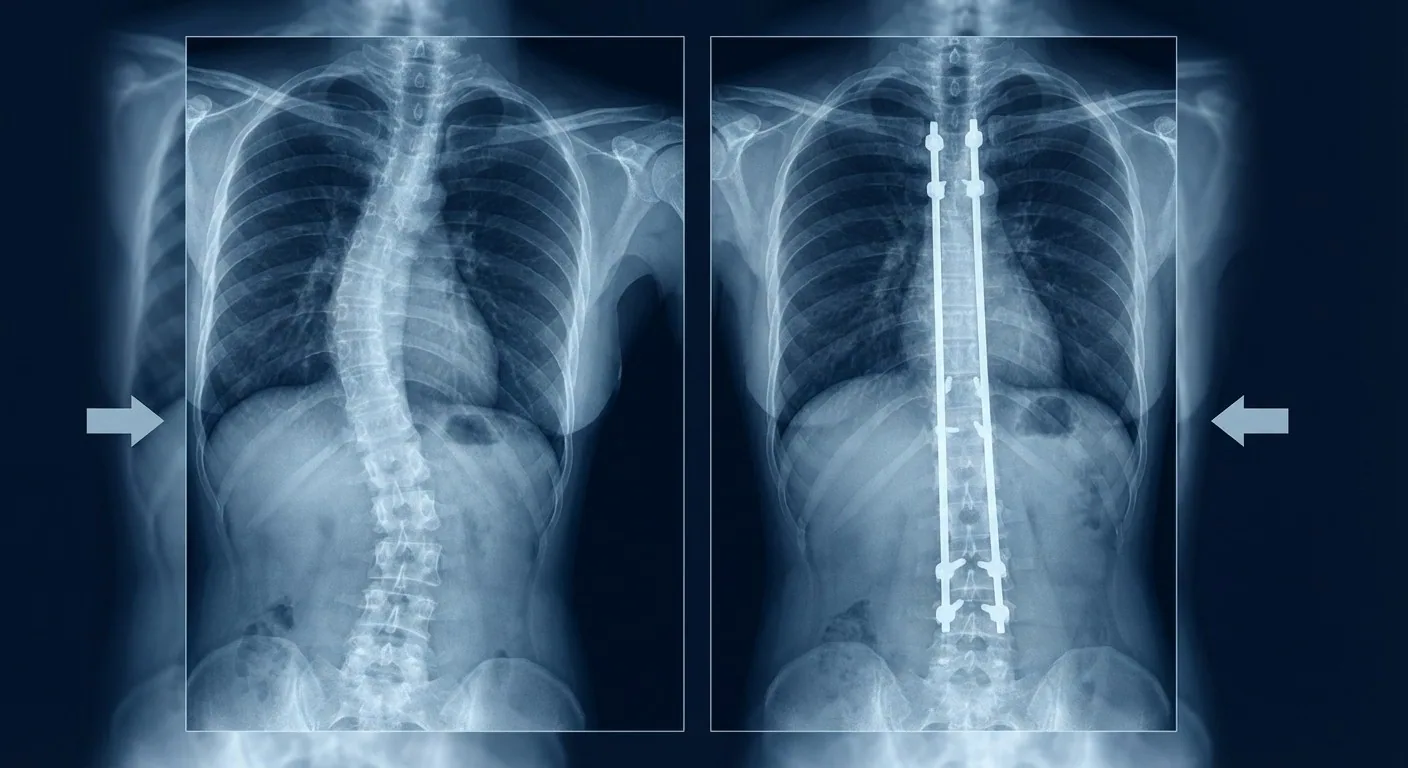
Surgery is considered in the presence of pain that restricts daily activities and/or progressive neurological deficit that do not respond to conservative treatment (physical therapy, pain management, epidural injection).1,2 The decision is made based not only on the angle, but also on the patient's functional status and quality of life.
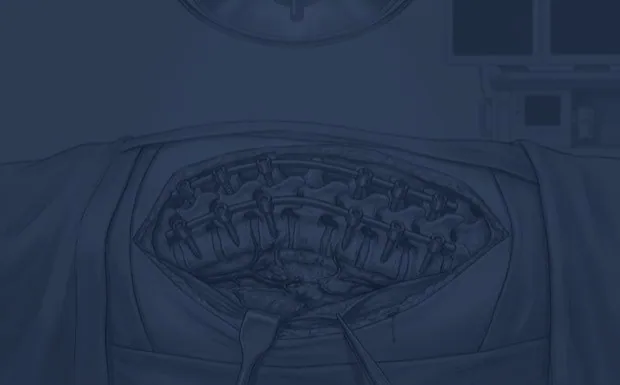
Surgical Techniques
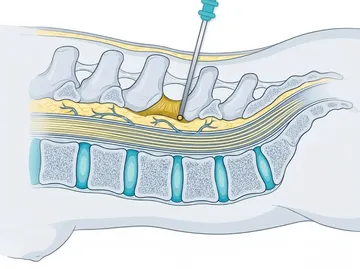
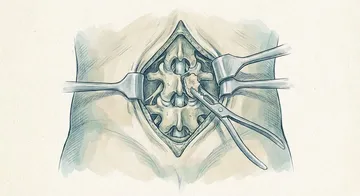
Decompression: In patients with nerve compression but no significant instability, laminectomy alone may be sufficient.
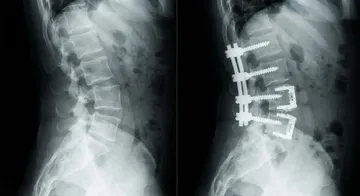
Fusion + Instrumentation: The curvature is corrected and the spine is stabilised with pedicle screws and rods. Short-segment (3-4 levels) or long-segment (down to the pelvis) fusion can be performed.
Osteotomies: In severe and rigid deformities, correction is achieved with a Smith-Petersen osteotomy (SPO) or pedicle subtraction osteotomy (PSO).3,4
Lateral Interbody Fusion (LLIF/XLIF): The disc space is opened and lordosis is restored by entering from the side. It can be performed as a preliminary stage (staged surgery) in preparation for open posterior surgery.
Risks and Considerations
Adult scoliosis surgery is a major operation. Blood loss, infection, screw loosening, proximal junctional kyphosis (PJK), and pseudoarthrosis (non-union) are the main complications. Advanced age increases the risk of complications in scoliosis surgery.5 Therefore, patient selection and surgical planning are of critical importance.
Osteotomies: In severe and rigid deformities, correction is achieved with a Smith-Petersen osteotomy (SPO) or pedicle subtraction osteotomy (PSO).
Postoperative Process
Early mobilisation (standing up on the 1st postoperative day) is targeted. Brace use may last 3-6 months. Full recovery takes 6-12 months; heavy lifting is prohibited until the fusion is complete.
→ Next page: S33 — Spinal Cord Tumours
Kaynaklar
- García-Ramos CL et al. Acta Ortop Mex. 2015. PMID 27012088
- Li M et al. Orthopedics. 2011. PMID 21410122
- Bourghli A et al. Eur Spine J. 2022. PMID 34586505
- Tarawneh AM et al. Eur Spine J. 2020. PMID 32382878
- Winter RB et al. Instr Course Lect. 1983. PMID 6546065
- Girod PP et al. Acta Neurochir (Wien). 2023. PMID 37715821
- Lonner BS et al. Spine J. 2005. PMID 15739277
Doç. Dr. Özgür Akşan
Beyin ve Sinir Cerrahisi Uzmanı
Beyin ve Sinir · Sorumlu Yazı İşleri Müdürü ve Editör · Künye