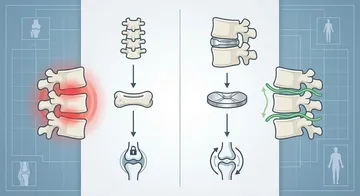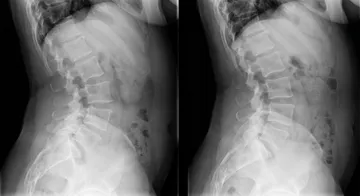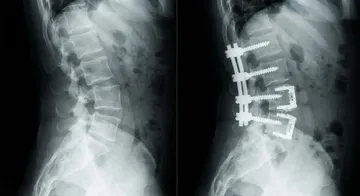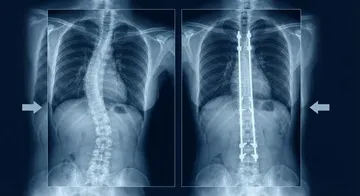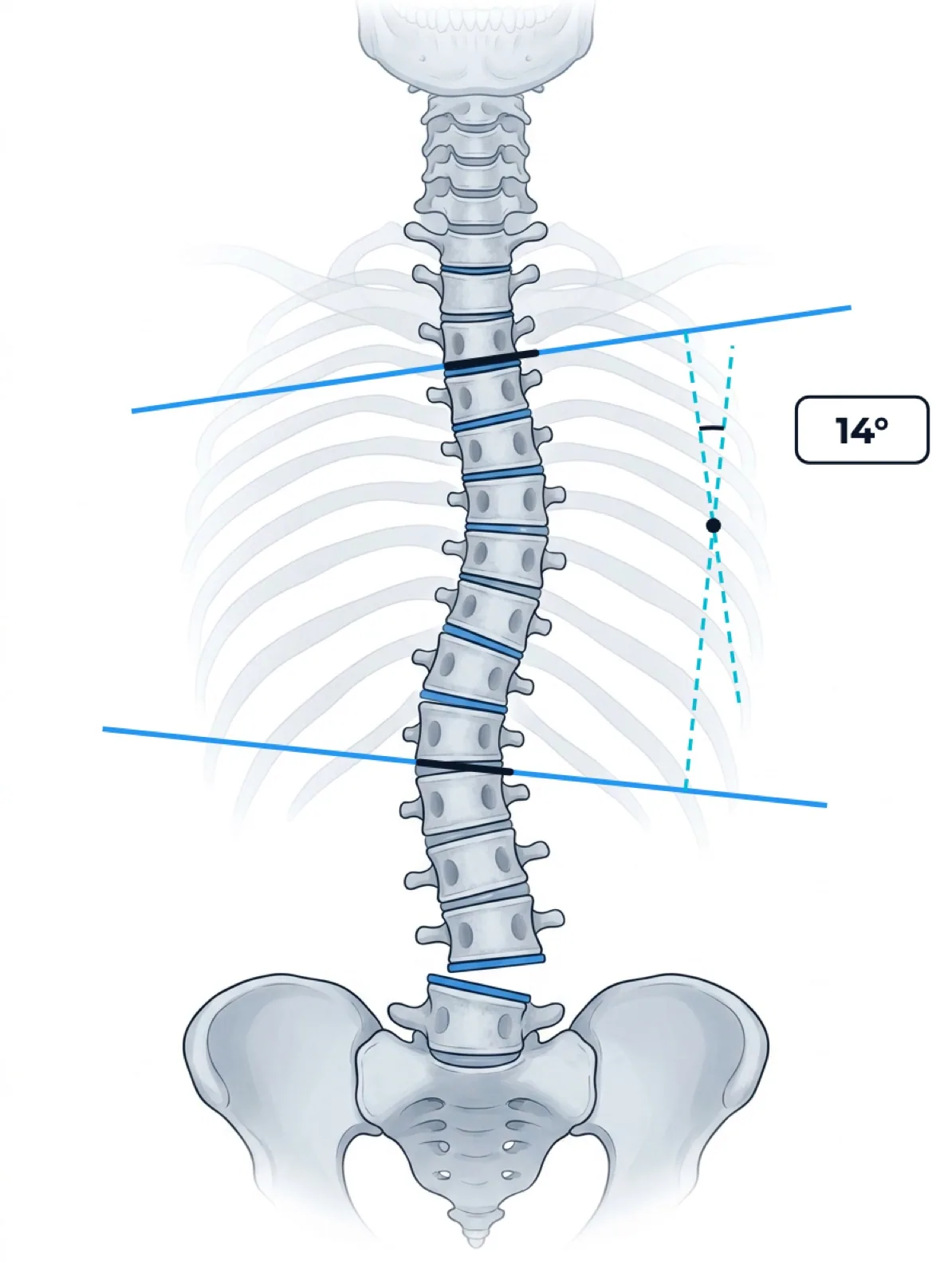
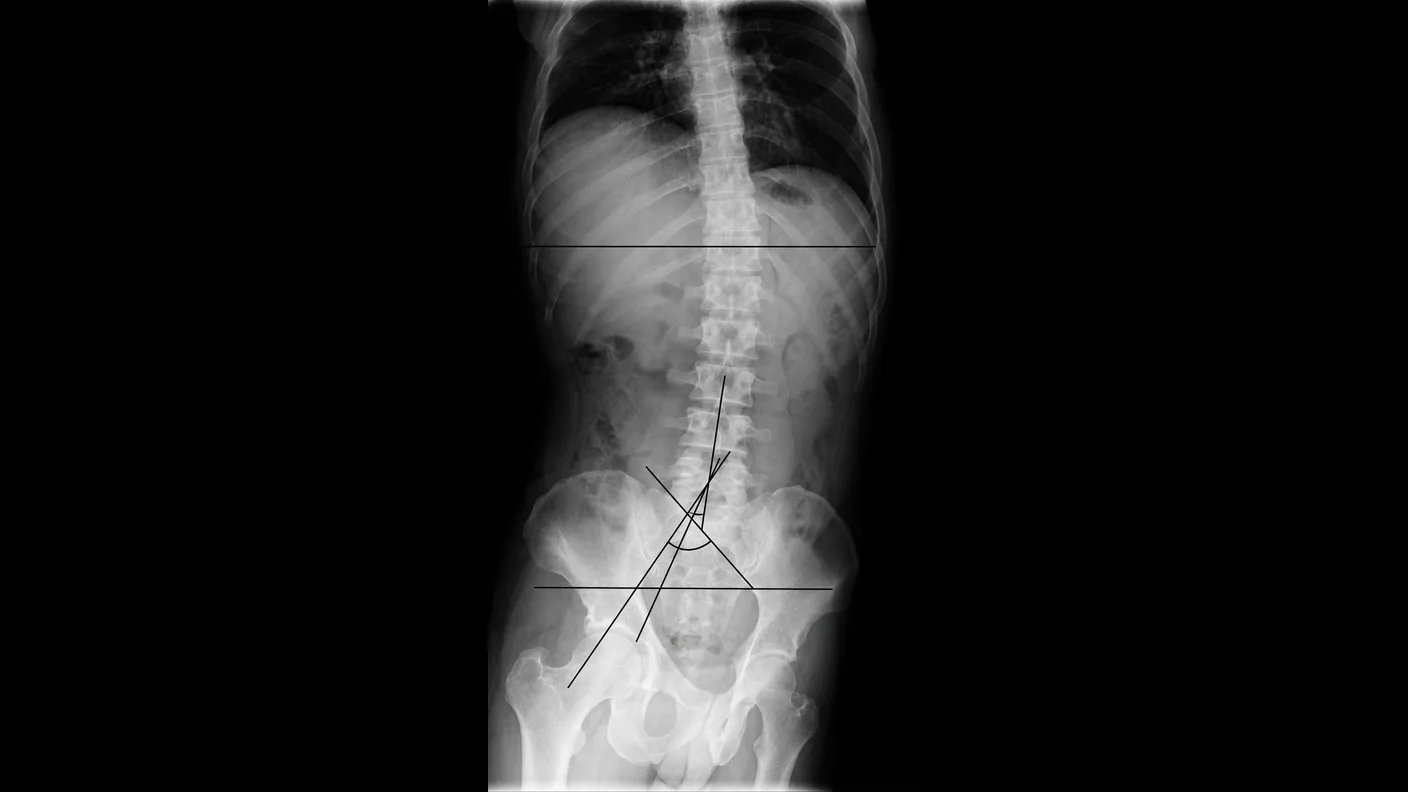
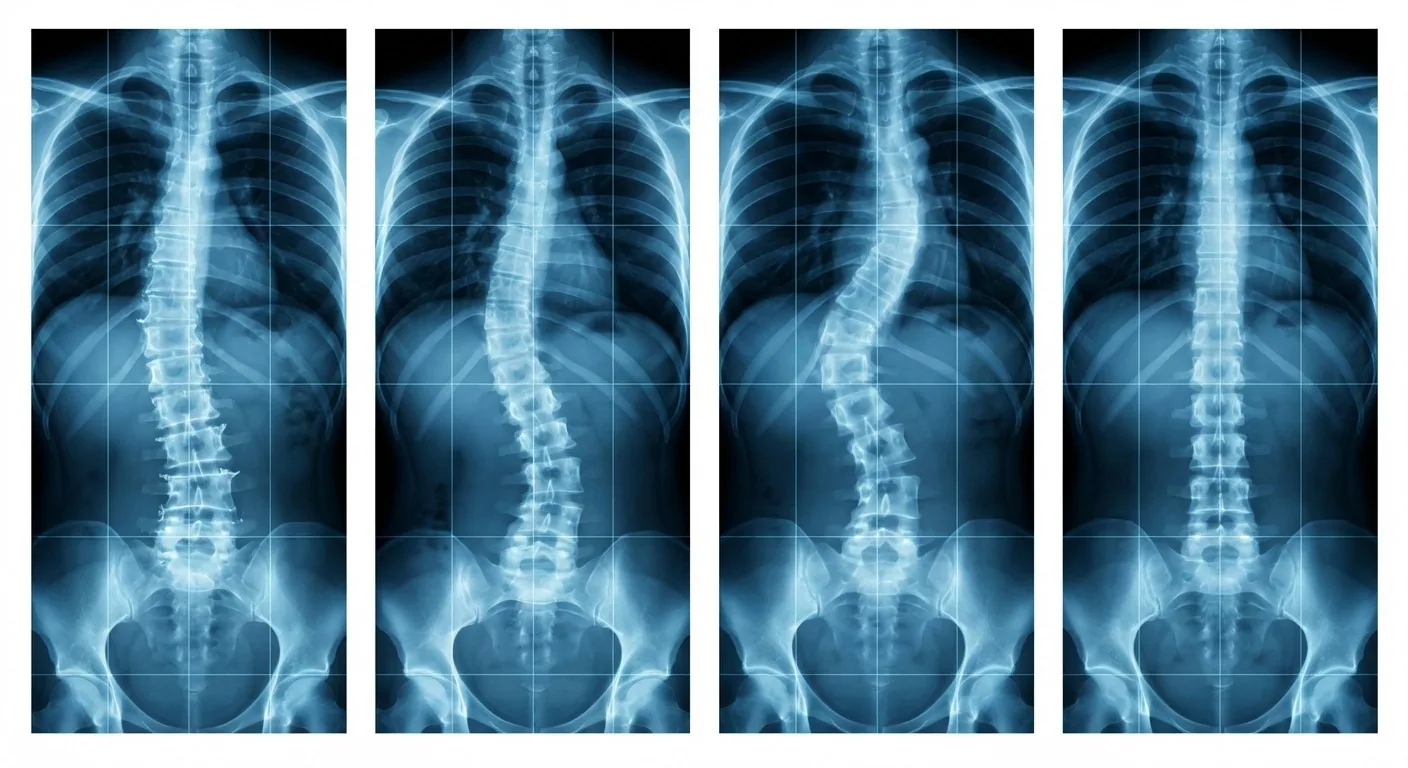
Scoliosis is the sideways curvature of the spine. Adult degenerative scoliosis, unlike childhood scoliosis, develops as a result of wear and tear in the discs and facet joints with ageing. It is generally seen in patients over 50 years of age, and low back pain and walking difficulties are the most common complaints.1,2
Types
De novo (Newly developed) scoliosis: It emerges with the degenerative process in people who did not previously have scoliosis. De novo scoliosis is seen in the lumbar region and the Cobb angle is over 10 degrees.3,4
Progressive scoliosis remaining from adolescence: The progression in adulthood of a curvature that started in childhood. Symptoms become prominent when degenerative changes are added.
Symptoms
The main symptoms of adult scoliosis: low back and leg pain, a decrease in walking distance, trunk imbalance (leaning forward or sideways), numbness and weakness in the legs. The pain usually increases with prolonged standing or walking, and eases when sitting or bending forward.
It is generally seen in patients over 50 years of age, and low back pain and walking difficulties are the most common complaints.
Diagnosis
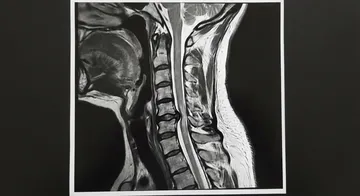
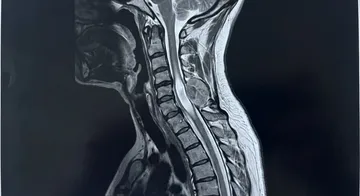
The Cobb angle, sagittal balance parameters (SVA, PI-LL mismatch), and pelvic parameters are evaluated. Spinal stenosis and nerve compression are detailed with MRI. Bone quality and fusion planning are done with CT.
Why is Sagittal Balance Important?
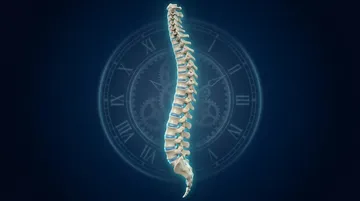
When the natural curves in the side view of the spine (lordosis-kyphosis balance) are disrupted, the patient leans forward. This 'sagittal imbalance' condition is an important factor that negatively affects the quality of life.5,6
→ Next page: S32 — Scoliosis Surgery
Kaynaklar
- Petrosyan E et al. N Am Spine Soc J. 2024. PMID 39399722
- Shao Z et al. Spine (Phila Pa 1976). 2024. PMID 38597179
- Kim HJ et al. J Neurosurg Spine. 2024. PMID 38335526
- Aebi M. Eur Spine J. 2005. PMID 16328223
- Kim HJ et al. Asian Spine J. 2020. PMID 33254357
- Kim HJ et al. Asian Spine J. 2022. PMID 36274246
Doç. Dr. Özgür Akşan
Beyin ve Sinir Cerrahisi Uzmanı
Beyin ve Sinir · Sorumlu Yazı İşleri Müdürü ve Editör · Künye